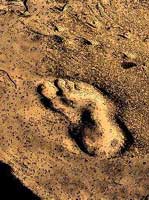
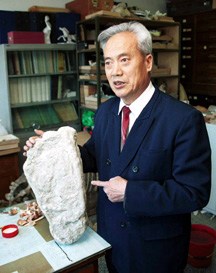
Plug

Member of The Crypto Crew:
http://www.thecryptocrew.com/

Please Also Visit our Sister Blog, Frontiers of Anthropology:

http://frontiers-of-anthropology.blogspot.com/

And the new group for trying out fictional projects (Includes Cryptofiction Projects):

http://cedar-and-willow.blogspot.com/

And Kyle Germann's Blog

http://www.demonhunterscompendium.blogspot.com/

And Jay's Blog, Bizarre Zoology

http://bizarrezoology.blogspot.com/

Monday, 20 August 2012

Bigfoot Beyond Our Borders

http://inexplicata.blogspot.com/2009/08/bigfoot-beyond-our-borders.html

paranormal cases from Spain, South America and the Caribbean

BIGFOOT BEYOND OUR BORDERS
By Scott Corrales
(c) 2005

It is possible that the man-apes variously known as Sasquatch, Yeti, Ukumari, etc. constitute the greatest and best known variety of mystery creature, and the only kind whose study has received a tacit nod from officialdom. Anthropologists have even gone as far as establishing its identity as the Gigantopithecus, an anthropoidal creature which may have survived into modern times by keeping clear of Homo sapiens. The historic record contains mentions of these beings, such as that they were used by the ancient Medes and Persians as ferocious battle animals, and that Nearchos, Alexander the Great's admiral, encountered communities of these creatures on the barren shores of the Persian Gulf. The historian Arrian, whose Anabasis Alexandrii (Indica) was translated by E. Illiff Robson in 1933, mentions that as the Greek admiral headed westward, his galleys hugging the shore of the Asiatic landmass, he came upon a remarkable--and terrifying--group of natives.

When anchored by the River Tomerus (its modern location unknown), the returning Macedonians found "a lagoon at the mouth of the river" whose natives dwelt in recesses near the bank, occupying "stifling cabins". The natives, having never seen ships, took an offensive stance: Arrian states that ignorant of metals, they nonetheless wielded fire-hardened spears. The war galleys fired a volley of stones and arrows against them, and the primitives proved no match against the Macedonians, fresh from their victories along the Indus. But what is of interest to us isn't the prowess of Nearchos's forces, but the description of the six hundred or so primitives:

"Some were killed in flight; others were captured; but some escaped into the hills. Those captured were hairy, not only their heads but the rest of their bodies; their nails were rather like beasts' claws; they used their nails (according to report) as if they were iron tools; with these they tore asunder their fishes, and even the less solid kinds of wood; everything else they cleft with sharp stones; for iron they did not possess. For clothing they wore skins of animals, some even the thick skins of the larger fishes."

The rough technology evinced by these hirsute primitives-- tropical versions of the Toonijuk or Tunnit who reputedly lived in Greenland and Bylot Island in ages past )--is also found in descriptions of the Maricoxis, bestial creatures confronted by the ill-fated explorer Col. H.P. Fawcett in the early 20th century while surveying the Matto Grosso. Fawcett's description of the Maricoxis, as "great apelike brutes who looked at if they had scarecely evolved beyond the level of beasts," would not have been out of place in Admiral Nearchos' log. The Maricoxis were considered primitive even by the standards of other primitive tribes, despite the fact that they wielded bows and arrows.

Arrian mentions that the number of primitives who attacked the Macedonians stood at approximately six hundred. Did the ones that escape, assuming both males and females, retreat to the mountains of what is today northern Pakistan, moving on into what are now the modern republics of Central Asia (Kazhakistan, Turkmenistan, Tadzhikistan, etc.) to give rise to the legend of the Almasti? A fascinating possibility.

Mexico's Fearsome Quinametzin

One of these early chroniclers of Mexico's history--Fernando Alva Ixtlilxochitl--mentions in his book Obras Históricas the widespread belief that the Chichimecs, the earliest occupants of what is now Mexico, had to displace an old race of giants that lived there. This echoes not only the Biblical displacement of giants from Canaan by the advancing Hebrews, but other traditions surrounding the elimination of giants from Britain by a Trojan warrior named Brutus. The presence of these ancient colossi would thus account for the persistent discovery of abnormally large remains. Ixtlilxochitl also mentions the wars between the giants known as Quinametzin and normal-sixed humans.

Memory of the Quinametzin was widespread throughout Mesoamerica, as can be seen from the information gleaned by Spanish explorers and colonizers. Bernal Diaz del Castillo, who accompanied Hernán Cortés on his conquest of the Aztec Empire, wrote of a belief among the Tlaxcalan people that "...their ancestors had shared the land with men and women of very tall bodies and large bones, and since they were very wicked and ill mannered, [the ancestors] slew them in combat, and what remained of them died out..."

Other information turned up by early missionaries is also quite intriguing. Fray Diego Durán claimed to have seen the bones "of immense giants" excavated "out of rough places". Fray Gerónimo de Mendieta was told by the older natives that their predecessors had been forced to struggle against giants, "and after this land was won, the bones of many tall men were found." Bernardo de Sahagún, the great Franciscan missionary, would be the first to suggest that the pyramids of Teothihuacan and Cholula were the handiwork of the vanished giant race. Wherever the conquistadors went, more stories were added to the body of information concerning these creatures. When the rapacious Nuno de Guzman reached what is today Jalisco, he demanded to know from the natives why a number of towns had been abandoned. They informed him that the towns had been inhabited by a band of giants who had come up from the south.

There was to be no peaceful co-existence between the Quinametzin and the newly-arrived humans, who called them quinametzin hueytlacame ("huge deformed men" or "monstrous giants"). The advancing human tribes (tentatively identified as Olmecs and Toltecs) drove the giants out of their ancestral domain, causing some of them to flee to the north and others to the south, following the Pacific coastline down to Central America. Fray José Mariano Rothea, a Jesuit, sums up this belief as follows: "...in very ancient times there came men and women of extraordinary height, seemingly in flight from the North. Some of them went along the coast of the Southern Sea, while others took to the rough mountainsides..."

Fray Andrés de Olmos, writing in the 16th century, mentions a curious detail: the Mexican giants nourished themselves on oak acorns and a variety of weeds. This detail contained in the codexes enables us to contemplate a strange possibility: could the Quinametzin have survived into our present age under the guise of the tall, hirsute simian beings known as Bigfoot, Yeti, Sasquatch and myriad other denominations? Those interviewed by the Colonial-era chroniclers explained that tradition held that those giants who were not exterminated by normal-sized humans were chased into the wilderness, where remnants of their race still endure. Marc Dem, the French author of a number of works on the paranormal, has identified the Biblical Anakim with giant beings such as the Asian Yeti.

Is there any evidence that such a race of giants actually existed south of the border?

In 1975, Mexican ufologist Pedro Ferriz visited Calvillo, Aguascalientes (on the Pacific coast, famous for its intricate mazes of unexplored manmade caves) to inspect some ancient petroglyphs on the property of local landowner Víctor Martínez. Martínez told the ufologist that he was ambivalent about the petroglyphs, which he considered unlucky, particularly since "that affair with the giants". When asked to elaborate, Martínez explained that he had stumbled upon the ancient skeletons of two extraordinarily large creatures while tilling the soil. Martínez went into Calvillo to notify the authorities about his find, only to discover that the local police believed him to have killed both giants and wanted to incarcerate him!

The farmer finessed his way out of the predicament, returned to his farm, and set fire to the bones.

Monster-Men of the Andes

Argentina's Salta region has been the focus of a number of hairy hominid sightings for many years. This rugged, mountainous region could not differ more from the Sasquatch's forested Pacific Northwest: arid, desolate landscapes meet vast salt deserts, such as the Puna de Atacama, where rainfall is almost nonexistent.

In 1956, Dr. José Cerato and geologist Claudio Spitch discovered the footprints of a Bigfoot-like creature at an elevation of almost 16,000 ft. The prints, according to Spitch, were so large that they precluded the possibility of having been made by a human being.

Shortly after Cerato and Spitch's discovery, a muleteer named Ernesto Salitonlay (name also given as José Santolay by some sources) led his animals into a lowland area and was startled by "a strange being covered by dense hair" that let out piercing screams upon seeing the human, terrifying the pack beasts in the process. Salitonlay said that the bizarre creature looked more like "a large, agile monkey" than anything else and fired his shotgun at it, but missed the target. The hairy hominid took flight and the muleteer headed post-haste to the local police station to report the incident. Authorities looking into his claims surmised that it could have been the Ukumar Zupai described in the legends of the Coya inhabitants of the region.

From all descriptions, the Ukumar was smaller than its Himalayan counterpart. It had a pointed head and projected its body forward when it ran; the natives became accustomed to hearing its cries at dusk and in the winter months. There was also the interesting detail that locals would come across ruined condor and eagle nests, high in the mountains, which appeared to have been ransacked by a savage attacker, leaving dead and injured birds in its wake.

The creature was not seen again until a hapless prospector named Benigno Hoyos, combing the Quitillipi region for minerals, was caught by an unexpected snowstorm in the vicinity of Morro del Pilar and was forced to take shelter from the elements in a cave...which turned out to be occupied by an "unknown creature of large proportions, similar to a bear." The prospector was able to fire his sidearm at the improbable being and scored a hit: the creatures screams turned into heart-rending cries of pain.

According to anthropologist Silvia Alicia Barrios, hunters have successfully apprehended live specimens of Bigfoot's southern cousin. One such case involves the capture of a family of Ukumaris--a mother and two offspring--by Andrés Olguín. The two young Ukumaris were allegedly turned over to a Paraguayan zoologist.

[Ukumaris are still being reported post-2000; their zoological identification is still debated]
Ucumar
GIANT HOMINID of South America.
Etymology: After its ululating call.
Variant names: Sachayoj, Ucu, Ukumar-zupai
(in Tolar Grande). In Bolivia and Peru, the spec-
tacled bear is known as Ucamari or Jucamari.
Physical description:Half man, half bear. Cov-
ered in long, black hair. Bearded. Small eyes.
Large hands and feet.(Some tracks reported with) opposed big toe
Behavior:Bipedal. Makes eerie, ululating calls
(“uhu,  uhu”)  at  night.  Eats  wild  fruit  and
honey. Said to abduct women for breeding.
Tracks: Humanlike. Length, 17 inches.
Habitat: Mountains, caves, and rocky areas.
Distribution: Tolar  Grande,  Mount
Umahuaca,  El  Chorro,  and  Baritú  National
Park  in  Salta  Province,  Caliliegua  in  Jujuy
Province, Chaco Province, all in Argentina.
Possible  explanation: The  Spectacled  bear
(Tremarctos ornatus) is found in the Andes as far
south as northern Argentina. Its occasional for-
ays into Argentina could contribute to Ucumar
folklore.[There is no way it could make tracks that big]
Sources: Angel Luciano López, Narraciones y
supersticiones del Desierto Saladino (La Banda,
Argentina, n.d.), pp. 20–26; José Murillo,
Leyendas para todos (Buenos Aires: Editorial
Guadalupe, 1978); Pablo Latapi Ortega,
“Ucumar, the Argentinian Yeti,” Contactos
Extraterrestres, April 16, 1980; Simon
Chapman, The Monster of the Madidi:
Searching for the Giant Ape of the Bolivian
Jungle (London: Aurum, 2001).

-From Eberhart,George, Mysterious Creatures, 2002
A Possible Connection with UFOs?

Argentinean cryptozoologist Fabio Picasso, compiler of the
Manual de Criptozoología Argentina y Sudamericana (1990), mentions the Ukumar-Zupai in his catalogue of hairy hominid sightings: In July and August 1956, the La Gaceta newspaper began to publish a series of articles (obtain with the aid of Chilean researcher Liliana Núñez) about the creature seen in the vicinity of Nevado Macón, a Andean peak standing 5700 meters above sea level, where "huge human footprints larger than those of an elephant have been allegedly seen."
["Elephant tracks" are also attributed to Yetis in Tibet and the tracks are probably remelted and enlarged-DD]

Picasso notes that the sightings of the Andean hominids commenced shortly after a flurry of UFO sightings in the area, to which the newspaper items attest: in 1955, the year before the first hominid reports began, a strange object had crashed into the slopes of Nevado Macón in full view of the residents of the villages of Tolar Grande, Caipe, and Quebrada de Agua Chuya, all in the vicinity of the Salar de Arízaro. Apparently, prior to colliding, the vehicle had flown over the region all day, making themselves visible to workers at a Public Works shanty and members of the local gendarmerie, who took photos of it.

The Ministry of Aeronautics's Information Service received a request, says Picasso, to conduct an investigation to determine if the crashed object was either "an aircraft or an aerolite", but nothing appears to have been done in this regard. The fact remains that strange luminous artifacts continued to be seen over the Andean deserts, first hovering over the dusty villages and then giving the appearance of descending in the mountains. Author Gustavo Fernández adds the interesting detail that an official police communique revealed the crashed object was cylindrical and measured a whopping three hundred fifty meters long by fifty meters in diameter (approximately 1000 ft. by 165 ft.) and was metallic in color with a "dark band" visible across it. Despite the fact that it was wingless, it executed sharp and sudden turns, leaving a smoky contrail that remained visible for four hours.

"This anecdote," states Fabio Picasso, "appears to contain the seeds of the oft-mentioned theory regarding the link between UFOs and Yeti-type creatures; a theory which would was foreign to the specialized media and was only approached in the 1970's by Angelo Moretti, regarding South American cases involving primitive beings found amid a sweeping UFO flap." The author cautions his readers that this should not be construed as the creatures and the UFOs sharing the same origin. It is possible that the powerful crash into the mountainside drove the hominids out of their lairs.

In 1963, the village of Ranelagh in the Province of Buenos Aires was visited by a strange entity whose journalistic moniker, El dientudo ("Toothy") de Ranelagh came from its extraordinarily long fangs. For eight days, according to Gustavo Fernández, residents of this unpaved shanty town, surrounded by contaminated streams, were haunted by the fearsome "Toothy". This shaggy entity, standing some six feet tall, had phosphorescent eyes and was seen by a number the witnesses late at night near a small bridge.[This is essential a southward extension of the apelike Mapinguari]

Unlike most cases involving hairy hominids, "Toothy" lashed out against humans, injuring a few of them; but it saved its true rage for dogs. According to reports, the monster killed several and devoured them.

"Toothy"'s short reign came to an end when a police officer fired his service revolver at the monster one night; the following morning it was ascertained that blood had been found next to its footprints. Police speculated that the creature, wounded to death, had fallen into Ranelagh's polluted creek. It was never seen again.
INSERT- Dientudo
Giant Hominidof South America.
Etymology: Spanish, “big teeth.”
Physical  description:  Half  bear,  half  man.
Huge teeth.
Habitat: Forests.
Distribution: El Gato Creek, Ringuelet, and
Toloso in Buenos Aires Province, Argentina.
Source: Fabio Picasso, “South American
Monsters and Mystery Animals,” Strange
Magazine, no. 20 (December 1998): 28–35.
[There have also been more recent sightigs]


There are more recent cases of strange creature activity in Argentina: Carlos Alberto Iurchuk, editor of the El Dragón Invisible journal, received a letter from one Gustavo Aufnerr--owner of an estate in the municipality of Carlos Spegazzini--regarding a 1996 encounter with the unknown.

Aufnerr was walking through a forest trail one summer evening when he heard a noise behind him. Upon closer inspection, Aufnerr and a companion shone their flashlights toward the ground, only to find the carcass of a dog, eyes vacant and jaw torn off. Gripped by fear, both young men heard the noise once again. As they moved away, they came across another carcass--this time that of a cat, slain in the same gruesome fashion. They only did what could be expected in such a circumstance: they ran.

But their frantic race toward safety was interrupted by "something" that crossed their path in a sideways motion, crossing the forest trail from left to right. According to Aufnerr's description, the strange "something" was about the size of a dog, but running on two legs, with a rounded head smaller than its body, and with claws dangling from the upper part of its body.
[By inferrance this is a "Chupacabras" sighting]

Patagonian Giant
GIANT HOMINID of South America.
Etymology: The size of these animals caused
explorer  Ferdinand  Magellan  to  name  them
Patagónes (Portuguese,  “big  foot”)  and  their
country Patagonia.
Variant  name:  Chaucahue  (possibly  Huil-
liche/Araucanian).
Physical description: Height said to be 7–12
feet.[A report of an isolated bare footprint stated it was 18 inches long.]
Behavior: Nomadic, following the wild herds
of  Guanaco  (Lama  guanicoe),  their  primary
source of food.
Distribution: Southern Argentina and Chile.
Significant sightings: In June 1520, the expe-
dition of Ferdinand Magellan encountered giant
Indians  at  Puerto  San  Julián,  Santa  Cruz
Province, Argentina.
In June 1578, Francis Drake’s men brawled
with the Puerto San Julián Indians, noting they
were not as tall as Magellan’s chronicler had in-
dicated.[ So possibly they had NOT encountered the same Giants!]
Sebald de Weert in 1598, Joris van Spilber-
gen  and  Wilhelm  Schouten  in  1615,  John
Byron in 1764, and other visitors also encoun-
tered Indians of large stature.
Probable explanation: The Tehuelche Indians,
whose height was exaggerated by clothing and
long hair. In 1983, the last thirty or so remain-
ing Tehuelche lived on a small reserve at Ca-
mashu Aike, Santa Cruz Province, Argentina.
Sources: Antonio Pigafetta, First Voyage
around the World [1525] (Manila, Philippines:
Filipiniana Book Guild, 1969); Wilhelm
Schouten, The Relation of a Wonderfull Voyage
Made by William Cornelison Schouten of Horne
(London: Nathanaell Newbery, 1619), p. 18;
Francis Drake, The World Encompassed [1628]
(New York: Cooper Square, 1969); Cornelius
Pauw, Recherches philosophiques sur les
Américains (Berlin, 1770); John Hawkesworth,
An Account of the Voyages Undertaken by the
Order of His Present Majesty for Making
Discoveries in the Southern Hemisphere
(London: W. Strahan and T. Cadell, 1773),
vol. 1, pp. 27–32, 152–155; Charles Darwin,
Voyage of the HMS Beagle [1839] (New York:
Harper and Row, 1959), chap. 9, pp.
164–165; Rupert T. Gould, Enigmas: Another
Book of Unexplained Facts (New Hyde Park,
N.Y.: University Books, 1965), pp. 16–23. 
-Once again quoting Eberhart, Mysterious Creatures, 2002


¿Bigfoot in the Pyrenees?

The Pyrenees--the mountain range separating the Iberian Peninsula from the rest of Europe--also appear to be the home of a fascinating mountain hominid. For centuries, there have been reports of hairy, foul-smelling creatures known as basajún in the Basque country and simiote or simiot in Aragón and Cataluña. Author Miguel Aracil went in search of this elusive manimal at the behest of Spain's Más Allá magazine and ascertained that belief in the simiots, far from being medieval legend, was current fact.

Medieval tradition, which has survived to our time as chronicles and artwork (two 12th century images of the simiot are known to exist, depicting it as a creature resembling the "black cats" that haunt the British countryside), holds that the simiots killed entire flocks of sheep and an occasional human. As in other countries, these Pyrenean hominids issued strange cries, grunts and wails, aside from a noisome odor.

Aracil writes that a group of woodsmen from the wild Pyrenean region of Peña Montesa was attacked by "a bizarre, hairy creature with semi-human features" which went on to indulge itself a vandalistic frenzy, shattering vehicles and heavy forestry equipment and even hurling tree trunks against humans, according to one account. Groups of volunteers scoured the mountains in search of the being but came up empty-handed, suggesting that it hid away in "the enormous caves that are found in the region." Many years later, a tourist who had gone hiking in the area had a face-to-face encounter with the creature and was astounded by its foul smell.

Scientists have dismissed the simiots as mere folktales. French scientist Alain Pillaire believed that the reports concerned a "baboon", regardless of the fact that these animals are found in equatorial Africa and are seldom over three feet tall.

Alfonso Serra concurs with Miguel Aracil, stating in his book Misterios Ocultos (Barcelona: Protusa, 1997) that gigantic skeletal remains of great age have been found in the Pyrenees, some of them buried near the prehistoric dolmen of Oren, in La Cerdanya. Nothing further was ever heard about them after they were turned over to the Barcelona Archaeological Museum. Another giant skeleton, allegedly measuring three meters long, was found in near Garós in the Pyrenees: it had the peculiarity of having had an ancient piece of iron driven through it.

Could it be possible, as many authors have suggested in past decades, that humanity is not quite alone on this planet? This question has usually been raised with regard to presence of extraterrestrial life on our world, whether visiting in passing or possessing permanent bases on it. But in this case the question is directed at the very real presence of other beings--possibly sentient--living in remote or nearly impenetrable parts of our world.

Latest Loch Ness Monster Photo Claimed as Hoaxed


And from the National Geographic, a photo of the the model which is to be towed behind the boat on a line, as it sits on the dock in preparation for the hoax to follow


Special thanks go to Mike Playfair who provided the photos and the information

UPDATE:
http://news.stv.tv/highlands-islands/186792-loch-ness-monster-photograph-branded-a-hoax-by-nessie-enthusiast/

Loch Ness Monster photograph branded a hoax by Nessie enthusiast

STV


A photograph which received thousands of online views apparently showing the Loch Ness Monster has been branded a hoax by a Nessie enthusiast.
Tour boat operator George Edwards said he took the photograph at the loch in November 2011.
But another Loch Ness Monster enthusiast has come forward claiming the image shows a fibreglass model, and says he has the hump to prove it.
For 21 years Steve Feltham has lived on the shores of Loch Ness, hoping to solve the mystery of the elusive monster.
So he was delighted to spot recent media coverage of what was heralded as the definitive photo proving Nessie's existence, snapped Mr Edwards.
But now Mr Feltham says he has new evidence blowing the photograph's authenticity out of the water.
He says he is convinced Mr Edwards took the picture during the filming of a documentary on the monster which he participated in, and has sourced the film's fake fibreglass hump which he believes is the star of Mr Edwards' snap.
Mr Feltham said: "There's absolutely no doubt that this is the same thing. Look at the step slope on the front – it's got several ridges on it. The number of ridges is the same as on the model.
"And as the tail and slopes down towards the back, just as it reaches the water there's a lump on the back of the body. That's on the model as well."
Mr Edwards declined to be interviewed on camera, but told STV News that he denied knowing anything about a fake hump.
He said Mr Feltham was entitled to his opinion and said people who make their livelihoods from the Loch should be happy it is in the news.

Sunday, 19 August 2012

On The Track of the Abominable Snowman

Yeti, On the Track of The Abominable Snowman

http://www.unexplainedstuff.com/Mysterious-Creatures/Apelike-Monsters-Yeti.html

[I have added most of the photos from a google photosearch]
Tales of hairy monsters existing in the Asian wilderness can be found in the writings of several venerable Chinese scholars who linked these creatures to the "time of the dragon," the presumed genesis of Asian civilization. Despite an occasional report by a European visitor to the region, the apelike creatures did not receive any sort of widespread notoriety until the beginning of the twentieth century.
During an expedition into the Himalayas in 1906, botanist H. J. Elwes was astonished to glimpse a hairy figure racing across a field of snow below him. The scientific establishment dismissed his report until several scholars discovered the journals of Major Lawrence Waddell, who, during his 1887 expedition, reported having found humanlike tracks in the snow.
The First Everest Expedition was launched in 1921, led by Colonel C. K. Howard-Bury. The climbing party of six British men and 26 native porters was crawling slowly up the north face of Everest, near the Lhakpa La Pass, when Howard-Bury spotted tracks in the morning snow. Most of them were easily recognizable as those of rabbits or foxes, but one set of indentations was peculiar, appearing as if a man walking barefoot had made them. A Sherpa guide identified the tracks as belonging to the Yeti or the "mehteh kangmi," the man-beast of the mountains who lived in the snow.
Later, when Howard-Bury telegraphed his reports to Calcutta, he mentioned the incident briefly. Unfortunately, the telegraphic facilities were very primitive and the words "mehteh kangmi" were garbled into "metch kangmi." The expedition's assistants in Calcutta were confused by the term and asked a Calcutta newspaper columnist to translate the term. The columnist told them that "metch" was a term of extreme disgust, so it might be translated as the "horrible snowman" or the "abominable snowman."
A reporter for one of England's most sensational newspapers was in the office when the telegram was translated. He raced for the cable office in Calcutta, wiring his paper that the First Everest Expedition had encountered a frightening creature known as the "abominable snowman." Thus the hairy wild men of the Himalayas were named in error and the term has persisted to this day. When Howard-Bury and his unsuccessful mountain climbers admitted defeat on Mt. Everest, they returned to civilization and discovered that newspaper reporters were eager for more information about the abominable snowmen.

2007 "Yeti" track found by Destination Truth
In the 1930s scientists studied the reports of explorer Frank Smythe's discovery of Yeti tracks in the snow at 14,000 feet. The footprints measured 13 inches in length and were five inches wide in 1936.
Famed mountaineer Eric E. Shipton claimed that he saw similar tracks on his expedition to Everest
World War II (1939–45) stopped mountaineering and scientific exploration of the formidable Himalayas, but in 1942, Slavomir Rawicz and four other men escaped from a Communist prison camp in Siberia and struck out on a "long walk" toward India. They reported meeting two Yeti during their incredible journey.
Sightings of Yeti mushroomed in the 1950s as several scientists seriously investigated the snowmen. In 1950, natives reported Yeti in three different locations, including a sighting by a large group of monks near Thyangboche. A Yeti also ventured out of the forest and hung around the Thyangboche Monastery until it was finally chased away by monks who blew bugles, struck gongs, and shrieked at it. The following year, Eric Shipton discovered tracks and photographed them while on his way to Everest with an expedition.
In 1952, Sir Edmund Hillary and George Lowe found "snowman" hair in a high mountain pass, and tracks were reported by a Swiss expedition. In 1954, an expedition financed by the London Daily Mail set out to capture a Yeti. They found tracks in several different locations, but returned without their prize. Three other scientific groups also reported finding tracks.


Tom Slick Track Cast, Reversed

In 1957, the first expedition sponsored by the American millionaire Tom Slick found hair and footprints at several locations. Two porters said Yeti had been sighted in those regions earlier that year. Peter and Bryan Bryne said they had seen a snowman when the Slick Expedition was in the Arun Valley. In 1958, Gerald Russell and two porters with the Second Slick Expedition encountered a small snowman near a river, and in the following year, tracks were reported by the Third Slick Expedition, as well as by members of a Japanese expedition.

Sir Edmund Hillary, the man who conquered Mt. Everest, created a sensation when he returned with the alleged scalp of a Yeti. Hillary later proved that the so-called scalp was actually goat skin, and he declared that snowman tracks were made by foxes, bears, and other animals that became enlarged when the snow is melted by the sun.
An alleged Yeti, or abominable snowman, on the 1952 issue of Radar magazine. (MARY EVANS PICTURE LIBRARY)
An alleged Yeti, or abominable snowman, on the 1952 issue of Radar magazine.
 (MARY EVANS PICTURE LIBRARY)

In August 1981, Soviet mountain climber Igor Tatsl told the Moscow News Weekly that he and his fellow climbers had seen a Yeti and that they had attempted a friendly, spontaneous contact with the creature. Tatsl went on to state that his team had made a plaster cast of an imprint of a Yeti's footprint that they had found on a tributary of the Varzog River. This particular river rushes through the Gissar Mountains in the Pamiro-Alai range of Tadzhik in Central Asia. In Tatsl's considered opinion the Yeti may quite likely be humankind's closest evolutionary relative. He further believed that their senses were more highly developed than those of the human species.

Almas Type "Abominable Snowman"Track

Russian scientists have sponsored serious efforts to track down the Yeti for more than a quarter of a century. Although each Russian province may have its own name for the mysterious giants of the mountain—in Dagestan, "kaptar"; in Azerbaijan, "meshe-adam"; in Georgia, "tkys-katsi"; while the Chechens, Ingushes, Kabardins, and Balkars call it the "almasti"—each startled eyewitness seems to describe the same strange beast.

The Chinese call the snowman "yeren," and in 1977, 1980, and 1982, expeditions searching for the manbeast set out to track down their quarry in the Shennongjia Forest Park in western Hubei province. In September 1993, a group of Chinese engineers claimed to have seen three yeren walking on trails in the Shennongjia Forest Park.
In October 1994, the Chinese government established the Committee for the Search of Strange and Rare Creatures, including among its members specialists in vertebrate paleontology and palaeanthropology. A loose consensus among interested members from the Chinese Academy of Sciences maintains that the yeren are some species of unknown primates. The largest cast of an alleged wildman footprint is 16 inches long, encouraging estimates that the yeren itself would stand more than seven feet tall and weigh as much as 660 pounds. The scientific committee has also studied and examined eight hair specimens said to have come from yeren ranging through China and Tibet. The analyses of the hairs, varying in color from the black collected in Yunnan province and the white collected in Tibet to the reddish brown from Hubei, indicate a nonhuman source, but no known animal.


Yeren AKA Xing-Xing ("Mainland Orang")
In April 1995, a yeren expedition of 30 members led by Professor Yuan Zhengxin set out for the Hubei mountains. Although the enthusiastic Professor Zhengxin expressed confidence that the well-equipped group would capture a yeren within three years, by July most of the expedition members had returned to Beijing with little more than some possible hair samples to show for their three-month safari.
In January 1999, Feng Zuoguian, a zoologist for the Chinese Academy of Sciences, announced through the state-run China Daily newspaper that China was officially proclaiming its firm opposition to any outsiders who attempted to organize expeditions to capture the Yeti or the yeren. According to the official proclamation, after much debate in December 1998 the members of the Chinese scientific community had decreed once and for all that the creatures do not exist.

"Chinese Wildman" Track Casts
However, in spite of the official pronouncement from the Chinese Academy of Sciences that neither the Yeti nor the yeren exist, anthropologist Zhou Guoxing reminded his colleagues that unidentifiable hair specimens and 16-inch casts of footprints had been found during scientific expeditions to the Shennongjia region. In his opinion, even if 95 percent of the reports on the existence of the wild man are not credible, it remains necessary for scientists to study the remaining five percent.

 
Chinese "Yeti" track on the Left: More Bigfoot type track cast on the Right.
Both types have been found in Tibet and both types have been found on Mount Everest
In April 2001, British scientists on the trail of the Yeti announced the best evidence yet for the existence of the mysterious creature of the Himalayas—a sample of hair that proved impossible to classify genetically. Dr. Rob McCall, a zoologist, removed strands of the Yeti hair from the hollow of a tree and brought them back to Britain to be analyzed. Dr. Bryan Sykes, Professor of Human Genetics at the Oxford Institute of Molecular Medicine, one of the world's leading authorities on DNA analysis, stated that they could not identify the DNA that they had discovered in the hair and that they had never before encountered DNA that they couldn't recognize.
[So Far the DNA tests on the so-called Yeti hairs have been indeterminate. A few hairs have turned out to come from ke or goatlike mountain animals]
The Yeti tracks themselves are highly variable in size and shape and I have attempted to give some sense of this with the samples posted along with the article. Contrary to statements made by others, North American-type "Bigfoot" type tracks do appear in the Himalayas and on Mount Everest itself. The more human sized and humanlike ones are the Almas tracks which vary from less than standard human size to somewhat greater than standard human size: morphologically they are pretty consistent though. The "Real Yeti" tracks tend to be smaller and rounder in shape: some claims are made for "Elephant tracks" which are basically circular in outline, but the general feeling is that the "Circular" outline is due to snow slumping into the tracks or the tracks becoming melted and refrozen. The more trustworthy tracks in this category have an offset big toe on the inside and are "Mittenfoots."
THE YETI Yeti is a biped be known throughout the Himalayas. was in it, where the climber Eric Shipson managed to perform the first photographs of the alleged traces of snowman. Measuring 29 centimeters in length and width 14. Who left the prints was over two meters high. Edmund Hillary, one of the climbers reached the summit of Everest, wrote: "Sen Tensing, one of my more experienced Sherpas, he assured me he saw a yeti. The following year I found a lock of black hair at 5,800 meters altitude. My Sherpa assured me it was a yeti hair and threw him afraid. " Since then, Chinese scholars became interested in the matter. There have been many testimonies which have been encountered with this creature. Zhening Yuan, a paleoanthropologist at the Chinese Academy of Sciences, which conducted several expeditions in search of the yeti, revealed in 2000 to The New York Times that there are probably several families of these creatures in the various regions of China. In Tibet Metoh called kangmi. Walk slightly leaning forward. It has all the hairy body straight and strong, except the face, white or red skin, the coat is shorter in the chest and below the knees. The head is oval and pointed. His forehead is steep, sunken eyes and jaws strong. The neck and back are wide and muscular. The arms reach to the knees and legs are strong and arched. The feet wide, are covered with hair. It gives off a characteristic strong odor. It has nocturnal habits and shy away from the man. It follows that is an omnivorous animal. The analysis of excrement that have been found with traces confirms this hypothesis: they contain vegetable matter, bones of small mammals and birds, and remains of large insects. Have also been found in these droppings three new species of intestinal parasites, suggesting that his guest is an unknown species.

But, as discussed above there are several groupings: The great yeti, called dzu-teh (chuti) by the Sherpas, Rimi by Tibetans and Migyur mountain in Bhutan, is between 2 and 2.75 meters high (7 to 9 feet). It has prominent eyebrows. Its coat is made ​​of two layers: an inner, thick, reddish short hair, and a more loose, consisting of long hairs grayed brown or black. The DNA of a sample of long black hairs collected in Bhutan has been analyzed in 2001 at the Institute of Molecular Medicine, University of Oxford, with the result that failed to identify the animal it came from. Their tracks are more than 30 centimeters (one foot, some are 18 inches). He lives between 3000 and 4000 meters in Tibet and northern Nepal, Sikkim and Bhutan, although possibly the same giant primate, under various names, is known in southern China and throughout Southeast Asia.
probably is related to Gigantopithecus, a huge anthropoid ape of over 2 meters high (6 feet 6 inches tall), known only by their teeth and jaw fragments found in India, Vietnam and China, disappeared in the Middle Pleistocene, about 400,000 years.
The small yeti, called yeh-teh or myti (Mi-tre) by the Sherpas, lower down the mountain than Tibetan, Rackshi Bonpo, Jungli Admi (jungle men) in Bhutan, Sikkim sogpa or shukpa, bamanush or vanamanusha in Kashmir and Bangladesh, is stocky and size of a man, or somewhat shorter, between 1.4 and 1.7 meters (4 foot 6 to 5 foot 6). Its fur is thick, reddish, some hairs, analyzed at the Museum of Natural History in Paris, have been identified as belonging to a unknown primate, related to the orangutan (Pongo pygmaeus). His cheeks are covered with brown hair, flat nose, lips long and teeth wide. The hands are large. His footprints, human side, measuring about 25 centimeters long (10 inches) by 12 wide (6 inches) and have 4 or 5 fingers one of them a thumb.
According to the Tibetan mountaineers, there is a third type of yeti, which they call nyalmo or my-chen-po. It is a giant carnivore, cannibal, 4 to 5 meters high, dwelling in inaccessible caves above 4000 meters and move in groups. Of these titans there is little evidence, but it seems that also found their mark, 45 to 60 centimeters in length. (18 to 24 inches, more likely going to creatures 9 to 12 feet tall rather than 12 to 15 feet tall)
"Mountain Giant" depicted as sleeping Almas-style: this is from a set
of illustrations about fairytale creatures, but it was so striking I had to add it

[There is a confusion between a more manlike and more apelike creature in the smaller category, as is shown by the names lumped together. One is more like the Almas]
http://pedromariafernandez.blogspot.com/2009/09/criptozoologia-2.html (Google Translation)
http://en.wikipedia.org/wiki/Yeti

Etymology and alternate names

The word Yeti is derived from Tibetan: གཡའ་དྲེད་, Wylie: g.ya' dred, ZYPY: Yachê), a compound of the words Tibetan: གཡའ་, Wylie: g.ya', ZYPY: ya "rocky", "rocky place" and (Tibetan: དྲེད་, Wylie: dred, ZYPY: chê) "bear".[6][7][8][9][10] Pranavananda[6] states that the words "ti", "te" and "teh" are derived from the spoken word 'tre' (spelled "dred"), Tibetan for bear, with the 'r' so softly pronounced as to be almost inaudible, thus making it "te" or "teh".[6][10][11]
Other terms used by Himalayan peoples do not translate exactly the same, but refer to legendary and indigenous wildlife:
  • Michê (Tibetan: མི་དྲེད་, Wylie: mi dred, ZYPY: Michê) translates as "man-bear".[8][10][12]
  • Dzu-teh – 'dzu' translates as "cattle" and the full meaning translates as "cattle bear", referring to the Himalayan brown bear.[7][10][11][13][14]
  • [This is doubtless a false identification because the name is used in areas where the bear cannot be found. It literally means "That-which-attacks-our-yaks"-Dzu actually means Yaks]
  • Migoi or Mi-go (Tibetan: མི་རྒོད་, Wylie: mi rgod, ZYPY: Migö/Mirgö) translates as "wild man".[11][14]
  • Mirka – another name for "wild-man". Local legend holds that "anyone who sees one dies or is killed". The latter is taken from a written statement by Frank Smythe's sherpas in 1937.[16]
  • Ban Manchi - Nepali for "jungle man" that is used outside Sherpa communities where yeti is the common name.[15]
  •  [ie, "Downslope". this is identical to Biabanguli and Barmanu, and probably Rakshi-Bompo]
  • Kang Admi – "Snow Man".[14]
        [Mi-go and variations is used most commonly and considered the most definite term]
http://en.wikipedia.org/wiki/Yeren

Dale's reconstruction fot the Himalayan Mehti or Yeti
Migoi, Yeti Mask, the Abominable Snowman, street bazaar, Kathmandu, NepalPhoto credit: Wonderlane
Authentic mask with Neanderthal features, supplied under a creative commons license
"Mi-Go" is the usual specific term for "Wildman" in Tibetan and is more precise than "Yeti"

Chinese Wildman mask prop from movie. This was in a state of direpair when I got the reference photo and so I made a fixup by taking parts off of one side and mirroring on the other: the result is fairly good but still has some problems (the side teeth would never stick out that way but I have left them in there anyway) The rresult is recognisably some sort of an ape with a facial structure close to an orangutan. There is an indication for a sagittal crestthe upper lip has been pulled back to show the fangs but normally should hang dow more, and the fangs are also exaggerated. Please note the eyes are placed closer together than in the Migo mask erent and the teeth on the other mask are much more square and even.

Another Bigfoot Comparison


Last Friday or so, there was a posting on one of my Facebook groups reprinting the picture above anthe notice that "The one in the middle was the one that I saw" in Ohio, and this was joined by a similar statement from another member. I thought this was interesting because I had seen the chart before and discussed it then (I said I could not tell what distinction was meant to be shown between the two figures on the left)ther different member of the other group said that the middle one was the one THEY had seen, but in Texas. Sird witness had said that, I took a strong second look at the illustration, and I made the paste-up below:
This pasteup compared the middle "Gigantopithecus" to the Iceman as represented by Bernard Heuvelmans, and it became apparent that a Gigantopithecus was not represented at all. The two recocnstructions had any number of similarities and the "Gigantopithecus" was far too human-like, especially its head and face. Between the two the browridge, height of the face as proportion to the full height, and form of the mouth were all close, and the noses are actually identical although the drawing styles tend to make that less obvious. The proportionate lengths of the arms and legs, and the shape of the hands and feet, werthe two, but more specifically both had the same oddly thickened forearms and thick wrists and ankles. I'm willing to call that Neanderthaloid from the comparison.

The overall effect is also much like the individual creature known as Mecheny and reported n Siberia. Harry Trumbore has a different drawing of this but I prefer the original art shown here

Friday, 17 August 2012

Two Bestiary Sea Monsters

Year: 1638
Scientist: Ulisse Aldrovandi
Originally published in: De Piscibus
Now appears in: "Monk Seals in Post-Classical History" by William Johnson in Mededelingen No. 39
Like Conrad Gesner, Aldrovandi passed along his share of misinformation. In published books, misconceptions could multiply because many artists were illiterate. As a result, illustrations didn't always match the written descriptions they accompanied. It's hard to say what's more remarkable about this serpentine sea monster: it's precise aim in dousing a seal with a waterspout from its own head, or its ability to wriggle on the water's surface. Either way, the turtle observing the spectacle appears entertained.


After examining the depiction and doing what research I can on the depiction, I believe this is showing one of the big moray eels Bernard Heuvelmans spoke of as living in the Mediterranean,  and I think it is probably about the only reasonably accurate depiction we would have of such a creature. The "Vertical undulation" as shown is the belief of most people creatures whether or not it is actually true. Against this possibility are two other objections which come to mind: the first is that eels cannot "Spout Water" as a whale does. True but they can actually spit real water out of the mouth when hauled up on land and that is a possible cause of confusion. The second is that the "Camoflage" colouration Heuvelmans ascribes to this creature is not shown. And to that the only answer would possibly be that the creature should have such markings but the artist chose to make his job simpler by not indicating the pattern.

Year: 1635
Scientist/artist: Juan Eusebio Nieremberg
Originally published in: Historia Naturae
Now appears in: The Science of Describing by Brian W. Ogilvie
Gesner suspected that the walrus (which he called "rosmarus") was the same as another creature known as "morss piscis." That was an accomplishment, considering how different they looked. This especially fuzzy, scrappy picture was likely made from a dried skin. Poorly preserved specimens and confusing illustrations meant that the two animals weren't recognized as the same thing until the end of the 17th century. Nieremberg published this illustration in a book about odd creatures, most of them from the New World. A similar looking animal also appeared in an engraving of the naturalist Ferrante Imperato's museum.


My understanding is that the caption means generically "Marine Fish" and is no clue to the identity. I think this is one of those Master-Otters caught travelling out at sea, and the illustration ois actually taken after the pelt of one such creature. If it is of a length comparable to a walrus (which it does not resemble in any other way), it might be 10-12 feet long. And the flaring out of the tail is probably reasonable enough given the limitated understanding of the illustrator. I imagine the "Streamers" on the bottom toward the rear indicate where the hind limbs would be and probably the hide of the hind legs was damaged either by the removal of the skin, by poor subsequent handling, or possibly by curious individuals taking samples of the hide off, leaving the tattered appearance. This is definitely a very hairy sea-beast, and that narrows down the possibilities considerably.

Both of these engravings and the descriptions are from
http://www.strangescience.net/stsea2.htm

REPOST_CFZ Canada on Canadian Water Monsters

Tuesday, 20 December 2011

Introduction-Canadian Water Monsters

CFZ Canada welcomes guest blogger Dale Drinnon. I'm sure you will enjoy his offerings! Thanks so much, Dale, for your support. ~Robin

CFZ Canada had put up an article earlier this year in which it was stated that Plesiosaur fossils had been found in the deposits left behind by Glacial Lake Agassiz. This would be unusual for several reasons, not the least of which would be that the lake would be pretty much perpetual icewater. I had also discovered something about Lake Monsters in North America during my studies of the reports, most of which I shall explain later in this article. But for this matter I should say that Lake Agassiz was an extremely transitory body in Geologic time: it was not in any one place for long and it did not last a for a long time all told. Its position was continually shifting northward with the retreat of the continental ice sheet, and the total thickness of accumulated deposit was not much. Therefore it is quite possible to have aquatic deposits laid down in the same geographic area (or part of it) but at a different (probably older) time. And so this is what I expect was the case of the Plesiosaur fossils in this area, probably coming from an older time and a much warmer climate (I would be quite happy to admit the opposite to be true should any good evidence show up to confirm the idea that the Plesiosaur fossils were actually contemporary with Lake Agassiz and Final-Pleistocene in date.)

Now the other matter was something which does not become apparent in reading the usual accounts of Water Monsters in North America, but the fact is that The Longnecked animals are almost always reported at the far East and West of the continent and almost always not very far inland from the sea. And this also seems true of the genuinely large eel-like animals. Long-necked or Periscope reports are almost never from the deep interior of the continent and they are therefore suspicious when they DO appear there.
I include two pieces of Native art to demonstrate the idea: the first one is a Longnecked Seaserpent "Totempole" from the far South of Alaska (and hence in the same cultural area as the adjoining part of British Columbia, including prime "Cadborosaurus" viewing area) and the other a Mikmac Petroglyph from the East Coast area of a maned longnecked animal with its neck down in usual swimming conformation.(below) That petroglyph looks pretty authentic to me and it compares well with White witnesses' sketches for similar types of Seaserpent sightinngs. So personally I think that is probably a "Sketch from life" by an actual witness, or not done long after an actual sighting in any event. It is also c;lose to other petroglyphs on the West coast. The "Totem Pole" is comparable in size and shape to a Viking ship's figurehead, but I suspect that the head is made larger than the actual animls' would be in real life. However it is entirely possible it is intended to show the "Periscope" at life size.


Now the conception of a Water Monster that held over the interior of most of North America for most of the time was that of a creature called "The Great Horned Serpent". This category probably included more than one original species but often the "Serpent" would be shown with four short legs and the usual representation woul;d be then a "Water Panther", Piasa or "Mishipizhiw" (Piasa turns out to be only an alternative form for Mishipizhiw= Water Panther) And I recently discovered that such "Fearsome Critters" as the Wisconsin Hodag are actually little more than the White Man's borrowing of the same creature. As far as living creatures (Cryptids) go, there are some large Lizard-shaped animals that are identified as "Water Panthers" but the original category was an amalgam to start with. For that reason it is not too unusual if the identity had been tagged on to giant Otters in the north and also Giant spinybacked Iguana lizards in the warmer climes. However, it seems that there is another reason why the special features of such representations are insisted upon.

The Sioux Water Monster Unktehila as depicted by Jonathan Carver in 1766-7 seems plausibly drawn from the fossil remains of a Diplodocus topped off by the hurned round head of a Triceratops. And perhaps it actually is meant to be a sort of Paleontological reconstruction. The composite image seems to have been strong enough to capture the imagination of the Native Continent: "THIS is what a Water Monster looks like"

To quote some similar words from a recent (Dec 2005) National Geographic site:

 
Unktehila, Monsters in Native AmericaIn a small auditorium at Mount Rushmore National Memorial in the Black Hills of South Dakota, Kevin Locke, a Lakota Sioux storyteller from Standing Rock Reservation, gently strokes a braided strand of sweetgrass. Its power will help him bring forth good thoughts and feelings. Then he grips his ceremonial rattle, closes his eyes, and, as an attentive audience of Lakota Sioux children and visiting Boy Scouts listens, he sings a Lakota prayer used at the springtime Thunder Feast.

“Leciya tuwa makipanpelo. Wiyohpeyata Wakinyan Oyate kola makipanpelo.”

The words rise and fall to the sound of Locke’s rattle, and he gives it an extra flourish at the end, signaling the close.

“We sing this to welcome the Thunder Nation,” Locke explains, referring to thunderstorms. “Maybe some of you have heard the word Wakinyan before and know its meaning?”

One slender Lakota boy raises his hand. “It’s the name of our cat—he’s orange like a Thunder Being.”

Locke smiles broadly. “Good, good. That’s right, Wakinyan are the Thunder Beings, forces with power, like the Thunder Birds. They come with the big cumulus clouds in the spring to the prairies. The Wakinyan bring the rain, hail, thunder, and lightning—all the things that renew life after the winter. But in the long ago days, before humans, the Wakinyan also used these things in a big battle. And that battle was with the evil water monsters, the Unktehila.”

There were many different kinds of Unktehila, Locke continues, but most were like huge reptiles with scaly skin and horns; some were like giant lizards, and others were like serpents; some slithered on their bellies, and some had feet. “They ate each other and every other living thing, and so the Thunder Beings were given a divine mission to kill the Unktehila. That’s when the Thunder Birds came with their thunder and lightning. They struck the water monsters with lightning bolts and boiled their lakes and streams until they dried up. After that most of the Unktehila died or were very diminished in size, so that all we have left today are some small snakes and lizards. But we know the giant Unktehila lived because our people found their bones in the Badlands and along the Missouri River.”

Indeed, long before paleontologists arrived to excavate the fossils of marine reptiles, Native American peoples were carrying away enormous bones that lay exposed on the surface. For the Lakota, Cheyenne, and Kiowa (as well as many other tribes), the bones held special powers and could be used for healing or other rituals. And, as Locke explained, the bones were also “the physical manifestation of the evil forces the Unktehila represented.”

Although Locke had learned about the Unktehila from his elders and had sung the prayers of the Thunder Feast many times, he’d never seen the kinds of fossils that likely inspired the stories. So we went to the Museum of Geology at the South Dakota School of Mines and Technology in Rapid City, where skeletons of a plesiosaur and mosasaur are on display. These and other marine reptiles had lived in the ocean that covered much of North America about 75 million years ago.

“Wow,” he said, nodding appreciatively at the long-necked, fat-bodied plesiosaur. But it was the massive-jawed mosasaur that held his attention. “Now this one,” he said, pausing to size up the 29-foot-long snaky animal, with its fierce array of teeth and double-hinged lower jaw joint that allowed it to swallow large kinds of prey (including other mosasaurs). “This one is an eating machine. If our people found one of these, I’m sure they would call it Unktehila.”

And, Locke added, mosasaur-like creatures with toothy jaws and horns were often painted on the tepee covers of the Kiowa, Cheyenne, and Blackfeet. Some Native Americans had carved images of such creatures into the rocks above the Missouri River, and others had made one out of stones along the river’s banks. “Everyone who sees these knows they’re Unktehila.”

Paleontologists often find bones of pterosaurs, flying reptiles, along with the mosasaurs. Adrienne Mayor, a folklorist, suggests that pterosaur and mosasaur remains may indeed have triggered the stories of the Thunder Birds and their battle with the water monsters.

Do the Lakota, like the people who wait for Nessie to surface, regard the Unktehila as still existing? Locke hesitated. “Well, the old Unktehila were killed by the Thunder Birds. That’s what our stories say. Some people still fear large bodies of water, and they’ll say prayers to protect themselves from Unktehila when crossing the Missouri River.”

But, he went on, the power of the Unktehila lies more in what they symbolize than in any hard reality. “They were a negative force and had to be destroyed. That’s what the Thunder Birds did for the world. And that’s why it’s important for us to keep these stories alive. Because there are still negative forces—many that are even more powerful than water monsters—in the world today. We have to fight against things like alcohol and depression and materialism. These are the new Unktehila. We can fight them with our songs and music.”

And that’s why Kevin Locke sings about sea monsters for the children: To remind them of their heritage and to tell them about the ancient battle fought to bring goodness into the world.

In a way they are right because we do actually still have reports of Sea Monsters that are described like Plesiosaurs or Mosasaurs. But the Water Monsters described as having full sets of antlers like deer and moose are much more likely to be inspired by sightings of swimming deer and moose, with their long wakes giving the illusion of an elongated body swimming in the water with a "Serpentine" motion. On the other hand I have some different concept art for Unktehila and it seems to be drawn from motre recent reports. It is a large fish=shaped creature with a series of knobs on the backbone and those knobs give it away: the head os roughly correct but the mouth and jaws are wong, and the vertically-flattened swimming tail is also about correct but lacks the "Forked" effect of having two lobes. In other words, the clearly seen parts of the fish are obviously representing some kind of a large sturgeon, while the filled-in underwater features are less identifiable because they are less accurate representations.


And the drawing of the "Cadborosaurus" from The Paranormal Haze article Monsters of Canada-
Is a much better representation for the "Ogopogo" sightings that are more sturgeon-like. I have consequently renamed that illustration as "Ogopogo"


"Champ 1999"
It seems that the dominant type of large water Cryptid from the midsection of the continent-From "Ogopogo" territory up to including the Great Lakes, at least, and at least as far as Hudson's Bay to the North, seems to be a large sturgeon of some sort, and in those areas "Periscopes" are rarely reported. When they ARE reported, they are usually in the range of 3-5 feet long/high and are most often reports of swimming moose. Toward the East and West coasts themselves, there are reports of the Plesiosaur and Giant Eel types. In such places as Lake Champlain and other lakes in that area, the usual visual impression of the monster is something like a Plesiosaurus of a "Brontosaurus" and that has stood up as being true for the largest part of the 20th century. On the other hand, there is also much overlap so that dominantly in older days, and continuing on into the present, you are still ALSO getting reports of swimming moose or deer, and then a minority of reports of seals and other mistakes.


Dale Drinnon joined the SITU back in the days when Ivan Sanderson was still alive, and they exchanged some letters: at the time of Sanderson's death he was allowed to go through Ivan Sanderson's files pretty extensively. Dale has run exhaustive statistical analyses on Water Monster reports back in the 1970s, including this data, as well as some referesher studies of the data more recently. Unfortunately the bulk of Dale's material remains unpublished and remains controversial in that it strongly bucks the trend set by other Cryptozoologists and proposes new models for Freshwater types when traditionally the WaterMonsters have been treated as if they were all the same sort of thing (For examples see Peter Costello, In Search of Lake Monsters, on up to George Eberhart, Mysterious Creatures, 2002)

Thursday, 16 August 2012

South American Bigfoot and Patagonian Giants

From Pearl Prihoda on Facebook:


And after I had added that one, I replied:
"Yes I saw that one before, very Bigfoot-y. I think I looked it over and finally decided it was like a Neanderthal, partly because of the big hands" This one is from Colombia, at the Northern end of South America, I think.
The Neanderthals actually did have rather outsized hands and feet for their size:


And then I was sent this independantly also on Facebook:

Check out this little article about the "Patagonian Giants", written about by both Ferdinand Magellan and Captain Cooke in their log books; Cooke claims to have captured a 9-foot specimen who burst free of his ropes and jumped overboard. Oddly, Patagonia was known as "Land of the Bigfoots" for a spell, there.
COINCIDENCE? YOU BE THE JUDGE!

Patagonian Giants  [link]
And I added as a reply:
There is an Abominable Snowman that leaves tracks up in the Andes and is well known for doing that: I have written about it on my blog before. But I tend to think the Patagonian Bigfoots are the same as our Eastern (North American) Bigfoots anyway. Some of the older accounts illustrate them as larger versions of European hairy Wild Men (Salvajes is the Spanish term, also used in South America). Oddly enough, that makes them possibly the same as the Basajaun.

New Footage: Happy Camp Bigfoot Photo

Last Monday on Bigfoot Evidence:

New Footage: Happy Camp Bigfoot Photo

Monday, August 13, 2012


The photo above was purportedly taken near the town of Happy Camp, CA. It's located in the canyons of the Klamath Mountains-- along the Klamath River. It is the home territory of a Native American tribe called the Karuk Ar. Happy Camp is also home to many reported sightings of the "Hairy Man".

Read More

What If Justin Smeja Failed The Polygraph Exam?

Bigfoot Evidence

From Our Forum: What If Justin Smeja Failed The Polygraph Exam?

Wednesday, August 15, 2012


Here's something to think about for you skeptics. It is said that lie detectors can be fooled and that the 99 percent accuracy level means nothing. Justin Smeja recently beat a Limestone Polygraph instrument, one of the most accurate ones out there, and it's used by the government. Even after Justin's polygraph results showed that he was telling the truth, some are still claiming that lie detectors are flawed and that anyone can fool a polygraph.

Here's the question that was posted on our forum earlier today: What if Justin failed the polygraph exam? Would skeptics accept the polygraph results and say that they knew he was lying all along?

Read More Here
Extended comments going down the page, 59 at time of posting

Wednesday, 15 August 2012

Justin Smeja: What We All Think About His Story

Justin Smeja: What We All Think About His Story

Wednesday, August 15, 2012

Guy Edwards sent us several questions to answer about our opinion on Justin Smeja's recent polygraph results. Whether the story is true or not, those involved in the investigation have become even more convinced that something did happen in October 2010. To those who are still on the fence about everything, you have to admit that it's a damn good story and it begs to be documented and retold.
Examination Video

Go check out Guy Edward's article about our thoughts on the matter. The questions were sent to Bart Cutino, Me, Ro Sahebi, and Carl Olinselot.

Click here to read at Bigfoot Lunch Club

Justin Smeja's Polygraph Examination Video

On Bigfoot Evidence:

Wednesday, August 15, 2012

Justin Smeja's Polygraph Examination Video


Justin Smeja undergoes a polygraph examination. He is asked about all aspects of the Sierra Kills event. If Justin is telling the truth, does that mean that Bigfoot is real? You decide.

On Bigfoot Evidence, Read More Here

Tuesday, 14 August 2012

Tale of Two Bigfoot Busts


Alexa Evans just posted this photo of a Bigfoot head reconstruction that she had created on Facebook (above) and within minutes a reply was sent in by Jefferey Gonzalez: "News!!!!!!!!!!!! This is about the size of the head of Bigfoot that left the impression on my driver side window of my truck. " Which I assume is good independant confirmation of the accuracy of the model


When Alex had sent in her reconstruction I said immediately that I should put it on my blog together with the similar reconstruction of the Sasquatch (immediately above), primarily from the West Coast evidence and particularly referencing the head shown in the Patterson/Gimlin film. While the two models are not directl comparable (One is a male and the other is a female, and the scale is not quite the same in both photos) we can see pretty easily that the Eastern Bigfoot type is a "Big Cave Man" ewith a large head and large facial features; while the Sasquatch of the Pacific coast area is a physically larger creature, but with a smaller head (both relatively and absolutely measured)
 So I said "Put the two together and people should see immediately there are two different things"

This is another demonstration I did earlier, shown below: this sample of Bigfoot heads from different illustrations that has been going around the internet for a while. In this cae I have re-sorted them. The ones on top have noticeably more pointed heads, smaller proportionate cranial capacities, a more apish look overall and shoulder muscles that seem to flow right into the base of the skull without much of a neck. The ones below tend to have lower and rounder heads with proportionately larger braincases and faces with bigger features, and somewhat more in the way of having necks. On the negative side, a couple of them have much too short of a nose and much too long of an upper lip, which would be the artist's fault. People often describe the second series creatures as looking like "Cavemen" and the last one on this chart bears a striking similarity to the comic strip character Alley Oop.


Best Wishes, Dale D.

Monday, 13 August 2012

Justin Smeja's Official Polygraph Examination Report


Here is the official results for Justin Smeja's polygraph test on August 7, 2012. Team Tazer Bigfoot's Ro Sahebi found one of Sacramento's top polygraph examiners to perform the test. This person has 10 years of experience as a polygraph examiner, has a degree in criminal justice, and is a licensed private investigator. She is also a member of PEOA (Polygraph Examiners Of America) and CAPE (California Association of Polygraph Examiners). Justin, Carl Olinselot, and Ro spent the night at my house and the questions were not revealed to Justin and the polygraph examiner until Tuesday morning.

Read article at Bigfoot Evidence blog.

Sunday, 12 August 2012

Possible Sasquatch Hand Found In Northern B.C. Canada

OMG! This guy named Peter Hrychiw found this hand during a bike trip in Northern B.C. Canada back in July 2012. It was discovered near an unpaved road named LIG T.T. Trans.

Tuesday, 7 August 2012

Rick Dyer Reports Justin Smeja To The California DFG

http://sasquatchscoop.blogspot.com/2012/08/rick-dyer-reports-justin-smeja-to.html?spref=fb


Rick Dyer Reports Justin Smeja To The California DFG

In Rick Dyer's latest video he explains how he has contacted the California Department of Fish and Game and reported Justin Smeja and the alleged Bigfoot shootings. In a previous article, I asked Justin if he had been contacted by any authorities. Justin stated that the DFG did not seem interested but that they had been to his residence. Dyer stated that the DFG will open a full investigation. It seems now that Rick is a California citizen, he feels it is his duty to report Smeja. Here is Rick's video.

Monday, 6 August 2012

Postscript to: A Trapper In Alberta Canada Took This Amazing Photo Of Bigfoot

After doing a few photoshop manipulations on the photo, I THINK I might be able to see the following features in the photo that make me think it represents a mother bear and her cub. The eyes are the most obvious, noses with round nostrils not so obvious and the ears are a little vague and blurry. This is my interpretation of what I'm seeing, anyway:

A Trapper In Alberta Canada Took This Amazing Photo Of Bigfoot


Holy Matt-Moneymaker-On-A-Pogo-Stick! It seems Canada is hot right now for Bigfoot activity with all the recent photos and videos surfacing lately. WhoFortedBlog  just posted a photograph of Bigfoot from a woman named "Penny" who claimed that it was originally taken by an game trapper from Alberta.