Plug

Member of The Crypto Crew:
http://www.thecryptocrew.com/

Please Also Visit our Sister Blog, Frontiers of Anthropology:

http://frontiers-of-anthropology.blogspot.com/

And the new group for trying out fictional projects (Includes Cryptofiction Projects):

http://cedar-and-willow.blogspot.com/

And Kyle Germann's Blog

http://www.demonhunterscompendium.blogspot.com/

And Jay's Blog, Bizarre Zoology

http://bizarrezoology.blogspot.com/
Showing posts with label Troodon. Show all posts

Wednesday, 11 September 2013

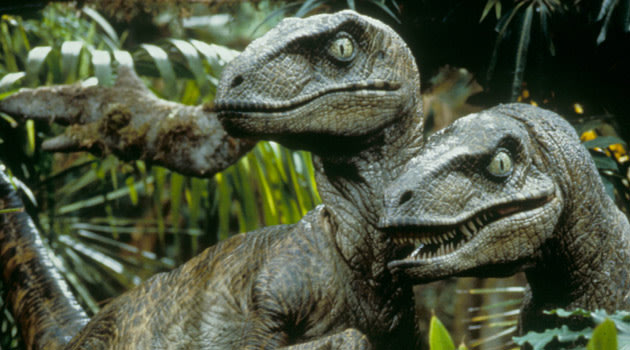
'[Veloci]Raptor' Sightings

Frequent commenter and now Co-Blogger Troodon Man has a specific interest in Cryptozoology, the rather specialized area of Troodon sightings (similar to the "Raptors" from Jusassic Park)

 Interested readers are invited to visit his blog below. One specific example he has pointed out is the following report.

http://paranormal.about.com/od/livingdinosaurs/a/tales_09_04_15t.htm

Raptor Sighting in Georgia

[Submitted]BY Y. PHILLIPS

By , About.com Guide

This happened to me and my grandpa on a hunting trip in July, 2008. I don't see my grandpa very often, so I always take the chance to take trips with him. Grandpa is pretty much an outdoorsman and enjoys hunting, fishing and just being out in nature.
Grandpa and I were out in the woods. It was around 3 to 3:30 o'clock on Friday the 25th of July. I was 18 at that time. We were on grandpa's land in Georgia. It's a pretty place with the typical Georgia woodland and a few grassy plains. We were walking on a little rocky road heading for a site where grandpa often sees deer. As normal, there were a lot of sounds going on at night in the woods. We ignored most of them and remained quiet to not scare away anything.
Suddenly, we heard an unusual noise we never heard before on our many hunting trips. Grandpa looked at me and listened. Then he raised his finger in front of his mouth to show me that we shouldn't make any more movements. I heard a lot of movement and more of the noise. I can't really describe the sounds, but I sure can describe what I saw, even when it was pretty dark.
We just kept listening to the sounds as suddenly something came walking slowly out of the bushes and onto the road maybe 150 yards in front of us. My eyes got really big, and at that moment I wasn't even scared, just amazed to see this creature. We didn't move. As crazy as it sounds, it looked just like a raptor from the popular Jurassic Park movies.
I just froze because I thought things like that lived many thousands of years ago. It had a long, stiff tail, walked on two feet and had short arms. It looked lizard-like and had a huge claw on both of his feet and smaller claws on his arms. Since the creature appeared to us that it could run fast, we decided to just not move at all. It raised its head in the air and it seemed like it was smelling the air. I estimate its height around 5 feet at the shoulders. After sniffing the air, it made these sounds again and turned around and ran off in the bushes.
Grandpa and I waited until we felt safe again and then quietly made our way back to the truck and drove home. In the truck, we talked to each other about what we had seen and decided to not tell it to grandma because she would think we were crazy.
I never believed in stuff like ghosts and creatures and paranormal stuff, and I still don't believe in ghosts. But since that encounter, I believe in creatures that science doesn't know about. That's my story, as odd as it sounds. I know what I saw.

Associated with this sighting in the string of postings were a couple of others:
http://paranormal.about.com/library/blstory_january06_16.htm

Your True Tales
January 2006
Page 16

Raptor in Oklahoma
by Bruce

In late June of 2005, I headed south on Highway 169 from my home in eastern Kansas to Tulsa, Oklahoma to attend a youth baseball tournament that my son's team was playing in. My wife had gone on ahead the previous day and I was traveling alone. It was late in the day, a few minutes before sunset on a bright sunny and hot day, and I was just north of Tulsa in a suburb whose name now escapes me.
Suddenly, a strange creature darted across the road directly in front of my pickup and I got a clear look at it (because of the time of day and the nearness of the creature). It looked for all the world like a small dinosaur out of a Hollywood film, perhaps a velociraptor from Jurassic Park or something like that, because it ran upright on the two large back legs, with the smaller, front legs carried close to the torso rather like a human sprinter would do. Its head was tilted back and the mouth slightly open exposing a set of fearsome fangs while the eyes had a wild, fixed expression and were so wide open as to be slightly bug-eyed in appearnance.
It was shockingly fast, and appeared and disappeared in a moment, but not so fast that I didn't get an absolutely clear look at it. It was not a cat, dog, squirrel, fox, possum, raccoon or any other animal that I had ever seen, and I live in the woods and see these more common animals all the time around here. I have seen other references to this kind of animal on the Net, but now recently. What I haven't seen reported elsewhere though, is how absolutely feral and dangerous it looked. I count myself lucky though to have seen it, and hope to see one again.

And some rather less similar reports from Texas and Arkansas, both in regular "Mountain Boomer: territory.

I am keeping an open mind on the matter but so far theses sightings sound pretty much the same as the usual "River Liz/Mini-Rex sort, only some of them are from east of the Mississippi River, which is unusual, and there is a seeming complication in that the more common "Lizard Man" sightings also have a recognizably distinct subtype that has a long tail and looks like a small dinosaur.

As of right now I am considering the matter and alsothe regular Lizardman sightings. Despite Tyler Stone and despite Coleman and Huyghe, I am not so certain the Lizardman sightings fit very easily into the Freshwater Monkeys/Merfolk category either. More work needs to be done.
See Troodon Man's blog:
http://www.mysteriouszoology.blogspot.com/

See Also Raptormania if you have an interest in the topic.
http://albertonykus.blogspot.com/

Incidentally I have always wondered if Charles R Knight's "Laelaps" was actually a Dromeosaurid whose larger foot claw was not recovered and so the relationship was not realized.


Wednesday, 7 September 2011

Followup on Reptoids and Dinosauroids

Blogger is preventing me from posting comments on my own blogs again. I think it started when I was adding more material on the Sucuriju Gigante posts earlier, and along the way the blogger shut off and I was not allowed to post any more. No matter, we know the drill here: If I can't post comments, I post another followup blog entry.
 This is the exchange of opinions between Tyler and me following the Reptoids posting: 

Hi Dale, Sorry for the length of time since our last conversation. I just started high school and the combination of homework and sports has really cut into my time. Anyway, while I have some spare time I thought I'd add a couple quick comments:

1. The damage done to the Rawson vehicle in 2008 actually WAS from an animal chewing on the car. Blood samples were taken and later came back as being from a domestic dog. There were further tests on an identical car using a model jaw and a strain gauge which showed that the bite force needed to cause damage like that seen on the Rawson vehicle was within the range of a domestic dog. I have no idea why this dog was attacking the car, but I think we can safely say that a domestic dog WAS responsible.

2. The "Dinosauroid" model, while an interesting idea, is actually an impossible one. The Troodon model used is extremely outdated; we have fossils of other Troodontids with feathers, which suggests that Troodon probably had them too. A more accurate model would look like this:
If a Troodon WERE to evolve into a humanoid creature, it would more logically become an Owlman/Birdman, as opposed to a Lizardman.

That being said, I think it's still an interesting idea and would make for a great piece of science fiction. Hope everything is alright where you are.

Best regards, Tyler Stone

FROM:Dale Drinnon TO:Tyler Stone Tuesday, September 6, 2011 9:36 PM

 Thank you for mentioning the dog, I did not have that information. I have no idea what possessed the thing to act that way.
 I acknowledged that Darren Naish had criticized Dale Russell's version of the Dinosauroid and that he thought that the evolution of the Troodontids would more likely go another way [A more birdlike direction]. I said that was probably true.
BUT
 I also said that there is really no way to predetermine which way evolution would or could go, and that it was still possible that a small carnivorous dinosaur could evolve into a Dinosauroid. And that is the simple truth: it is possible and there is no really good reason for saying it could not happen, only the opinion that it was less likely to happen that way. There is a world of difference between the two things.

 You also have the WHOLE Diversity of birds evolving in different directions since the Archaeorns in the Mesozoic, something roughly like the time scale we are talking about here: and the end results of that radiation can be as visually different as a penguin, an ostrich, a peacock and a condor. So by that analogy there is no reason why the Troodontids could not have evolved into Dinosauroids AND into the sorts of things you mention. And as to being feathered or featherless, we are back to the same Dinosauroids as on the Penguin end of the scale rather than on the more typically "Bird" looking end of the scale.Perhaps they went through their own "Aquatic Ape" phase.

 And so I respectfully disagree with you. And should Darren Naish happen to pop in, I should in all truthfulness tell him the same thing.

So good of you to write, I hope things are well with you.
Best Wishes, Dale D.
FROM:Tyler Stone TO:Dale Drinnon Tuesday, September 6, 2011 10:22 PM

Understood, and I appreciate your comments. I agree, animals cannot be pinpointed as being certain to evolve into one specific creature; my reading of the fossil record simply suggests to expect something with birdlike characteristics, humanoid or not. Then again, my knowledge primarily comes from books.

 I'm not sure when I'll have time to write again, but if I have anything worth sharing soon I'll try sharing it this weekend.
Best regards, Tyler

 I believe Tyler is saying that "Book learning" is not the same thing as working with the theory with a broad knowledge of the field in question. In this case, I believe the "Approved model" for Evolved-Troodon is something that can be looked upon as an immediate result whereas the Dinosauroid would be a much more distant end product, tens of millions of years down the line, with any number of other possibilities in between as part of an adaptive radiation. And from that basis, I still think the Dinosauroid model is justifiable.
 Best Wishes, Dale D.

[Scale for Troodon, From Wikipedia]
http://www.scientificamerican.com/article.cfm?id=will-e-t-look-like-us

 Scientific American
 Will E.T. Look Like Us? Evolution helps us imagine what aliens might be like

By Michael Shermer | November 5, 2009 |

What are the odds that intelligent, technically advanced aliens would look anything like the ones in films, with an emaciated torso and limbs, spindly fingers and a bulbous, bald head with large, almond-shaped eyes? What are the odds that they would even be humanoid? In a YouTube video, produced by Josh Timonen of the Richard Dawkins​ Foundation for Reason and Science, I argue that the chances are close to zero (www.youtube.com/watch?v=JKAXrmkx12g). Richard Dawkins himself made this interesting observation in a private communication after viewing it:

I would agree with [Shermer] in betting against aliens being bipedal primates, and I think the point is worth making, but I think he greatly overestimates the odds against. [University of Cambridge paleontologist] Simon Conway Morris​, whose authority is not to be dismissed, thinks it positively likely that aliens would be, in effect, bipedal primates. [Harvard University biologist] Ed Wilson gave at least some time to the speculation that, if it had not been for the end-Cretaceous catastrophe, dinosaurs might have produced something like the attached [referring to paleontologist Dale A. Russell’s illustrated evolutionary projection of how a bipedal dinosaur might have evolved into a reptilian humanoid].
 I replied to Dawkins that if something like a smart, technological, bipedal humanoid has a certain level of inevitability because of how evolution unfolds, then it would have happened more than once here. In his 2001 book Nonzero: The Logic of Human Destiny, Robert Wright argues that our existence precludes other terrestrial intelligences of our level from arising. But Neandertals were as close as one can get to a counterfactual experiment: they had hundreds of thousands of years to themselves in Europe without our interference and showed nothing like the technological and cultural progress of the modern humans who displaced them. Dawkins’s rejoinder to me is enlightening:
 But you are leaping from one extreme to the other. In the film vignette, you implied a quite staggering rarity, so rare that you don’t expect two humanoid life-forms in the entire universe. Now you are ... pointing out, correctly, that a certain inevitability would predict that humanoids should have evolved more than once on Earth! So, yes, we can say that humanoids are fairly improbable, but not necessarily all that improbable! Anything approaching “a certain inevitability” would mean millions or even billions of humanoid life-forms in the universe, simply because the number of available planets is so huge. Now, my guess is intermediate between your two extremes ... I suspect that humanoids are not so very rare as to justify the statistical superlatives that you permitted yourself in the vignette.
Good point. But of the 60 to 80 phyla of animals, only one, the chordates, led to intelligence, and only the vertebrates actually developed it. Of all the vertebrates, only mammals evolved brains big enough for higher intelligence. And of the 24 orders of mammals only one—ours, the primates—has technological intelligence. As the late Harvard evolutionary biologist Ernst Mayr​ concluded: “Nothing demonstrates the improbability of the origin of high intelligence better than the millions of phyletic lineages that failed to achieve it.” In fact, Mayr calculated that even though there have evolved perhaps as many as 50 billion species on Earth, “only one of these achieved the kind of intelligence needed to establish a civilization.”

The late astronomer Carl Sagan​, in a Planetary Society debate with Mayr (Bioastronomy News, Vol. 7, No. 4, 1995), noted that technologically communicating species “may live on the land or in the sea or air. They may have unimaginable chemistries, shapes, sizes, colors, appendages and opinions. We are not requiring that they follow the particular route that led to the evolution of humans. There may be many different evolutionary pathways, each unlikely, but the sum of the number of pathways to intelligence may nevertheless be quite substantial.” .Thus, the probability of intelligent life evolving elsewhere in the cosmos may be very high even while the odds of it being humanoid may be very low. I strongly suspect that we are blinded by Protagoras’ bias (“Man is the measure of all things”) when we project ourselves into the alien Other. .
Image: Matt Collins, after an illustration by Dale A. Russell in Reconstructions of the Small Cretaceous Theropod Stenonychosaurus Inequalis And A Hypothetical Dinosauroid, by D. A. Russell and R. Séguin, National Museums of Canada, National Museum of Natural Sciences, 1982