

FRONTIERS OF ZOOLOGY
Dale A. Drinnon has been a researcher in the field of Cryptozoology for the past 30+ years and has corresponded with Bernard Heuvelmans and Ivan T. Sanderson. He has a degree in Anthropology from Indiana University and is a freelance artist and writer. Motto: "I would rather be right and entirely alone than wrong in the company with all the rest of the world"--Ambroise Pare', "the father of modern surgery", in his refutation of fake unicorn horns.
Showing posts with label Whale-Eater (Cetiovore). Show all posts
Showing posts with label Whale-Eater (Cetiovore). Show all posts
Monday, 26 May 2014
Preadators Scale
The fifteeen largest known active predators, extinct or alive. Larger graphic here: http://bit.ly/124gg5A

Thursday, 22 May 2014
The Whale Eater Strikes
This was shared with the Zombie Plesiosaur Society on Facebook.
I'd say this is independent evidence of and good evidence for the Whale-eater theory I have been promoting the last several years. After a little research I found out the traditional name actually is "Whale Eater" after you translate it, in many locations.


A rescuer examines a female fin whale, which lies alive and stranded on the beach at Carlyon Bay on August 13, 2012 in St Austell, England. (Matt Cardy/Getty Images) Aug 22, 2012 http://darkroom.baltimoresun.com/2012/08/getty-photographer-matt-cardy-on-a-stranded-fin-whale-that-died-off-the-st-austell-coast/#1
He says it was the first time for him photographing a distressed whale and a first time for most of the rescuers to have dealt with such a large mammal at 20 meters (65 ft). Fin whales are the second largest animal on the planet and an endangered species.
According to Cardy, he was listening to the 7 p.m. BBC headlines in his car when the broadcast reported news of the whale. A quick check of his satellite navigation, revealed that he was less than an hour away, so he headed to the beach – a random chance that he was so close that evening.
Below, he describes the surreal scene.

Rescuers examine a female fin whale, which lies alive and stranded on the beach at Carlyon Bay on August 13, 2012 in St Austell, England. Fin whales are globally an endangered species and the second largest animal on the planet. (Matt Cardy/Getty Images)
When I arrived, it was bedlam. Cars were parked everywhere and people were making their way to the beach. The whale had been reported only a few hours before and was already attracting a large crowd of onlookers. It had washed up on a private beach (unusual in the UK) and they had closed the car park. Luckily, I showed my press card and talked the security guards into letting me drive rather than walk the 30 minutes down the path to the beach. That was critical as the sun had set and the light was fading fast. As I got onto the beach, hundreds of people were lining a cordon that had been set up to give the animal some space.
The crowd were very somber and quiet. As soon as I arrived, I was told that there was little anybody could do as the animal was too sick to be helped.
I was allowed into the cordon to photograph the whale at a much nearer distance. I used a Canon 70-200mm f2.8 and a 24-105mm lens on 2x 5D Mark II’s, shifting to 3200 ISO at a 60/sec. Eventually, the animal went through what we later realized were its death throes, opening its mouth and swashing its tail. After 15 minutes or so, it settled down, and the rescuers examined it and pronounced it dead.It was a very sad end to an event that had happened all really quickly.
—
Edited by Stokely Baksh


Rescuers attempted to save a female fin whale that died after it was stranded on the beach at Carlyon Bay on August 13, 2012 in St Austell, England. Initially, they had hoped to refloat the 65 ft fin whale. (Matt Cardy/Getty Images)


I'd say this is independent evidence of and good evidence for the Whale-eater theory I have been promoting the last several years. After a little research I found out the traditional name actually is "Whale Eater" after you translate it, in many locations.
Getty Photographer Matt Cardy on a stranded fin whale that died off the St Austell coast
Getty photographer Matt Cardy photographed a fin whale that was stranded on a beach off the St Austell coast in England on August 13.He says it was the first time for him photographing a distressed whale and a first time for most of the rescuers to have dealt with such a large mammal at 20 meters (65 ft). Fin whales are the second largest animal on the planet and an endangered species.
According to Cardy, he was listening to the 7 p.m. BBC headlines in his car when the broadcast reported news of the whale. A quick check of his satellite navigation, revealed that he was less than an hour away, so he headed to the beach – a random chance that he was so close that evening.
Below, he describes the surreal scene.
The crowd were very somber and quiet. As soon as I arrived, I was told that there was little anybody could do as the animal was too sick to be helped.
I was allowed into the cordon to photograph the whale at a much nearer distance. I used a Canon 70-200mm f2.8 and a 24-105mm lens on 2x 5D Mark II’s, shifting to 3200 ISO at a 60/sec. Eventually, the animal went through what we later realized were its death throes, opening its mouth and swashing its tail. After 15 minutes or so, it settled down, and the rescuers examined it and pronounced it dead.It was a very sad end to an event that had happened all really quickly.
—
Edited by Stokely Baksh
[Closeup of the wounds on the head. Something with enormous elongated jaws had seized the whale and was worrying it to death. The whale escaped but was traumatised and eventually beached itself in a state of starvation. This was not the bite of a sperm whale or any other known large marine predator.-DD]
Scott Mardis sent in a second copy of this report (filling in the pages that had not printed in the first posting of this blog article owing to a technical glitch) and he added a couple of additional illustrations
 And he adds "This is not the bite of a sperm whale, the tooth row is different"
 And yes I have records of similar bite marks reported from before. This is the first time they have been photographed and so well documented. But I had heard of such things as far back as the 1970s when I was going through Ivan Sanderson's archives. Reports at that time were unsubstantiated allegations only, unfortunately. we needed to wait forty years more before we had good documentation. Special thanks to Max Hawthorne for doing so well on this report.
Sunday, 15 September 2013
Wiwiliámecq’ and the New England Whale-Eater

http://www.native-languages.org/weewillmekq.htm
Name: Weewillmekq
Tribal affiliation: Maliseet, Passamaquoddy
Alternate spellings: Wiwilomeq, Wiwilmekw, Wiwilmeku, Weewilmekq, Wiwillmekq', Wiwilameq, Wiwilemekw, Wiwila'mecq, Wewillemuck, Wiwiliamecq', Wiwil'mekq, Wiwilmeku, Wee-Will-l'mick, Wee-wil-li-ah-mek, Wee-wil-'l-mekqu'
Pronunciation: wee-will-uh-meck-w
Type: Lake monster, serpent
Related figures in other tribes: Axxea (Cheyenne), Apotamkin (Passamaquoddy) Axxea Although this monster features in several Wabanaki tales, little information about it has survived. It was certainly a water monster, but is variously described as resembling a giant snail, leech or slug, worm, or alligator. Some Wabanaki people believe Weewillmekq was actually the same creature as Kci Athusoss, but in other legends the two monsters were said to fight one another.
[Kci-Athussos is an underwater horned serpent, common to the legends of most Algonquian tribes. It is said to lurk in lakes and eat humans. Its Maliseet-Passamaquoddy name literally means Great Serpent.]
Weewillmekq Stories
 The Magic of the Weewillmekq'
  The Dance of Old Age:
 Stories about the magic healing powers of the horns of the Wiwilomeq.
How a Woman Lost a Gun for Fear of the Weewillmekq':19th-century story about a boastful woman who was not as brave as she claimed to be.
Jipijka'm and Weewillmekq':Tales about the Mi'kmaq and Maliseet horned serpents.
Weewilmekq and Kitchi-at'Husis:Story of a fight between two Wabanaki water monsters.
Recommended Books of Related Native American Legends
Giants of the Dawnland:Good collection of Wabanaki legends told by a Penobscot Indian author.
On the Trail of Elder Brother:Another good book of traditional stories told by a Mi'kmaq author and illustrator.
Algonquian Spirit:Excellent anthology of stories, songs, and oral history from the Maliseet and other Algonquian tribes.
When the Chenoo Howls:Eerie collection of Native American ghost stories and monster tales.
In this case we do have a traditional Horned serpent which is alternatively said to be like a snail or a worm, the horns in this case meaning to be like snail's horns. The length of this one is given as approximately 30-50 feet and it is probably based on the standard Longneck (although mistaken impressions of other natural phenomena and other traditions got grafted onto it). The other component is the Alligator like form that was one of the originally different things that got grafted onto the tradition, and the Alligator like one is the one depicted in the carving at the top of this entry. It is twice the length of the other, 60-100 feet long according to other references.
George Eberhart's Mysterious Creatures describes the creature in this way:
Wiwiliámecq’
FRESHWATER MONSTER of northeastern North America.Etymology: Abnaki-Penobscot and Malecite- Passamaquoddy (Algonquian), “snail.” Variant names: Weewilmekq, Wiwil’mékq, Wiwilmeku.
Physical description: Serpentine. Length, 30–40 feet. Soft horns. Behavior: Lurks under waterfalls. Habitat: Both freshwater and saltwater. Distribution: Boyden Lake, Maine; New Brunswick, Canada. Significant sighting: The eighteenth-century Penobscot shaman Old John Neptune (or, more probably, a similarly named ancestor) battled an enemy Micmac warrior who took the form of his familiar spirit, a huge water snake, on the east side of Boyden Lake. Sources: Charles Leland, Algonquin Legends of New England (Boston: Houghton Mifflin, 1884), pp. 324–329, 345–347; Albert S. Gatschet, “Water-Monsters of American Aborigines,” Journal of American Folklore 12 (1899): 255–260; Fannie Hardy Eckstorm, Old John Neptune and Other Maine Indian Shamans (Portland, Me.: Southworth- Anthoensen Press, 1945), pp. 39–48.
In other words the battle would have looked like THIS:

And both types of Sea Serpent are reported in the Massachussets Bay area. We have had a few mentions of the situation recently with this as an outstanding example:
#72: South Pacific [position undisclosed (Actually NW of the Marquesas)], 1852. A whaling vessel [The Monongahela-DD] encountered something that captain and crew did not recognize as being any sort of whale. It was black, serpentine and moved with a snake-like motion. After some debate, they decided to chase the thing as they would a whale, harpooning it and killing it. It was 103' long. with a 6' diameter neck, widening to 8' at "shoulders". The body was about 16' at its broadest. The tail diminished to a point. The head was flat-topped and elongated. Its tongue was tipped with a "heart-shape". It had 94 teeth. Two spout holes, and four webbed paws. The back was black, the sides brown, and the belly yellow. They dismembered the thing as they would a Whale, but decided not to try to bring any of the bulk of it home. [I believe that some accident also occurred which flushed the evidence-ITS]. Oh well, such is Cryptozoology. [The Monongahela was later wrecked with a loss of all hands after the message was sent home by another ship in a parcel of letters. The authenticity of the letters was vouched for by the captain's surviving relatives and the letters together with the accompanying affidavits are now in the archives of the New Bedford Whaling museum. Several important points which needed to be specified!-DD]
#73: New Bedford, MA, 1964. An animal 50' long was seen just 50-100' off starboard. Water was "Flat and calm as a mill pond". The head was shaped alligator-ish, with lumps all along its midline, like camel humps. Head was also huge, about 20' long. The thing had a blow-hole, but was without a discernible neck. Body was dark but with white spotting. Its tail was like a lobster's and it flapped it upon the water. It paralleled the boat for some time and seemed "friendly". [Hey boys, come on in; the water's fine...]. [This one sighted by the Blue Sea was likely a whale but it is usually included together with the next one because both have "Alligator heads"-DD]
#74: New Bedford, MA, 1957. A creature with a very large body [of which 40' could be seen out of the water], was estimated at weighing over 35-40 tons. It had a seal-like shaped body but a long neck which held its head 26' out of the water. The head was "alligator-ish". It sported a mane of bristly hair.[The Noreen report, probably a "Whale-Eater" or the same as the Monongahela creature, and the midline crest is more ordinarily called a fin-DD]
The head and neck Periscope of the Whale-Eater type is commonly estimated to measure 25 feet, 10 feet of neck and 15 for the head, and this is also given in the case of the Monongehela creature. Hence it is not really the long neck that is so distinctive as it is the big head. Sightings of creatures with the head "the size of a rowboat" are uncommon but are on record off both New England and also Scandinavia, and sometimes in association with trains of the very large humps that could be due to pods of whales (hence the very largest "Super-otters" of absolutely fantastic dimensions) So once again we have our Whale-eater out chasing whales.
Friday, 23 August 2013
More Comparisons of Longnecked SeaSerpent Models

The standard Heuvelmans model Longneck is above. However, on the internet you will find such alternatives as the one directly below, which seems to have been influenced by some conceptions representing the Loch Ness Monster as "Nessiteras Rhombopteryx"

The head on this representation is way too small, but enlarging the head results in a decent depiction for the Hoy Island/Mackintosh Bell 1918 Sea serpent category and this is the one I was willing to allow to retain the name of Megalotaria because the basic concept and appearance for Heuvelmans' category is based on this type. 15 feet would be the normal adult size for the creature and not a minimum: a Scientific description exists for a 7 foot long pup and the biggest adult male should not be more than three times the length of the pup (Which Heuvelmans states himself in connection to the Hoy SS sighting. that would be just over 20 feet or a little under 7 meters)" Here are the categories of Sea-Serpents proposed by Heuvelmans, incorporating some more recent analyses by Loren Coleman, Patrick Huyghe, and Bruce Champagne. My illustrations are based on those of Heuvelmans:
"1. Long-Necked or Megalotaria longicollis (“giant sea lion with a long neck”)—A 15- to 65-foot-long, plesiosaur-like creature with a long neck, several humps, and the ability to move in vertical undulations. The head has a distinctive horse-like or “cameloid” appearance, and hair and whiskers have been reported. Believed to be a long-necked, short-tailed sea lion. Seen worldwide, with 82 reported sightings."
Once again the given proportions for the 1918 Hoy SS are that the neck is about half the length of the body, about as long as the body is thick, and about a quarter as thick as it is long (Presumably near the base).

The reconstruction can be made to approximate a more typical Longneck if we move the illustrated portion ahead and allow a length of the neck is in the water and not showing because it is submerged. Several models for the Loch Ness Monster assume a shorter neck and estimates range from 1/4 of the whole length down to 1/6 or less: and Oudemans made the head and neck out as 1/5 of the length. these shorter estimates would all stem from observations of only part of the neck showing.

Below are Tim Morris' representations of the Longnecks as categorized by Heuvelmans and Bruce Champagne. The latter system contains two Long-necked subtypes, and both of them have tails.

Lord Geekington summarises the two Long-necked subtypes out of the Champagne system as follows:
Type 1: "Long-necked"Below once again is the very useful comparison chart made by Tim Morris which contains the images excerpted above:
These are reports that, of course, are of long necked animals. Confusingly, other types have this characteristic (3, 4B), but presumably other characters took precedence. This type is somewhat comparable to the long-necked/merhorse/super-otter classification of Heuvelmans and the "waterhorse" category of Coleman and Huyghe. Unlike previous authors, it has been divided into two sub-types.
Type 1A:
This "long necked" is primarily distinguished by a head of the same or slightly smaller diameter than the neck. Type 1As are reported worldwide, but appear most in boreal climate zones. They aren't even limited to salt water and have apparently been sighted several kilometers inland in fresh water, possibly to breed. Champagne also suggests that this type is a pinniped and a relatively large one at 2.5-12 (9 avg) meters in reported length [=8.5 (!) to 40 feet long, 30 feet average. I am comfortable with the 30-40 foot usual adult size range.-DD]. Given peoples' tendency to exaggerate, I'd suggest that this type could fall within the mass range of pinnipeds [calculating the mass by given volume, it essentially is just about the same mass as an elephant seal-DD]. The proposition of a long necked and tailed pinniped raises a lot of questions. Pinniped necks actually aren't longer than a dog's ('cept Acrophoca see Darren of course [ERROR!Acrophoca's neck is NOT longer than a sea lion's]) and tend to be immensely thick to boot. Pinnipeds have very short tails, and [Heuvelmans, Costello and] the Coleman/Huyghe book suggested that reports of a long tail are due to the rear limbs. The superficial plesiosaur or elasmosaur-like body coupled with a pinniped-style flexible neck makes this type quite unique and would presumably indicate an unknown niche. The idea of a pinniped being fully adapted to a marine life and taking on a new form doesn't seem too outlandish, and at least this type resembles common sightings. The lack of resemblance to anything in the fossil record is still a major problem of course.[The obvious resemblance to Plesiosaurs suggests a different interpretation to Karl Shuker and to most observers, ie, that it actually IS a Plesiosaur. The supposed problem with the neck flexibility is more of a problem with Elasmosaurs in particular rather than all Plesiosaurs in general-DD]
Type 1B:
This "type" is only known from 5 sightings in the North Atlantic and is distinguished by a head larger in diameter than the neck. It is supposedly much larger (17 meters+/ over 55 feet, or the "Average length of 60 feet" given by Heuvelmans-DD]) than the 1A and displays more "primitive" characteristics and different behaviors (frequently associates with cetaceans, etc). Oh, these illustrations are ones that I did a while back, so you'll see I chose to portray it as a more robust "1A" type animal as opposed to another lineage of long-necked creature. Limbs were never observed and only inferred to exist by presumed relations. The proposed anatomy of this type is even stranger than the 1A, and I don't know what to think of a massive head on a long neck. Judging by the lack of sightings or apparently much detail, I'm suggesting that future analyses will probably just absorb these sightings into the "1A" or maybe "type 3" classification. Ah, to lump or to split, the eternal question. [I reviewed the cases of Longnecks associated with Cetaceans in an earlier blog, I saw no difference in head size from the common Longnecks and no differences from the more common Longneck sightings, period.-DD]


In a different matter,
While discussing the Marine Saurian of Heuvelmans with Jay Cooney, I mentioned that some of the "Many Humped" creatures could have been in that category since the "humps" were being produced by the wake and not a permanent feature of the anatomy. I then suggested that some of the Massachussets bay sea serpents (some of them were "Alligator-headed*) and Scandinavian "Super-otters" could have been the larger kind of Marine Sauran, the Whale-Eater, and that some reports with very large humps in a row could be such creatures stalking small pods of large whales. This would be why the Coleman/Huyghe Classic Sea Serpent resembles a "Marine Saurian" in design.

"Classic Sea Serpent: A quadrupedal, elongated animal with the appearance of many humps when swimming. Essentially a composite of the many humped, super otter, and super eels types."
In my statistical analysis of Sea Serpent reports (edition sent in to the SITU in 1980), I did make mention of the fact that suspected reports of zueglodonts. Mosasaurs and Giant eels tended to fall together statistically and were different to sort out from internal criteria.
(* footnote: Heuvelmans refers to a series of "Alligator headed" Sea Serpent reports from the area of Nantucket in the 1960s as being "Typical": he has qualms about one of the reports stating it had a long neck and he assume that somehow a reported neck 2'6" long became reported as 26 feet long . This is the Noreen sighting. I had not noticed before but a head and neck length of 25 feet for the whale-eater Marine saurian is absolutely typical! -In the Wake of the Sea Serpents, page 527)
Friday, 9 August 2013
Osborne SS Whale-Eater?

Jay Cooney was looking at photos of the HMS Osborne Sea Serpent sighting and he thought it could indicate the presence of a large Marine Saurian type Sea Serpent. Because of the suggestion, it is best to review the case once more:
In June 1877 the Lords Commissioners of the Admiralty received official reports from the Royal Yacht Osborne, forwarded by Commander Pearson, regarding the sighting of an unidentified marine creature seen on the second day of that month off Cape Vito, Sicily.
Commander Pearson’s report read: -
“I myself saw the fish through a telescope, but at too great a distance (about 400 yards) to be able to give a detailed description; but I distinctly saw the seal-shaped head, of immense size, large flappers, and part of a huge body.”
Lieutenant Douglas Forsyth’s report, written at sea on June 4th is as follows,
Another officer, Lieutenant Haynes, reported“At 5 p.m. on the 2nd inst., while passing Cape St. Vito, north coast of Sicily, I observed a large, black-looking object on the starboard quarter, distant about two cables [a cable is 240 yards]; and on examining it with a telescope, I found it to be a huge monster, having a head about fifteen to twenty feet in length. The breadth I could not observe. The head was round, and full at the crown. The animal was slowly swimming in a south-easterly direction, propelling itself by means of two large flappers or fins, somewhat in the manner of a seal. I also saw a portion of the body of the animal, and that part was certainly not under forty-five or fifty feet in length.”
“On the evening of June 2, the sea being perfectly smooth, my attention was first called by seeing a ridge of fins above the surface of the water, extending about thirty feet, and varying from five to six feet in height. On inspecting it by means of a telescope, at about one and a half cables' distance, I distinctly saw a head, two flappers, and about thirty feet of an animal's shoulder. The head, as nearly as I could judge, was about six feet thick, the neck narrower, about four to five feet, the shoulder about fifteen feet across, and the flappers each about fifteen feet in length. The movements of the flappers were those of a turtle, and the animal resembled a huge seal, the resemblance being strongest about the back of the head. I could not see the length of the head, but from its crown or top to just below the shoulder (where it became immersed) I should reckon about fifty feet. The tail end I did not see, it being under water unless the ridge of fins to which my attention was first attracted, and which had disappeared by the time I got a telescope, was really the continuation of the shoulder to the end of the body. The animal's head was not always above water, but was thrown upwards, remaining above for a few seconds at a time, and then disappearing. There was an entire absence of ‘blowing’ or ‘spouting’.”
Mr. Moore, engineer of the Osborne, writes,
(if the fins were 6-8 feet high out of the water then they are certainly staged out over well more than 40 feet by that scale. It is more likely a hundred feet or more given the spacing of the fins)“When looking over the starboard quarter of the ship, my attention was called by observing an uneven ridge of what appeared to me to be the fins of a fish above the surface of the water, about a cable's length distance from the ship. They varied in height, as near as I can judge, from seven to eight feet above water, and extended about forty feet along the surface. Not having a telescope with me, I regret I am unable to give a further description.”

Jay had noticed that one of the officers had seen an animal with the face of an alligator while the other officers described something they compared to a very large seal or turtle. Jay thought the ridge of pointed fins could be on the back of a large Marine Saurian This would then be comparable to the creature seen by the schooner Eagle off of Virginia, which had a head over 10 feet long and a total length of 75 feet. These proportions are in the range of the larger Marine Saurian, Dr, Shucker's Leviathan. The eagle creature was also reported to have a row of pointed projections on the back, possibly a row of fins as in the illustration for the Osborne creature. "Pristichampsus" (Tim Morris) has put his artistic interpretation of the Eagle creature on Deviantart and it is reprinted below

Since there is a pretty definite tradition of a whale-eater around Ireland that chases Humpback whales until they "Fly" out of the water in an attempt to escape (The story of the Gorramolooch and the Bo-Dre-More) it is just possible we have a different encounter of the same type as witnessed around Sicily instead. The fins may belong on the back of the Whale-eater as Jay guesses, but they could also belong to some innocent bystander basking sharks, or some opportunistic predatory sharks foillowing along after the Whale-eater in hopes of scavenging from a meal left by the larger creature.
I still feel the "Turtlelike" creature with the 15 foot flippers is a humpback whale, but from the description given, there could very well have been at least two creatures or sets of creatures.
Saturday, 3 August 2013
"Enemies of the Architeuthis"
There is a somewhat peculiar exchange of views between Ivan Sanderson and Bernard Heuvelmans recorded in the Conclusions part of In The Wake of the Sea Serpents. On page 556 and under the "Merhorse" heading, Heuvelmans quotes a message from Sanderson as saying:

I had thought I had a marvelous statement to indicate giant squid were part of the Whale-eater's regular diet, but in checking this story out I find no indication of what the giant squid night be called, I find no indication that giant squid are ever found anywhere near the Aru islands, nor yet near New Caledonia, at all. They tend to avoid the tropics. So actually we have no confirmation for either Sanderson's or Heuvelmans' statements quoted here.

https://en.wikipedia.org/wiki/Giant_squid Distribution of giant squid from strandings (map)
However I don't think either man was actually making anything up out of whole cloth. So I hold onto
some hope that giant mosasaurs [As the originals for Leviathans, Whale-eaters and the largest form of "Merhorse"] regularly kill and eat giant squids on our world and in our time.
 http://necromoprhvsfellowship.blogspot.com/2012/08/magneto-vs-sarah-kerrigan-battle.html
ADDENDUM: Jay Cooney and I were discussing the matter on Facebook after the original publication of this blog. Jay Cooney started in with this comment: "I've seen American science documentaries refer to non-Architeuthis squid as 'giant squids.' So I think it's likely that Heuvelmans and Sanderson heard "giant squids" and interpreted it as thus. Or, maybe there just haven't been any recorded beaching a of Architeuthis in that region"
And so I replied:"Both of them [Sanderson and Heuvelmans] thought the genus was cosmopolitan. And in this case it probably was such a thing as informants said 'giant octopus/squid' and they were understood as referring to Architeuthis, which was the only genus of giant squids commonly known at the time. Now we also do have lesser genera of squids related to Architeuthis but not so large and often confused with them: perhaps it was one of those other ones.The thing to do is to see which of those other genera is a likely candidate in that range"
" I may cut this conversation out and paste it on that blog, I think we have hit on something"
And so Jay Cooney replied: "Yeah, I think that's likely. Sounds good Dale."
It would seem that the Bigfin Squid would be a good candidate, it has very long arms and is largely tropical in range. I have seen videos of this squid mistakenly identified as Architeuthis:
http://en.wikipedia.org/wiki/Bigfin_squid
But there are several other squids in the mantle length of a meter or more range, Architeuthis accepted as 2.25 meters: http://en.wikipedia.org/wiki/Cephalopod_size

Natives of the Arufra Sea and notably in the Aru Islands [near to Irian Jaya, Western New Guinea-DD] call them the equivalent of 'Enemies of the Architeuthis' and assert that if grabbed while feeding inside a reef by the long arms of a giant squid lying on the outside of the reef, they will just chop off said arms and eat them, or pull the cephalopod over the reef by brute force.Which elicits the reply from Heuvelmans "This reputation of enmity may be formed on an accidental observation of a duel between a Merhorse and a giant squid which have come to the surface from the depths where they both regularly live" and before the block quote Heuvelmans states "The Arufura Sea which connects to the Coral Sea, where there are many sightings of Merhorses" (perhaps half a dozen, but some of Heuvelmans' reports of "Merhorses" in the Coral Sea include some obvious elephant seals on the Great Barrier Reef of Australia) And before one gets too cheerful about the Coral Sea being connected to the Arufura sea, we are talking about islands about three thousand miles apart when we are talking about the Aru Islands and New Caledonia.

I had thought I had a marvelous statement to indicate giant squid were part of the Whale-eater's regular diet, but in checking this story out I find no indication of what the giant squid night be called, I find no indication that giant squid are ever found anywhere near the Aru islands, nor yet near New Caledonia, at all. They tend to avoid the tropics. So actually we have no confirmation for either Sanderson's or Heuvelmans' statements quoted here.

https://en.wikipedia.org/wiki/Giant_squid Distribution of giant squid from strandings (map)
However I don't think either man was actually making anything up out of whole cloth. So I hold onto
some hope that giant mosasaurs [As the originals for Leviathans, Whale-eaters and the largest form of "Merhorse"] regularly kill and eat giant squids on our world and in our time.

ADDENDUM: Jay Cooney and I were discussing the matter on Facebook after the original publication of this blog. Jay Cooney started in with this comment: "I've seen American science documentaries refer to non-Architeuthis squid as 'giant squids.' So I think it's likely that Heuvelmans and Sanderson heard "giant squids" and interpreted it as thus. Or, maybe there just haven't been any recorded beaching a of Architeuthis in that region"
And so I replied:"Both of them [Sanderson and Heuvelmans] thought the genus was cosmopolitan. And in this case it probably was such a thing as informants said 'giant octopus/squid' and they were understood as referring to Architeuthis, which was the only genus of giant squids commonly known at the time. Now we also do have lesser genera of squids related to Architeuthis but not so large and often confused with them: perhaps it was one of those other ones.The thing to do is to see which of those other genera is a likely candidate in that range"
" I may cut this conversation out and paste it on that blog, I think we have hit on something"
And so Jay Cooney replied: "Yeah, I think that's likely. Sounds good Dale."
It would seem that the Bigfin Squid would be a good candidate, it has very long arms and is largely tropical in range. I have seen videos of this squid mistakenly identified as Architeuthis:
http://en.wikipedia.org/wiki/Bigfin_squid
But there are several other squids in the mantle length of a meter or more range, Architeuthis accepted as 2.25 meters: http://en.wikipedia.org/wiki/Cephalopod_size

It seems that the tentacles of these squid can be almost 30 feet long and that they feed by blind groping about on the seafloor or at medium depths, seizing anything suitable they might come across. On occasion, such a creature feeding along a reef could mistakenly attach onto a mosasaur by its groping and then you have the scenario presented by Sanderson and Heuvelmans. And so we would have confirmation the whale-eater does feed on big deepsea squids: the possibility they would also feed on Architeuthis within the appropriate range once again also begins to sound more likely.
Thursday, 1 August 2013
Philippino Longneck
 |
| philippine_mythology__bakunawa__i__and_haliya__j__by_binibinieyebagstotz-d4zbpog |
There is apparently one main catchall category for Sea Monsters in the Philippines generally, and it is the exact equivalent to "Taniwha" and literally means "SHARK." It basically means the Whale-Eater but in this case ,the Long-Necked Sea Serpent is depicted but using the same name as used by the whale-eater (the creature serves mythologically both as the Lord of primordial Chaos and as the snake that swallows the sun during a solar eclipse. I imagine the last myth is the original for Jonah and the "Whale." The composite SeaMonster equivalent to Taniwhas is presumably the same as Tompandrano also and there might also be a linguistic connection. In this case, though, we are talking about a standard "Periscope" sighting such as elsewhere seen the whole world over.
The creature has an unusual-looking thing in its mouth which to me resembles a large crab. As far as I am concerned it actually IS a large crab the creature is attempting to eat. The best candidate would be the blue swimming crab or flower crab as it is known in the orient, and this can be something like eigh inches across the carapace: http://en.wikipedia.org/wiki/Portunus_pelagicus
The scale is shown as if the Longneck was about 60 feet long with a head two feet wide and three feet long. The head is shown in a correct shape and proportion for a Longneck, my personal preference is that the size represents a theoretical maximum and not a commonly achieved size. The representation is similar to what is called a Naga further to the West of the Philippines. I am assuming the illustration is based on older traditional prototypes. The size and the shape of the creatures head (Plus the confirmation that Longnecks are observed to feed on squids, octopi, lobsters and crabs as well as fishes) are statements which can be found in the conclusions section of Oudemans' book The Great Sea Serpent.
Thursday, 25 July 2013
The Large End of "Merhorse" Reports
Bernard Heuvelmans recognized that there was an ambiguity in his division of Sea-serpent reports and the determining features he used. He mentioned that his super eel category could be divided up into two different size range categories, one peaking around 30 feet in length and the other about 100. Fairly early on I realized that the same thing also worked for Merhorses,
Manes turned out to be non-determing factor in sorting since most kinds o f Sea Serpents seem to have some sort of a medial backfin or backbone ridge accentuator. But in this case the larger "Merhorses" were associated with other features such as a much shorter and thicker neck and an enormous eye a foot across or "The size of dinner plates"
Below I'm outlining several features from several distinct reports WORLD-WIDE


Above and below, large Mosasaur reconstructions by Charles R Knight, including the medial backfin. The medial fin does have a reason to be there, to provide stability in a very long body swimming, even as Bernard Heuvelmans had argued for a long low stabilizer down the middle of the back for Basislosaurus (zueglodon)


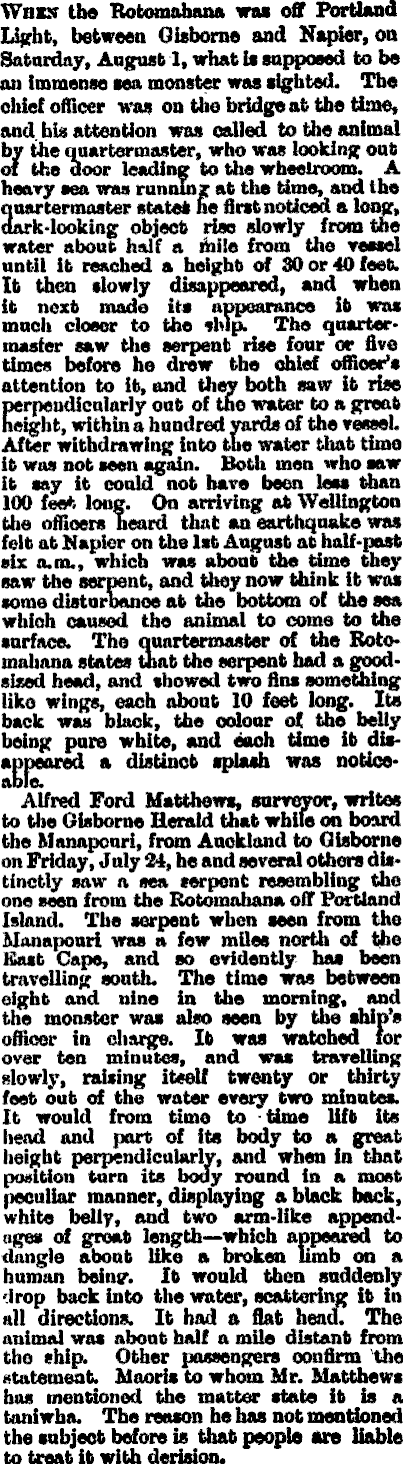
Above the Merhorse variant sighting from the Dart/Captain JM Dawson/ Dundee 1878 report which was said to be suspicious by Heuvelmans in that it was .said to be like no other report.(In the Wake of the Sea Serpents, p 363) But for the fact that it was said to have had a mane down its back, on the contrary, it sounds very much like the famous Rotomahana report that Tony Lucas thinks is a Mosasaur (On the bais of the plan drawing above I would tend to go along with that interpretation now) Below is the Grangense SS used to represent the usual run of "Marine Saurian" reports.
http://laist.com/2009/01/11/weird_los_angeles_7.php
During the early 1900s there were rumors that a strange creature was roaming the Avalon waters, and that some thirty people had seen the monster, but spoke little of it. Baldini was tuna fishing in the southern Californian channels when he first spotted the leviathan. He was ten miles off Catalina when the beast emerged from the water about a mile away. It was no whale. No sea elephant. It was a monster. It was a glistening, dark beast that rose out of the water, and remained exposed for a minute or so before sinking majestically back into the depths.
Baldini chose not to speak of the sighting, despite the possibility of some publicity and small fortune. He respected others who'd seen the beast, and all witnesses he could track down sketched a monster that matched every other sketch he'd seen. Then, in the September of 1920 Ralph had a very close encounter with possibly the same form.

Manes turned out to be non-determing factor in sorting since most kinds o f Sea Serpents seem to have some sort of a medial backfin or backbone ridge accentuator. But in this case the larger "Merhorses" were associated with other features such as a much shorter and thicker neck and an enormous eye a foot across or "The size of dinner plates"
Below I'm outlining several features from several distinct reports WORLD-WIDE


Above and below, large Mosasaur reconstructions by Charles R Knight, including the medial backfin. The medial fin does have a reason to be there, to provide stability in a very long body swimming, even as Bernard Heuvelmans had argued for a long low stabilizer down the middle of the back for Basislosaurus (zueglodon)


 |
| Dart SS_sighting_by_Pristichampsus (Tim Morris) on Deviant art |
 |
| Grangense SS_sighting_by_Pristichampsus (Tim Morris) on Deviant Art |
 |
| The U28 and U108 Sea Serpents in World War I were most likely the same type, Seen in cold waters of the North Sea and North Atlantic in the summer, and said to be about 100 feet long |
http://laist.com/2009/01/11/weird_los_angeles_7.php
Weird Los Angeles: The San Clemente Sea Monster
Believe it or not, Southern California's San Clemente was once a sea serpent haven. The June 1934 issue of Esquire Magazine For Men featured an intriguing article by a Ralph Bandini who spoke quite openly of his two encounters with the San Clemente Monster. In his article "I Saw A Sea Monster," Bandini commented, "San Clemente Island is a lonely, wind-swept bit of rock and sand lying some fifty miles south of Los Angeles Harbor. It is little frequented except by fishermen. Its waters are lonely too...The Thing itself appears to like this remote bit of ocean - that windy channel between San Clemente and Santa Catalina."During the early 1900s there were rumors that a strange creature was roaming the Avalon waters, and that some thirty people had seen the monster, but spoke little of it. Baldini was tuna fishing in the southern Californian channels when he first spotted the leviathan. He was ten miles off Catalina when the beast emerged from the water about a mile away. It was no whale. No sea elephant. It was a monster. It was a glistening, dark beast that rose out of the water, and remained exposed for a minute or so before sinking majestically back into the depths.
Baldini chose not to speak of the sighting, despite the possibility of some publicity and small fortune. He respected others who'd seen the beast, and all witnesses he could track down sketched a monster that matched every other sketch he'd seen. Then, in the September of 1920 Ralph had a very close encounter with possibly the same form.
He was swordfish fishing with a Mr Smith Warren. They'd been positioned at Mosquito Harbor and were passing White Rock when something caught Baldini's eye. Just three-hundred yards away he saw what he described as, "A great barrel-shaped Thing, tapering toward the top and surmounted by a reptilian head strangely resembling those of the huge, prehistoric creatures whose reproductions stand in various museums. It lifted what must have been a good twenty-feet. Widely spaced in the head were two eyes - eyes such as were never conceived of even in the wildest nightmare."
These eyes were around a foot in diameter, like dinner plates, belonging to some great, hulking monster seemingly spewed from one of H.P. Lovecraft's fictional terror tales. But this was real.
The men headed for the creature and got to within one-hundred feet. It appeared as though it was covered in [had a mane they thought was made up of] short, dark bristles, (with) a reddish hue. All that protruded from the water was a huge neck and head. Goodness knows what length and mass lurked beneath the waves it frothed around it. And then it was gone...slipping back into the murky domain.
Only a few witnesses to the San Clemente sea monster remain today. Many have surely never spoken of the great beast, and others died with their secrets. However, what we do know is that out there, somewhere, there still may be one, two, or more sea serpents eluding science, and stirring the waves of legend.
Sources: Strange Ark
These eyes were around a foot in diameter, like dinner plates, belonging to some great, hulking monster seemingly spewed from one of H.P. Lovecraft's fictional terror tales. But this was real.
The men headed for the creature and got to within one-hundred feet. It appeared as though it was covered in [had a mane they thought was made up of] short, dark bristles, (with) a reddish hue. All that protruded from the water was a huge neck and head. Goodness knows what length and mass lurked beneath the waves it frothed around it. And then it was gone...slipping back into the murky domain.
Only a few witnesses to the San Clemente sea monster remain today. Many have surely never spoken of the great beast, and others died with their secrets. However, what we do know is that out there, somewhere, there still may be one, two, or more sea serpents eluding science, and stirring the waves of legend.
Sources: Strange Ark
Contact the author of this article or email tips@laist.com with further questions, comments or tips.
[When Tabitca Cape ran this story on her Crypto-osicty blog I immediately saw it was no typical Merhorse sighting but it did also have several measurements in common with the following famous report, and to the Sea Serpent said to have been killed and flensed by the crew of the Monongahela--]
[When Tabitca Cape ran this story on her Crypto-osicty blog I immediately saw it was no typical Merhorse sighting but it did also have several measurements in common with the following famous report, and to the Sea Serpent said to have been killed and flensed by the crew of the Monongahela--]
On the 12th of December 1857, the ship Castilian, bound from Bombay to Liverpool, was, at six in the evening, about ten miles distant from St. Helena. A monster that suddenly appeared in the water was described by the three chief officers of the ship—Captain G. H. Harrington, Mr. W. Davies, and Mr. E. Wheeler; the description was entered by Captain Harrington in his Official Meteorological Journal, and was forwarded to the Board of Trade. Nothing can be more plain than the honest good faith in which the narrative is written. The chief facts, in the captain's own words, are as follows: 'While myself and officers were standing on the lee-side of the poop, looking towards the island, we were startled by the sight of a huge marine animal, which reared its head out of the water, within twenty yards of the ship; when it suddenly disappeared for about half a minute, and then made its appearance in the same manner again—shewing us distinctly its neck and head, about ten or twelve feet out of the water. Its head was shaped like a long nun-buoy [a conical shape]; and I suppose the diameter to have been seven or eight feet in the largest part, with a kind of scroll, or tuft of loose skin, encircling it about two feet from the top. [The Mane in this case was recognized as a continuous frill of skin and it turned over, hanging down two feet from the top/median line of the spine]
The water was discoloured for several hundred feet from its head: so much so, that on its first appearance my impression was that the ship was in broken water, produced, as I supposed, by some volcanic agency since the last time I passed the island; but the second appearance completely dispelled those fears, and assured us that it was a monster of extraordinary length, which appeared to be moving slowly towards the land. The ship was going too fast, to enable us to reach the mast-head in time to form a correct estimate of its extreme length; but from what we saw from the deck, we conclude that it must have been over two hundred feet long. The boatswain and several of the crew who observed it from the top-gallant fore-castle, state that it was more than double the length of the ship, in which case it must have been five hundred feet. Be that as it may, I am convinced that it belonged to the serpent tribe; it was of a dark colour about the head, and was covered with several white spots.' Captain Harrington, some time afterwards, strengthened his testimony by that of other persons.
The water was discoloured for several hundred feet from its head: so much so, that on its first appearance my impression was that the ship was in broken water, produced, as I supposed, by some volcanic agency since the last time I passed the island; but the second appearance completely dispelled those fears, and assured us that it was a monster of extraordinary length, which appeared to be moving slowly towards the land. The ship was going too fast, to enable us to reach the mast-head in time to form a correct estimate of its extreme length; but from what we saw from the deck, we conclude that it must have been over two hundred feet long. The boatswain and several of the crew who observed it from the top-gallant fore-castle, state that it was more than double the length of the ship, in which case it must have been five hundred feet. Be that as it may, I am convinced that it belonged to the serpent tribe; it was of a dark colour about the head, and was covered with several white spots.' Captain Harrington, some time afterwards, strengthened his testimony by that of other persons.
In Swedish ecclesiastic and writer Olaus Magnus's Carta Marina, many marine monsters of varied form, including an immense sea serpent, appear. Moreover, in his 1555 work History of the Northern Peoples, Magnus gives the following description of a Norwegian sea serpent:
[It would seem that the largest "maned" sea serpents of tradition were of this type, and that the early Sea serpent reports commonly estimated as 100 to 500 feet and upwards were of this type. Heuvelmans does mention that some of the reports in his category were of this great length and it seems that the length could have been exaggerated because the animals were also seen around pods of whales and the estimates of length counted the whales along as part of the same body]
Those who sail up along the coast of Norway to trade or to fish, all tell the remarkable story of how a serpent of fearsome size, 200 feet long and 20 feet wide, resides in rifts and caves outside Bergen. On bright summer nights this serpent leaves the caves to eat calves, lambs and pigs, or it fares out to the sea and feeds on [octopus and jellyfish*], crabs and similar marine animals. It has ell-long hair hanging from its neck, sharp black scales and flaming red eyes. It attacks vessels, grabs and swallows people, as it lifts itself up like a column from the water.[*since the jellyfish species named can grow up to three feet in diameter and with tentacles trailing for 15-20 feet, we are talking a rather substantially-sized prey item. Other versions of the sea-serpents' prey list includes mention of squids and cuttlefish, seals, dolphins and small whales. The livestock items would have gone missing and were more than likely consumed by other humans while the sea-serpent was blamed for the neighbours' thefts. "Standing up like a Pillar" would mean as in the case of the Rotomahana mentioned in the passage above [And presumably also refers to the Physeter of antique maps]. In this case the dimensions would be doubled and the "Hair" a continuous backfin at about a foot or 18 inches high (Depending on the length of the ell as being used at the time-the ell is originally a cubit or 18 inches but several countries use the "Double ell" or yard as the standard and that would have been the "English Ell" at the time Olaus Magnus was originally writing. http://en.wikipedia.org/wiki/Ell ]
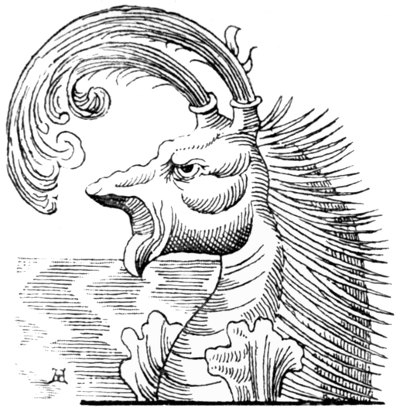 |
| Physeter, Heuvelmans calls a Longneck. Incidentally the large "Whale-eater" Marine Saurians are also reported to "Blow like a whale" when surfacing. |
[It would seem that the largest "maned" sea serpents of tradition were of this type, and that the early Sea serpent reports commonly estimated as 100 to 500 feet and upwards were of this type. Heuvelmans does mention that some of the reports in his category were of this great length and it seems that the length could have been exaggerated because the animals were also seen around pods of whales and the estimates of length counted the whales along as part of the same body]

Combined map for "Marine Saurians" around the world, less the Crocodiles
Subscribe to:
Posts (Atom)