Plug

Member of The Crypto Crew:
http://www.thecryptocrew.com/

Please Also Visit our Sister Blog, Frontiers of Anthropology:

http://frontiers-of-anthropology.blogspot.com/

And the new group for trying out fictional projects (Includes Cryptofiction Projects):

http://cedar-and-willow.blogspot.com/

And Kyle Germann's Blog

http://www.demonhunterscompendium.blogspot.com/

And Jay's Blog, Bizarre Zoology

http://bizarrezoology.blogspot.com/
Showing posts with label Giant Catfishes. Show all posts

Thursday, 28 November 2013

Lake Monsters Map from Atlas Obscura

Jeff Albertson sent in this chart from the Atlas Obscura site:
http://www.atlasobscura.com/articles/map-of-american-lake-monsters


Since I have already offered alternative interpretations for creatures at different locations in earlier entries on this blog, I made up an alternative key showing suggested changes developing from further research by myself and also including suggestions by others:

 
"Faux Alligator" should have been called a Cryptid but at the time I was thinking of giant salamanders (not indicated on this map)when actually they should be considered a separate category

Sightings at some locations can include sightings of more than one kind of creature (Such as giant fish and swimming moose both at Flathead lake for one example)

The revised map is below. This dramatically redistributes the "Nessies" as along both coasts and in the Mississippi river up the middle of the country. The "Giant Eel Pig" also leaves tracks and it is a clawed quadruped mammal. (Coleman would lump it in with the giant otter reports)
 

Saturday, 29 December 2012

More on the Big Catfishes of Kentucky

The Facebook page for Lake Kentucky, Lake Barkley and the Land Between the Lakes just posted more photos of Giant Catfishes
https://www.facebook.com/kentuckylake#!/kentuckylake

 
And the biggest catfishes were suppposed  to be about 100 pounds.
There are big, but not as big as the one supposedly shown in the earlier underwater photos.
 
 
178 pound catfish caught in the ohio river.

Thursday, 27 December 2012

Sightings increase of Zimbabwe’s own ‘Loch Ness monster’

http://www.scotsman.com/news/odd/sightings-increase-of-zimbabwe-s-own-loch-ness-monster-1-2707742

Sightings increase of Zimbabwe’s own ‘Loch Ness monster’

Sightings increase of Zimbabwe’s own ‘Loch Ness monster’
A statue over the River God paying tribute to  Nyaminyami
A statue over the River God paying tribute to Nyaminyami
A MYTHICAL serpent-like creature who lives in the murky depths of a lake and is the subject of countless childrens’ stories. Sound familiar? Meet Nyaminyami, Zimbabwe’s very own Loch Ness monster.

He has the head of a fish and a snake’s body. He lives in Lake Kariba, a magnificent man-made dam in the northwest of the country, studded with hippos and the eerie skeletal tops of long-dead trees. And for the first time in more than a decade, Zimbabweans living on the shores of Kariba are reporting a mysterious sighting on the River God.
State media is reporting that fishermen and residents of Mahombekombe, a suburb of Kariba town, saw Nyaminyami earlier this month.
“We were anchoring our boat near the District Development Fund harbour when we saw a large group of people rushing to the harbour. We quickly roped in our boat and rushed to where the group had gathered.
“I saw, with my own eyes, a monster snake that was almost two hundred metres long,” said fisherman Tapera Siyungungura. “Ask anyone who lives around this area and you will get confirmations of the story.”
“The truth of the matter is that Nyaminyami revealed itself to the people recently,” a second fisherman, Masenzi Dube Zimbabwe newspaper the Sunday Mail.
After the claims, the Mail sent a news crew on the long five-hour drive to Kariba to investigate the claims. The paper reported the beast took 45 minutes to ‘snake’ across the harbour in broad daylight – giving ample time to villagers to watch him and marvel. Eyewitnesses claimed Nyaminyami was so big that a truck would not have killed him if it had run him over.
Bite
Nyaminyami’s name is a corruption of a phrase in the local Tonga language that means “pieces of meat”. It’s a reference to Nyaminyami’s selfless character: apparently during times of drought Nyaminyami would let villagers cut pieces of his body to eat. And though you could take a bite out of him, no matter how many bites you took you’d never finish eating the creature up, say locals.
Nyaminyami was separated from his ‘wife’ during the construction of the Kariba dam wall by the colonial authorities during the 1950s, so the story goes. There is a belief that the beast is forever trying to get over the wall to be reunited with her – and those frenzied attempts are what cause the frequent earth tremors in the area.
But not everyone is buying the story that Nyaminyami caused a few houses to fall down in Kariba when he made his surprise appearance this month.
“I can confirm that [he] did not destroy any buildings...It is true that Nyaminyami was sighted here but some residents are just spicing up the story,” fisherman Lovemore Sibanda told the Sunday Mail.
The paper reported on Nyaminyami’s “reappearance” as if it were entirely credible. Some Zimbabweans believe in goblins and mermaids -- and the press regularly reports on their appearances too. Earlier this year Water Minister Samuel Sipepa Nkomo claimed that mermaids in two dams in eastern Zimbabwe were preventing the installation of water pumps there. Special rites had to be conducted to appease the mermaids.
Some have tried to offer evidence for Nyaminyami’s existence. One theory is that he may be a giant African catfish. Others are more sceptical.
“This is just a python,” says one local journalist, who has reported on the story for more than 15 years.
 
On one occasion the matter came up before (And I do not see where the comment is listed now at the CFZ) I mentioned that it is common enough for Congo Dragons to be described in terms of "Partly this and partly that" and that the NAME of this Nyaminyami is related to names of the more usual giant monitor lizard monsters of more Central Africa (ie, Congo Dragons) The interpretation "Pieces of meat" is a variation to go along with a local legend, a process common enough in Folklore. the SIGHTINGS I would assume are largely standing waves of some sort. I am reprinting this now because it strikes me that the open snake's mouth with fangs is EXACTLY what was represented about the "Dingonek" earlier, another "Partly this and partly that" description- DD.

Sunday, 26 August 2012

Lord Geekington on Giant Catfishes


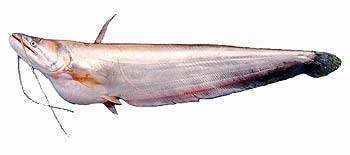
Top: Mekong giant catfish (Pangasianodon gigas) portrayed at hypothetical 3 m length. Source image

Left: Giant pangasius (Pangasius sanitwongsei) at hypothetical 2.75 m length. Source image

Piraiba (Brachyplatystoma filamentosum) at record 2.37 m length. Source image

Right: Wels (Silurus glanis) at record 2.78 m length. Source image
Soldatov's catfish (Silurus soldatovi) length unknown, portrayed at 2.5 m. Source image
Wallago (Wallago attu) portrayed at 2 m. Source image
Center: And of course, a puny human at 1.74 m tall.
 
[Lord Geekington (Cameron McCormick) once wrote an exellent summary about what is taken to be reasonable in the stories of giant catfishes and since we are keen on the topic here, I thought it would be a good idea to qote the article for reference. As a rule of thumb, reports of giant catfishes at half again these lemngths atre just marginally possible, but ones twice the given lengths most probably are not. And that is being generous-DD]

 Tuesday, August 7, 2007

Megafishes: Catfishes
 
Dear Constant Readers,

Fortunately this is not a very obscure group of animals, so there is plenty of popular literature to go on. Well, for the basic information at least. The Wikipedia page on catfishes actually makes a decent primer (for once), but I'd recommend the Tree of Life page even more. This is a huge group of fish with over 3000 species and 36 families, one of which was described as recently as 2005. Apparently 1 in 4 freshwater fishes, 1 in 10 fishes, and one in 20 vertebrate species is a catfish. On the Palaeos catfishes are closely grouped with knifefish and electric eels* in the clade "Siluriphysi" which is defined partially by the re-evolution of electroreception. Click here to see their relative position in the colossal Teleost radiation. Aside from electroreception, catfishes often have a benthic habitat, scaleless skin, small eyes (reliant on tactile barbels, chemosensitivity, oflaction), an adipose fin, and so forth. Some however are covered in armor plates, have sucker mouths, breathe air, have spinous fins, drink blood, and even digest wood. The Tree of Life suggest modification of the upper jaw for barbels and locking fin spines are good synapomorphies, although Fishbase "remarks" on more technical characters. Phew.

*This species apparently can get over 2 meters in length, however it is not considered a "Megafish", perhaps due to its eel-like shape? At the Shedd Aquarium in Chicago, they did have a specimen there that did seem to be around 2 meters, so I don't think 2.5m is a "fish story".


Now there is no ambiguity as to what a "catfish" entails, I should discuss the more impressive members of the group, their contributions to the "Megafishes". Out of the 20 species of Megafishes, 6 of them were Siluriformes. Even more remarkably, 3 of these species live in the Mekong River of Southeast Asia. I should also mention that most catfishes are small to moderately sized (5-20 cm or 2-8") with some species reaching maturity at below 1 cm. This gives a roughly 300-fold length difference between the smallest and largest species, and perhaps a weight difference a million-fold or over. I'll leave ridiculous size differences for later, here are the Megafishes:


Family: Silururidae

This family is defined by a lack of an adipose fin and occasionally pelvic and dorsal fins, a very long anal fin, no nasal barbels, et cetera. As you can tell from the name, these are very archetypal catfish in appearance. While most of you familiar will be correct in assuming the wels (Silurus glanis) will be discussed, according to the Megafishes article in Science, there is another giant catfish in the genus.


Silurus soldatovi, Nikolskii & Soin, 1948
Northern Sheatfish
Soldatov's Catfish

Not even graced with a Wikipedia article, information is hard to come by for this species. There were journal articles on the genetics, reproduction, and eggs of this fish, but I could find nothing on morphology. This fish lives in the Amur river basin, so like the Chinese paddlefish, there is the problem of most information being in languages I can't begin to understand (Russian and Chinese). What is astounding is that the Science article gives it an incredible length of 4 m (13'), yet the Fishbase page gives a weight (from the same source) at an astoundingly low 40 kg (88 lbs) at the same length. Perhaps the source itself was composed of two different specimens...or it was just another "big fish" story. It is odd how warning bells didn't go off for the author for such jarring figures. This Chinese page has a picture of what does indeed seem to be a wels-sized silurid catfish, although exact size is difficult to determine...or if it actually is this species (see below...it also bears a resemblance to the Megamouth, oddly). Pages seemed pretty adamant about the size, but it will have to be regarded as large but unknown for now. Unsurprisingly the Science article mentions it was not evaluated by the IUCN, but is probably being threatened by harvest, habitat, and pollution. Given how people seem obsessed by large fish, I find it exceedingly odd how this species apparently slipped under the radar.


Silurus glanis, Linneaus 1758
Wels

At the exact opposite of the popularity spectrum (imaginary) is this large Eurasian species. Mercifully, I don't have to go digging through technical literature to find the basic information. I should note that uniquely among Megafishes, this species is not threatened and is in fact regarded as least concern by the IUCN. Fishbase even regards this as potentially being a pest species. So it looks like this is one Megafish we shouldn't be overly worried about. It is also worth mentioning that this species was capable of entering the saltwater Aral Sea (note...was); making it all the more mysterious why sturgeons weren't considered "Megafish". By looking at Fishbase, you probably would have noticed something very strange as far the reported size. It, the Tree of Life and Science all report an astounding 5 m maximum size with variously given weights (306 and 300 kg --- 327 in Wood, 1982). This is a rather widely cited figure, a fact which I find unfortunate. For once thing, the Science article reported a stingray of the same length at 600 kg...shouldn't that set off warning bells for both figures there? A wels that size should weight 7-800 kg or even more, but I don't think they ever got that big.

So, how big does the wels get?

Gerald Wood mentioned several claims of excessive size (200 kg is "normal"?!), but I trust Markus Bühler/Sordes much more on this subject. The Wels grows larger in Southern Europe (Wood has no claims from there) due to warmer temperatures and a lack of parasites; the world record is an Italian specimen that measured 2.78 m (9'1.5") and weighed 144 kg (317 lbs). Compare this to the record German specimen which was 2.47 m and 89 kg (8'1" and ~200 lbs)


You can even see a Youtube video (what isn't on there?) of a catfish of nearly the same size (I'm not sure from where).


I haven't found any specific average size figure for this species, but Wikipedia (translated from European articles) suggests 1.3 to 1.6 m, which would make a 2.7-something meter fish a genuine monster...and make larger sizes quite unbelievable. Perhaps before exploitation I could imagine some 3-meter leviathans roaming around, but 5 meters is stretching things far beyond credibility. Perhaps they were confused with sturgeons (like Chinese Paddlefish), or maybe like many of these claims they were exaggerations or fabrications. But as you can tell by the video, the wels is a monster that doesn't need exaggerating.


Wallago attu, Bloch & Schneider 1801
Great White Sheatfish
Ikan Tapah

That's right, the Sheatfish family has a third member of allegedly gigantic size and a representative from the Mekong river basin. Fishbase describes this sheatfish as being a large, predatory species capable of delivering traumatic bites to humans. This species dwells mostly in rivers and lakes (streams in flood season), but apparently can tolerate brackish water as well. They also aren't limited to Southeast Asia, and can be found in Pakistan and possibly Afghanistan as well. Giri et al (2002) describe this sheatfish as being a fairly good candidate for captive rearing since it grows fast and has palatable flesh. The wels, in comparison, tastes bad at large sizes and apparently has poisonous eggs. The size reported for this fish is somewhat confusing. Giri et al give a maximum length of 2 m and a weight of "more than" 45 kg (6'6" and 100 lbs), which is around 10 kg less than the non-Megafish Blue and Flathead catfish of America, for instance. This badly translated abstract gives a weight of 25 kg for a 2 meter catfish and this page shows a rather large looking catfish that weighs only 9 kg. It also reported a 2.4 m specimen weighing 18.6 kg, a length (not weight) repeated in Fishbase and Science. If a fish that long weighed 18.6 kg, then a 9 kg fish would have to be 1.9 m long (6'3"), and I don't think the fellow in the picture is pushing 8 feet tall. The Science article lists this fish as being "not evaluated", but Fishbase reports it being "near-threatened" in Western Ghats, India and "lower risk" elsewhere. I do not see why length should be a more important measure than weight when it comes to fish, so either the definition of a "Megafish" should be broadened or this low-risk fish should be excluded.


Family: Pimelodidae
Brachyplatystoma filamentosum, Lichtenstein 1819
Piraiba
Kumakuma

Yet another surprisingly poorly known species (to the public) of very large catfish. Petrere et al 2004 note that catfish over 1.6 m and 50 kg (5'3" 110 lbs) and are given the name "Piraiba" and there have been suggestion that smaller fish are in fact a different species. This species is a top predator of the Amazon River channel, mostly inhabits whitewater areas, and is migratory. Petrere et al note that this species used to make up a huge proportion of the catch in the Amazon (94% !) in 1977, but now makes up only5% of the total catch. This was apparently the most important fishery of any catfish, and the authors draw parallels to the over-exploitation of sharks in marine waters. In addition to over-exploitation, the breeding waters of this fish are being disrupted by mining and land degradation, although the location of breeding grounds (headwaters of the Amazon) are apparently not known with certainty. Oh yes, and this species is also capable of living in brackish water, specifically river mouths.

So obviously this can be a rather large fish, reported at being 3.6 m and 200 kg (11'10" and 440 lbs) in Science, although Fishbase once again demonstrates that the length and weight are from different sources. Gerald Wood, who normally simplifies these matters, instead confuses them greatly. He insists that B. filamentosum (lau-lau) is indeed the longest catfish in the Amazon, but there is a heavier species called the..."pirahyba" (Piratinga piraiba), hmm. This turned up a negative result on Fishbase, although there is a synonym (Piratinga piraaiba) that is awfully close. Wood reported that the latter "species" weighed 159 kg at 1.85 m (6'1" and 350 lbs) and was estimated at a maximum size of 2.1 m and 181 kg (7' and 400 lbs). The conversions are Wood's and not mine. It should also be noted that the figures are much heavier than what would be expected from Petrere's figure; it is normally the opposite of that and it is possible that these fish to get bulkier as they increase length. None other than Teddy Roosevelt related a tale of a 3 m catfish getting killed after attacking a canoe, but this is of course rather dubious. As for the actual species, none other than William Beebe caught specimens, the largest of which was 2.11 m without the tail measured and presumably about 2.4 m (8') with. Judging by the weights reported by the "pirahyba", it is possible that this or a similar sized specimen is responsible for the 200 kg figure. A 3.7 meter+ claim (Wood's figure differs) is probably not realistic for a pre-exploitation animal...and would dwarf every other Megafish at a presumed weight of over 1 ton/tonne. But don't worry, the largest species has yet to be covered...


Family: Pangasiidae

Now here's a problem: 2 different fish species in the same family are reported to reach the same size (3m and 300kg)! Now that the wels and the paraiba have been downsized, what is the largest species of catfish? Well, I never fully discounted the reported 4 m size of the Soldatov's Catfish, but let's assume it's an exaggeration. Considering that every single reported size by the Science article appears to be wrong, I don't think that would be unjust.

Pangasius sanitwongsei, Smith 1931
Giant Pangasius
Dog-eating Catfish

Like a few other species, this one seems seldom mentioned despite its apparently gigantic size. This one is "Data Deficient", but the Science article mentions that many locals are surprised that this fish even still exists. 2 meter specimens were no longer caught in Thailand by World War II, and it may very well be extinct there and going extinct in the Mekong River valley. This could be another "so long we hardly knew thee" situation as with the Chinese paddlefish. Fishbase oddly claims that this species is often referred to in popular material and textbooks, but this has to be confusion with the upcoming species. There are people who claim to be keeping this species in captivity under the name "Paroon shark", but I can't help but wonder if it is a different species in the same genus; perhaps P. hypothalamus. Selling one of the world's biggest species of freshwater fish sounds a bit improbable to me, and from experience I know that pet stores and dealers often don't go by orthodox taxonomy. So how big does this fish get? Zeb Hogan in a previous paper describes this species as getting "slightly less gigantic" than the next species, and gives a length of 2.75 m maximum (9 feet). It is not known to what size 300 kg is supposed to go with, or even if the fish can actually get this big at all. Due to a huge gap in information, it looks like this fish too will have to remain a mystery.


Pangasianodon gigas, Chevey 1931
Mekong Giant Catfish
Pa beuk

In the Guinness Book of World Records this is the biggest species of freshwater fish. There is quite unambiguous of a 2.7 m female that weighed 293 kg (~9' and 646 lbs) caught in 2005, although record keeping for the species has only been going on since 1981. Gerald Wood comments upon a source in the 20's claiming a size of 3 m (~10 feet) for this species, and this has been a generally accepted figure despite the dubious corresponding weight of 240 kg. The weight has normally been reported at 300 kg for this size, but---do I even need to say this?---it Fishbase shows it came from a different source. Fishbase also states that this fish can grow 150-200 kg in 6 years, apparently making it one of the fastest growing known fish as well. Wood also remarked that only 14 specimens were caught in 1974, and the population has been estimated to have fallen 80% in the last 13 years according to the IUCN! It is no surprise that this fish is regarded as "Critically Endangered".

So let's see what happens here. Once again we have a species that is critically endangered, so can we save it this time? Hopefully Zeb Hogan can draw even more publicity to this species and save it from the apparent fate of the Chinese paddlefish. But, what about the more obscure species. I never heard about Soldatov's Catfish until a few days ago and I only heard vague mentions of the giant pangasius, and after looking for information the situation was hardly better! I somewhat doubt the public is more aware of these species and their plight than I do, and it may already be too late. The giant pangasius appears to be in an even worse situation than the Mekong giant catfish, which is quite alarming. But then, according to Hogan, we really don't know anything about this species. While discovering new species is one thing, I think that knowing so little about described species is nearly as surprising.

There's still a lot I'm curious about regarding these catfish. How are they capable of getting so large anyways? The Pangasiids are certainly not typical looking or behaving catfish (e.g. predatory giant pangasius and herbivorous Mekong giant catfish), so is it something other than niche occupation? Do the old records actually indicate that these species "shrunk" with exploitation. Were there even large Pleistocene cousins? I always seem to have a lot of questions here.


I'm not certain if I'll do more Megafish or not. My summer and blogging-spree is coming to an alarming stop here. Dang.


-Cameron

Thursday, 12 April 2012

Guest Blogger Lisa Hardcastle on Nessie

Needless to say, I'm really happy to see the first one went down well and was of use. I'm also flattered that you'd consider another, and I can only oblige such a kind offer - I've had enough time today to write another (may be the last for a while as the rest of the month is looking a bit hectic) and have pasted it below for you to check out at your leisure. As always, thoughts welcome!
Best,
Lisa H

------

Could Giant Catfish Be Responsible for Reports of the Loch Ness Monster?

Besides Bigfoot and the Yeti, the Loch Ness Monster is one of the world’s most famous criptids. For over eighty years, locals and visitors to the Loch, which is nestled in the Highlands of Scotland, have reported sighting a large creature that has been described as looking like everything, from a sea serpent to a dragon. It is a common belief by some cryptozoologists that the Loch Ness Monster could be a family of plesiosaurs, which somehow escaped the mass extinction of the Cretaceous-Tertiary period and is trapped in the loch.
Of course, the chances of dinosaurs having survived 65 million years and living and breeding in a Scottish loch are extreme to say the least, especially, as the loch is one of Scotland’s most visited natural beauty spots and the only evidence for the monster’s existence are grainy photographs and shaky videos. However, despite claims that the whole thing is made up by the locals to boost tourism, reports of the monster won’t go away, and these are not just the ramblings of people prone to hysteria. Sightings from all sorts of people, from chief constables to doctors, have been reported over the last eighty years, and most people living near the loch are convinced something is down there.

Nessie
Loch Ness is not the only Scottish Loch that has its monster. In fact, virtually all Scottish lochs have some legend of a monster attached to them, as do many great lakes and bodies of inland water across the globe. However, “Nessie” is by far the most famous, but if she is not a survivor from the age of the dinosaurs, then what else could be causing all the reports?
Existing evidence, such as photographs and videos, has always proved inconclusive. The most famous picture of Nessie, the so-called Surgeon’s Photograph, which showed a long-necked beast rising out of the water (and probably gave rise to the plesiosaur theory), was proved a fake, and other pictures and videos either have been of too low quality or have come from dubious sources to make any reasonable assessment. However, one thing is clear, with sightings spanning from the 1930s to the present day, there is definitely something at Loch Ness, and while little proof exists in photographic or video form, the age of the first reports could hold the key as to what Nessie could actually be.

Wels catfish
The first reported sightings of a monster in Loch Ness occurred in the early 1930s. In fact, the 1930s was Nessie fever with all sorts of sightings and pictures (including the infamous “Surgeon’s Photograph”) continually appearing in the national press of the UK. Perhaps the question should be asked, as to what was so significant about the 1930s, and could the secret of Nessie tie into an event that happened fifty years earlier?
The UK has an abundance of fish, some of which grow to a fairly large sizes, such as the pike and carp. Britain also has several indigenous species of catfish in its lakes and rivers, but most of these never grow past a few feet. However, in 1880, the wels catfish, one of the largest species of catfish in the world, was introduced into the waterways of Great Britain for anglers amusement, and has continuously been stocked both legally and illegally ever since. In its native Russia, adult wels of around forty to fifty years old, can grow up to 300lb, and reach 15 feet in length, making them a truly monstrous river fish. Therefore, perhaps the introduction of the wels catfish to Scottish lochs in the late nineteenth century, which were allowed to mature and grow to monstrous sizes, could be responsible for the reported sightings of Nessie fifty years later.

Kali River goonch
If the wels is responsible, it certainly wouldn’t be an isolated case. Large catfish have been responsible, not just for monster sightings across the globe, but also for actual attacks on people. In the Kali river of India and Nepal, between 1998 and 2007, reports of a giant river creature attacking and actually devouring swimmers were reported in both the national and international media.
Several investigations conducted by documentary crews, including British biologist Jeremy Wade, discovered the culprit was a large species of catfish, known as the goonch, which had grown to be over 200lbs. While goonch don’t normally grow so large or attack humans, it was discovered that the local people of India and Nepal burned their dead in funeral pyres along the riverbanks of the Kali. It was concluded, that the goonch were feeding on the half burnt human remains, enabling them to grow far larger than their normal diet would have permitted, making them large enough to attack human swimmers.
Of course, the people of Scotland don’t have funeral pyres along the banks of Loch Ness, but the wels catfish is a known scavenger and will eat anything, from fish to waterfowl, of which there is an abundance on the loch. While the idea of a dinosaur trapped for 65 million years (which would have been 64 million years before Loch Ness formed) in a Scottish Loch may be a romantic one, the true Loch Ness monster may be something as simple as a family of large wels catfish. However, if the Kali goonch attacks are anything to go on, this makes Nessie no less a frightening monster.

Wels catfish Silurus glanis

-----
Lisa Hardcastle is a freelance writer from England who writes on behalf of many organic producers, from ethical coffee farms to eco clothing stores, and is an expert in the latex vs. memory foam matress debate.

I should mention that Lisa supplies her own sponsor's links and I approve them. In the case of Loch Ness, the Atlantic sturgeon (recently mentioned in another posting on this blog) is more usually selected as a suspect for causing "Nessie" sightings, but there is nothing which prevents either fish or both being present at Loch Ness, either at different times or both together. And there is nothing which says that giant eels of approximately similar size could not be there in the place of one or the other, once you have established that point.

Best Wishes, Dale D.

Friday, 16 March 2012

Man-Eating Wels Catfishes and Others


I had a request to put up some information about man-eating Wels catfish. However,  this blog posting on the subject was accumulating errors because of sluggish Bloggo service and had to be taken down. I apologise if that part inconvenienced anybody.
The primary recent source  thatsubject these days comes from the cable TV series River Monsters:

http://animal.discovery.com/fish/river-monsters/wels-catfish/

WELS CATFISH

Silurus glanis

wels catfish

Maximum Length: Up to 10 feet
Maximum Weight: Up to 330 pounds
Vicious and Voracious: The wels catfish is defined by a long, scaleless body; a broad, flat head; and an extremely wide mouth containing rows of small, sandpaper-like teeth — hundreds of them. It also has two sets of barbels (whisker-like organs) on the upper and lower jaw, which help the fish hunt its prey in the murky waters of large lakes and slow-flowing rivers across Europe. The wels catfish is an adept hunter, first using its pectoral fins to create a disorienting eddy and then taking advantage of its vast, vacuum-like mouth to suck prey in and swallow it whole.
Maneater or Misunderstood? Tales of man-eating wels catfish date back as far as the 15th century, but 2008 saw a spate of attacks in Lake Schlachtensee outside of Berlin. Many believe the attacker to be a 5-foot wels catfish. These fish have been caught in Russia with human remains in their stomachs, but most experts suspect the victims were already drowned before being swallowed. Still, the wels catfish can exhibit aggressive behavior during its mating season, making it plausible that this monster fish could be responsible for attacks against humans that venture into its territory.
catching wels catfish Jeremy Wade's Tips for Catching Wels Catfish: "Because the water level has been raised by the dams, there are lots of sunken snags, so allowing the fish to run is not an option. But nobody's told the catfish that, and this one charged out into the current and almost pulled me over. It's then a long, drawn-out tug o' war, digging my heels into the slippery bank..."
For the full story, click on the fish icon over Europe on our River Monsters Map.
The wels catfish is an adept hunter, first using its pectoral fins to create a disorienting eddy and then taking advantage of its vast, vacuum-like mouth to suck prey in and swallow it whole

The wels catfish made headlines in 2008 after a spate of attacks in Lake Schlachtensee outside of Berlin.

http://en.wikipedia.org/wiki/Wels_catfish

Wels catfish
From Wikipedia, the free encyclopedia
The wels catfish (play /ˈwɛls/ or /ˈvɛls/;[1] Silurus glanis), also called sheatfish, is a large catfish found in wide areas of central, southern, and eastern Europe, and near the Baltic and Caspian Seas. It is a scaleless fresh and brackish water fish recognizable by its broad, flat head and wide mouth. Wels catfish can live for at least thirty years and have very good hearing.
The wels catfish lives on annelid worms, gastropods, insects, crustaceans, and fish including other wels catfishes; the larger ones also eat frogs, mice, rats and aquatic birds such as ducks.

Habitat
The wels catfish lives in large, warm lakes and deep, slow-flowing rivers. It prefers to remain in sheltered locations such as holes in the riverbed, sunken trees, etc. It consumes its food in the open water or on the bottom, where it can be recognized by its large mouth. Wels catfish are kept in fish ponds as food fish.

Physical characteristics

Wels catfish's mouth contains lines of numerous small teeth, two long barbels on the upper jaw and four shorter barbels on the lower jaw. It has a long anal fin that extends to the caudal fin, and a small sharp dorsal fin positioned relatively far forward. It uses its sharp pectoral fins to capture prey. With these fins, it creates an eddy to disorient its victim, which it then simply engulfs in its enormous throat. It has very slippery green-brown skin. Its belly is pale yellow or white. Colour varies with environment. Clear water will give the fish a black coloration while muddy water will often tend to produce brownish specimens. Weight and length are not correlated linearly, and also depend on the season.
The female produces up to 30,000 eggs per kilogram of body weight. The male guards the nest until the brood hatches, which, depending on water temperature, can take from three to ten days. If the water level decreases too much or too fast the male has been observed to splash the eggs with the muscular tail in order to keep them wet.[citation needed]

Size


Silurus glanis. Syr Darya River in Kazakhstan, Baikonur area.
With a possible total length up to 3 m (9.8 ft) and a maximum weight of over 150 kg (330 lb) it is the second largest freshwater fish in its region after the beluga sturgeon. However, such lengths are extremely rare and could not be proved during the last century, but there is a somewhat credible report from the 19th century of a wels catfish of this size. Brehms Tierleben cites Heckl's and Kner's old reports from Danube about specimens 3 m (9.8 ft) long and 200–250 kg (440–550 lb) heavy, and Vogt's 1894 report of a specimen caught in Lake Biel which was 2.2 m (7 ft 3 in) long and weighed 68 kg (150 lb).[2] In 1856, K. T. Kessler[3] wrote about specimens from Dniepr which were over 5 m (16 ft) long and weighed up to 400 kg (880 lb). "The largest authenticated wels, taken from the river Dnieper in the Ukraine in the southern U.S.S.R., measured over 16 ft (5 m) in length and weighed 675 lb (306 kg); elsewhere in Europe and in England, however, the wels seldom exceeds 5 ft (152 cm) in length and 25 lb (I 1 kg) in weight"

Most wels catfish are only about 1.3–1.6 m (4 ft 3 in–5 ft 3 in) long; fish longer than 2 m (6 ft 7 in) are normally extremely rare. At 1.5 m (4 ft 11 in) they can weigh 15–20 kilograms (33–44 lb) and at 2.2 m (7 ft 3 in) they can weigh 65 kilograms (140 lb).
Only under exceptionally good living circumstances can the wels catfish reach lengths of more than 2 m (6 ft 7 in), as with the record wels catfish of Kiebingen (near Rottenburg, Germany), which was 2.49 m (8 ft 2 in) long and weighed 89 kilograms (200 lb). This giant was surpassed by some even larger specimens from Poland, Ukraine, France, Spain (in the River Ebro), Italy (in the River Po and River Arno), and Greece, where this fish was released a few decades ago. Greek wels grow well thanks to the mild climate, lack of competition, and good food supply. The largest accurate weight was 144 kg (320 lb) for a 2.78 m (9 ft 1 in) long specimen from the Po Delta in Italy.[4] Other reports of larger wels (around 5 m (16 ft) or more) are unlikely and are often regarded as typical big fish stories or in some cases misidentifications of the now rare sturgeon.
Exceptionally large specimens are rumored to attack humans in rare instances, a claim investigated by extreme angler Jeremy Wade in an episode of the Animal Planet television series River Monsters. A report in the Austrian newspaper Der Standard on August 5, 2009, mentions a wels catfish dragging a fisherman near Győr, Hungary, under water by his right leg after the man attempted to grab the fish in a hold. The man barely escaped with his life from the fish, which must have weighed over 100 kg (220 lb), according to the fisherman.[5]

Ecology

There are concerns about the ecological impact of introducing the wels catfish to non-native regions. These concerns take into account the situation in Lake Victoria in Africa, where Nile perch (available in stores as Lake Victoria perch) were introduced and rapidly caused the extinction of numerous indigenous species. This severely impacted the entire lake, destroying much of the original ecosystem. The introduction of foreign species is almost always a burden on the affected ecosystem. Following the introduction of Wels catfish are fishes whose number is in clear and rapid decline. Since its introduction in the reservoir Mequinenza in 1974 - has spread to other parts of the Ebro basin over Ebro and its tributaries, especially river Segre. Some endemics species of iberian barbels, genus Barbus in the Cyprinidae, having once been abundant especially in the Ebro river, competition and predation by wels catfish has caused its complete disappearance in the middle channel Ebro around 1990. The ecology of the river also, has now a major development in the amount of aquatic vegetation, seaweed and algae. Barbel species from mountain stream tributary of the Ebro that wels catfish has not colonized, were not affected.

As a food fish

Only the flesh of young Silurus glanis specimens is valued as food. It is palatable when the catfish weighs less than 15 kg (33 lb). Larger than this size, the fish is highly fatty and not recommended for consumption. The eggs are poisonous and should not be consumed.

Related species

References

  1. ^ OED
  2. ^ Brehm, Alfred; Brehms Tierleben II - Fish, Amphibians, Reptiles 1
  3. ^ Mareš, Jaroslav; Legendární příšery a skutečná zvířata, Prague, 1993
  4. ^ Wood, The Guinness Book of Animal Facts and Feats, Sterling Pub Co Inc (1983), ISBN 978-0851122359
  5. ^ Der Standard, 2009-08-05. Waller-Wrestling im ungarischen Fischerteich. Retrieved 2009-08-06. (German)
External links


  • FishBase species summary
  • YouTube video of a giant Wels Catfish being caught
  • This article includes information translated out of the German and French Wikipedias.
    --So basically the answer seems to be, when the wels catfish gets big enough and there are human beings present in the water, the catfish is as likely to go after them as any other prey. Catfishes are very indiscriminate feeders. The thing is, they habve to be allowed to get that big, and few of them get that big in Europe any more (larger ones may be commoner in Central Asia these days). Lucas writes wondering if introduced wels catfishres might be mistaken for giant eels: and my answer is that my experience has been that usually witnesses make the distinction. There are some very eel-like catfishes, byt the wels has a fat body that is vaguely tadpole-shaped overall. ntroduced wels might make perfectly acceptable water monsters, my feeling is that ordinarily witnesses make the distintion between them and the eels.
    Best Wishes, Dale D.

    Wednesday, 7 March 2012

    Even More on Giant Catfish

    http://animalsversesanimals.yuku.com/reply/1785

    Giant Catfish Caught on Camera in the Mississippi River.

    Author: Ernest Wright, Giant Catfish Caught on Camera in the Mississippi River.
    http://catfishgumbo.blogs...catfish-story-is-not.html

    Photo Proves Giant Catfish Story Is Not A Myth


    The photograph above, captured one year ago today by a U.S. Army Corps of Engineers AFD (Automatic Foto Drone) at a dive site on the Mississippi River, proves what many people have been saying for years: enormous catfish-some weighing hundreds of pounds-live in the deep, dark waters swirling below many of America's large dams. The incredible photo, shown here for the first time, is one of a series shot by the high-tech surveillance camera. It was taken while divers worked to repair damage to an underwater pipeline below Melvin Price Lock and Dam at East Alton, Illinois. Ironically, this is the same area in which Illinois angler Tim Pruitt landed a 124-pound world-record blue catfish on May 21, 2005.

    "The AFD shoots a continuous series of photographs-one every two minutes-to document work at each site," said ACE spokesmen Sidd Finch. "This particular series, taken on the 1st of April last year, was being examined recently by engineer G.O. Welles when he noticed the huge fish behind the diver in this single frame. The diver, Theodore Hook of Cardiff, New York, said he was totally unaware he had been this close to a fish that was probably big enough to have swallowed him. But he claims he and other divers have seen gigantic fish like this before."

    According to Charles Piltdown with the Regional Underseas Studies Endeavor, the fish in the photograph appears to be a flathead catfish (Pylodictis olivaris), but the fuzzy nature of the picture makes it impossible to determine for sure.

    "Barbels, or whiskers, are clearly evident on the fish," the ichthyologist reported, "which tells us for sure it's some type of catfish. And by comparing the fish's dimensions to the size of known objects in the photograph, we were able to estimate its length at approximately 105 inches and its weigh at around 700 pounds. This is quite possibly the largest catfish ever documented, larger even than the 646-pound Mekong giant catfish captured in northern Thailand in 2005. It may be a new species, previously undescribed."

    Since the early 1940s, when hydroelectric and flood-control dams started springing up around the country, divers working around these structures have reported seeing incredibly large catfish, including some so enormous the divers refused to go back underwater because they feared the consequences of encounters with these huge creatures.

    "I've seen some catfish I knew were twice my size, and I've seen them while diving at 16 dam sites in six different states," said George Hull, an experienced diver who works for Freshwater Research and Underwater Development. "But telling people you've seen them is like saying you saw the Loch Ness monster or a UFO. No one believes you, so after a while, you figure you're better off if you don't discuss what you've seen.

    "I'm just glad someone has finally proven the existence of these fish," he continued. "And because it was a government agency that found the evidence, it will definitely be indisputable. Maybe now people will believe what divers like me have been saying for nearly half a century-there are fish out there big enough to eat people, and the fact that someone hasn't been hurt by them already is nothing short of a miracle."

    Trained biologists like myself have always dismissed encounters such as Hulls' as nothing more than figments of the divers' imaginations. But hardcore evidence like this photograph will make it difficult to dispute such sightings, which have been reported from at least 87 dam sites throughout the country. The evidence is clear: something huge is out there-lots of somethings-and it will take the concerted efforts of state and federal authorities to determine what it is.

    Unless, of course, some catfisherman like me catches one of these beasts first. I'm heading for the Mississippi River to do some fishing today, and I'm gonna use something big for bait: a Pomeranian perhaps, or maybe some of the stray cats running around my neighborhood. I figure if I tie one to the winch hook on my truck, I ought to have a decent chance of landing anything that bites.
    image
    COMMENTS: It's really hard to tell how far away the catfish is - is it in front of the diver or behind? If only the pic was taken a little later, when the fish passed either behind or in front of the diver!        
    i sure as hell hope that it was infront of the diver.. otherwise....

    WHAT THE ****!?!? thats terrifying to me...... it looks as if it could have swallowed him whole.

    and i've been watching the giant fish document on NG about the mekong catfish, and watched it captured & tagged, it was about the size of the man, but he and another fisherman could control it while in the water with their bare hands....

    this however.. looks nowhere near like a fish you could control or would even attempt to.. possibly the angle as said above but damn....

    if the mekong was 646lb, then by way of picture (grainy photo, angle possibly) & size comparitive to diver i'd venture it's far more then any 700lb fish.. Damn. that's rediculous. it definitely has to be the angle..... Right?... right!?

     by sin friendly, sense empty

    They said about 2 years ago, see If I can't find something of it online. Fisherman in the mississipi River where reeling in a catfish and they said just the tail of it told them it was atleast 650 lbs, before it snapped the line. The mississippi river is full of monsters.

    The fish is coming from behind. I remember another story where the 16 feet, 675 pound wels catfish was caught in the Ukraine River. Fisherman said they where close to catching a wels catfish that could have swallowed the boat they where in.

    In lake Cumberland Kentucky a 11 foot catfish was found floating dead. Though no one was ever called, or even thought about calling anyone to verify it. An locals say they've had fishes surface that are longer then the boat there in. When I rented a boat to go fishing there. I asked what's the largest fish ever pulled out of here, he said "575 lb catfish." Don't ever take selectively posted garbage on records. Catfish never stop growing.

    Also that 646 pound catfish isn't the heaviest reliable catfish fish on record. A 16 foot wels catfish caught in the Ukraine River is, it was heavier. The largest wels catfish weighed 675 pounds, and was 16 feet in length. National Geo, and others need to get there facts strait.

    "The largest authenticated wels, taken from the river Dnieper in the Ukraine in the southern U.S.S.R., measured over 16 ft (5 m) in length and weighed 675 lb (306 kg); elsewhere in Europe and in England, however, the wels seldom exceeds 5 ft (152 cm) in length and 25 lb (I 1 kg) in weight"

    http://www.cfz.org.uk/exp...martinmere/mere-index.htm

    There was also the famous 13 foot man eating wels catfish caught long ago. In Animal facts and feats 1982 they also confirm it was dubbed a man eater. I'm sure everyone has seen the pick of it. With the two Russians around it. Was said to have taken two grown men opon further research.
    This is your typical wels catfish. [In a forced-perspective shot also-DD]

    image
    Just the Mississippi River, people have no idea how big the catfish are. There are even blue catfish in there well over 200 pounds. An that the blue catfish record will keep getting broken. You'd have to clear out all the water to really get an idea of what's in there.

    CAT TALES FROM THE 17th CENTURY TO THE 19th
    French missionary Jacques Marquette was perhaps the first to describe the gigantic catfish inhabiting the mighty Mississippi. In 1673, Marquette accompanied Louis Joliet on an extensive exploration of the Mississippi. In his journal of their historic venture, Marquette told of hefty catfish colliding with their canoes. "We met from time to time these monstrous fish," he wrote, "which struck so violently against our canoes that we took them to be large trees, which threatened to upset us."
    http://www.arkansassports...ish-fishing/ar_aa060303a/
    "The fish is behind the diver, in the frame. The diver never even saw the fish, it crept up from behind. It's probably between 700 to 800 lbs. As unbelieveable as it sounds, there have been even bigger sightings in the river.

    This particular series, taken on the 1st of April last year, was being examined recently by engineer G.O. Welles when he noticed the huge fish behind the diver in this single frame. The diver, Theodore Hook of Cardiff, New York, said he was totally unaware he had been this close to a fish that was probably big enough to have swallowed him. But he claims he and other divers have seen gigantic fish like this before."


    ...In other words, the photos were part of an April Fool's Day gag.

     But the rest of the information is actually correct, the part about the dead catfish reported floating at Cumberland, the quote from Jacques Marquette, and especially the part about the wels catfish records-all independantly verifiable. And so I thought the piece was still valuable enough to run for only the supporting comments left after the original posting of the hoax.
    12-foot-long, 700 pound catfish are not even very large by the standards of these allegations, which will regularly run as large as any wels catfish records from Europe.

    Best Wishes, Dale D.

    More Giant Catfish

    Very large catfish out of Grand Lake, OK: the one on the left is a "Great White" and the one on the right is a "Big Blue". Both are colour phases of the blue catfish and both also occur in adjoining Missouri. Really big ones would be at least twice this length and girth.http://grandlakeguides.com/

    http://gummerfansmonsterhunterhq.blogspot.com/2008/06/great-giant-catfish-hunt-pt-1.html
    Gummerfan's Monster Hunter HQ
    14 June 2008  The Great Giant Catfish Hunt pt 1


    Living near the banks of the Tennessee river all my life, I've heard tales of giant catfish. It wasn't until I started reading about cryptids and strange creatures that I found out that the tales I'd always heard were the same as other tales being told all over the US.
    The story is basically the same everywhere it's told. Once some maintenance or construction divers were working on (insert local dam or bridge here) when they saw catfish swimming along the base of the dam that were literally large enough to "swallow a man whole." One account I read about occured on Lake Martin in Alabama, and the diver at first mistook the catfish, which was lying on the bottom of the lake, for a submerged tanker truck. He walked the length of the fish, and found what he thought was a flange on the tank, only to discover that it was the eye of the fish.
    Some of the stories have a strong apocryphal element to them. Children are warned not to swim out too far or the catfish will "get them".
    Is there any truth to the stories? Has any researcher contacted any scuba divers or the Army Corp of Engineers to get to the truth? How are the dams and bridges maintained if nobody will dive there? I would imagine that scuba-qualified construction workers or engineers are a pretty small, closely-knit community, and word would spread pretty fast among them, right? Are new, fresh recruits who've never heard the story contracted out?
    Why does the giant catfish story persist? It's easy. Catfish DO get big. Bigger than most non-fishermen would imagine. Years ago, I worked as the night manager at a nearby truck stop. In the early, predawn hours one Sunday morning, a man came strolling in and asked if anyone wanted to see a big catfish. A few of us went outside to check it out. As we approached the truck (one of those import "mini-trucks" that were popular at the time) we could see the top of the fish's back over the side of the bed. The fish was so long that it was too long for the (admittedly small) truck bed, and had about two feet folded around. I'd estimate its length to have been at least 6 feet.
    In the early 90's, our local paper (The Decatur Daily, Decatur AL) ran a story of a catfish that weighed over 100 lbs caught in the Tennessee River. (I don't remember the exact weight, 104 and 108 stick in my mind for some reason). The angler wrestled with the fish and finally managed to reel it into shallow water, at which point some observers waded out and attached a rope to it and pulled it ashore. Because the fish wasn't landed with a fishing pole, it wasn't eligable for record consideration, despite its "record" size and weight.
    Anybody who knows catfish will tell you that about all catfish do is swim and eat. They poke along the bottom, using the taste receptors in their whiskers (and in some species, even their skin) to find anything that tastes appealing. One would imagine that in the deep water at the base of a dam, there's plenty to eat, so they just eat and grow. (I know another story about a coroner's assistant who will never eat catfish again, but that's a different matter!)
    So, people have seen big catfish, the base of a dam seems to provide the ideal environment to produce giant catfish, ergo, the whole story seems to make perfect sense.
    In Part 2 I'll discuss my frustrations with my plans to try to catch one of these monsters.

    Sunday, 16 October 2011

    Giant Catfishes and Other Lake Monsters


    Normal Blue Catfish compared to the Monster Catfish, BIG BLUE

    At the Yahoo group Georgia Bigfoot Society, we have been having an interesting exchange of messages considering the impact upon one field of bordline study that the number of borderline subjects a person advances has upon that one area. Patty was the first to advance the subject and so I'll quote her message first:

    I have a question though.  On the Crypto Mundo website it says bigfoot, lake monsters, sea serpents and more.  How many people here who have interest in bigfoot also believe in the various lake monsters and other unknown animals.  I read the other day someone here post about bigfoot and Santa Claus.  As a Christian I cringe when I see people linking faith in God with belief in Santa Claus.  Mainly because I believed in St Nick growing up and it didn't damage me for life.  I see nothing wrong with kids believing in Santa or reading fairy tales or having invisible friends.  I don't want to be the person who bursts their bubble when it comes to St Nick so there's not a good way for me to respond to posts without risking some kid reading it, sooner or later they'll learn Santa's not real but I still remember how much more fun Christmas was before I knew he wasn't real.  I don't want to be the one to ruin it for them.   But to me bigfoot has an established history and just seems more logical to expect than the various lake creatures people say they see, many in man made lakes that really couldn't be expected to have large sea serpent type critters swimming in them.   Does anyone think it detracts from serious bigfoot research by clumping it in with sea serpents, loch ness, lake monsters, giant birds, chupacobras, giant spiders and all the other things that go bump in the night?  Our lake here is man made and has been impounded since the late 1940's.  It's got huge catfish in it but people claim from time to time to see someting similar to Nessie but logically it couldn't have grown in a man made lake so quickly, it couldn't have swam in from rivers that in places are only 1-2 feet deep.  People will insist they saw it though.  I think it's possible to logically defend one's belief in Sasquatch.  I think it possible that something is in Loch Ness but lumping every unknown animal together in an all or nothing type proposition makes it hard to defend.   I like to think I can intelligently defend my faith in God.  It does take faith, I don't have all the answers and part of it is probably because I want there to be a God.  But when I read people writing that God spoke to them and told them to do something usually stupid or something that makes them rich it's impossible to defend what they write.  Some people claim to have seen angels, some of the stories seem plausible and I want badly to see one but people have written books about this running almost nightly visitation from angels who share the secrets of God with them.  Some say they've been taken to Heaven, many say they've been healed or now have the power to heal others.  It's really close to what people say who claim to be visited by ET's over and over.  Seeing something in the night sky that one can't explain and claiming ET's have taken them to other planets and visit them weekly are totally different.  Does so often having people presume belief in one thing means belief in everything bother anyone else? 
    Reports of outsized Catfish Water Monsters:
    Most of the "Spots" are in introduced locations


    And then I made my reply (October 7):
     Well, I was the first guy to complain about the linking of believers in Bigfoot to belief in Santa Claus. Yep, that was pretty cringe-inducing. As far as lake monsters go, they are not all the same thing and people that even SAY they are all the same thing are being misleading from the onset. Not all sightings at Loch Ness
    are the same thing, some sightings are just big fish. And all over North
    America, I would say the most common sightings are big fishes, ESPECIALLY big catfishes down in our middle latitudes (up North in Canada it's sturgeons more likely.) We introduce catfish into ponds and lakes all over the place, and in
    absence of competetors, some of those catfishes grow HUGE. They basically have all they could ever want to eat from scavenging, and there might also be chemical or hormonal factors due to enviromental pollution involved.Those aren't the only kind of Lake Monsters there are, but the whole problem in Lake Monsters is getting over the hurdle that all the reports refer to the same thing and it is somehow "wrong" to believe there are Water Monsters. It's not wrong to believe in big fishes, outsized otters and beavers,swimming mooses or whatever. The problem is in the prejudice and not the sightings.

    Now if you are going to make a big overall theory like John Keel does, and has a
    vast interdimensional conspiracy theory that is behind all UFO and Monster
    sightings, all Religious experience and ghost stories, well then I've seen that
    theory come into and go out of fashion and IMHO it really DOES hurt credibility
    for the people that believe in it. So I can see your point in reference to that.

    Everybody believes in something different and in a different number pof
    different possibilities. So I don't think we have to force everybody to
    necessarily believe alike and to believe in EVERYTHING all at once. Because when
    you believe in EVERYTHING, people think you're just stupid and gullible.

    Best Wishes, Dale D.

    To Which Patty Replied (Same Day):
    Our lake has catfish over 6 feet long already and I'm sure they'll be larger
    decades from now. Even a normal size bass slapping the water trying to catch a
    bug sounds way bigger than they are and at night after a lake person's had a few
    beers I'm sure they grow even more. I think that's the problem with so many
    groups and organizations that research sasquatch, they also are whole hearted
    believers in every critter coming and going. Believing in God and running
    around trying to see Christ or the Virgin Mary in people's lawns or the frost on
    their windows or wherever else people say is totally different I think. Looking
    up at the night sky and wondering who or what's out there and thinking aliens
    come to my bedroom to update me on cosmic affairs are also totally different. I
    know groups have to play to the masses to be successful but serious discussions
    and really off the wall nonsense are different. We listed to coast to coast but
    way over half the time it's utter nonsense and is just something to provide
    background noise to pass the night. Some people think they've seen sasquatch,
    some have I'm sure but then way too many swear they've talked to them, lived
    among them, killed them, even seen them being unloaded from flying saucers! I
    wish serious debate no matter what the topic could be carried on without
    silliness.
    To Which The Group Owner Replied:
    It is my personal opinion that any catfish that is too big for my net classifies as being a MONSTER!  Nuff said.  Incidentally, has anybody here ever watched the series "River Monsters" on Animal Planet?

    And after that came the last-posted response, from Paul on Tuesday (Oct 11):
    yeess,       river monsters are certainly larger than the average catch. however, the dude does go to some exotic places to make his catches. what a life, getting paid to go fishing.
    [The matter of monstrous catfishes in Indiana was  discussed on one of my recent podcast interviews for the Indiana chapter of the American Fortean Society. It seems we have some very big and very ugly examples in the state, according to my host, and to which I added a few reports I had heard about myself.]
    To focus on the matter of Giant catfishes in particular, here is the excerpt from my "Catalogue" of unknowns that has been reprinted in the CFZ Yearbook (longer section quoted at bottom):
    Giant Catfish. It is suspected in certain instances, reports of Freshwater octopuses actually refer to Giant catfishes where the whiskers are being described as tentacles. In the case of the "Oklahoma octopus" this is fairly certain because not only are the reports to areas where Giant Catfishes are otherwise reported, they are reported in similar terms, each time using the description "As big as a horse". Furthermore some descriptions of the supposed octopus specify that it has the body of a fish or shark.
    Giant Catfishes are also universally indicated, in both [Southern] Canada and the USA; Coleman also has information on these, published in FATE magazine. Reports of Giant catfishes in general may be nearly world-wide. In the USA several of the indicated lakes have been stocked with introduced catfishes and the assumption is usually made that the catfishes are not an unknown species, but individuals of known species which grow to enormous size. The most common form in the USA seems to be a gigantic blue catfish which can grow to 12-16 feet long and weight 300 to 500 pounds. This variety of giant catfish is frequently said to be "the size of a horse" and estimates of the length can run up to 20 feet long, although ordinarily 10-15 feet (3 to 5 meters long approx.)
    A pertinent internet posting on the matter is quoted below:


     A FRESHWATER MONSTER? The Oklahoma Octopus is a mysterious creature generally said to inhabit three lakes in Oklahoma (Lake Thunderbird, Lake Oolagah and Lake Tenkiller) where it attacks and kills unsuspecting swimmers. According to legend and rumor, this freshwater demon measures the size (girth) of a horse and resembles an octopus, with long tentacles and leathery, brown skin. Skeptics question how an octopus — an ocean creature — could survive in freshwater lakes, but it is easy to believe that such a creature would be a fearsome predator. The Giant Pacific Octopus, for example, has tentacles that each boast the strength of a 200-pound man and a powerful beak that it uses to kill prey.

    EVIDENCE OF AN OCTOPUS? Although no physical evidence exists in the case of the Oklahoma Octopus, many point to the high mortality rate and large number of unexplained drownings in the Oklahoma lakes as a clear sign of its presence. There have also been numerous reported sightings. Cryptozoologists have pointed out that species of jellyfish have been able to adapt from saltwater to freshwater conditions, and the same adaptation may have been possible for a giant cephalopod trapped in an inland lake when coastal waters receded.

     "Oklahoma Octopus" from Animal Planet:
    http://animal.discovery.com/tv/lost-tapes/oklahoma-octopus/

    Additional comments added by readers include :
    "It is also added that octopi occupy other states. The writer says that gigantic, horse sized octopi occupy Lake Tenkiller, Lake Thunderbird, and Lake Oolagah in Oklahoma of all places. He has no sources."
    [The sources are traditional and new native reports circulated locally but continuing the same tradition. I had heard about these reports independantly from informants in the area-DD]


    And
    "The problem with the water chimera creatures such as the Oklahoma Octopus is that they are sometimes reported as having composite features such as a shark or fish body also, specifying that it has fins, and that sounds more like a Giant Catfish instead."

    To give you some king of idea about how extensive our zoo of Freshwater Monsters is in North America, I append two catalogue lists: the first is the list of Lake Monsters as defined by location (which is not necessarily the best way to tackle the problem, some locations have more than one type) and the lower longer list includes all of the lakes with probable identifications as to the type of "Monster" involved, when such information is already on the books or can be easily inferred from the descriptions.

    Aushaps-Lac St. Jean, Quebec
    Beast of Busco, Ocar the Turtle- Fulks Lake, Indiana, USA
    Bessie; South Bay Bessie- Lake Erie, New York/Ohio/Pennsylvania, USA
    Champ, Champy- Lake Champlain, New York/Vermont, USA
    Cressie- Crescent Lake, Newfoundland, Canada
    Elizabeth Lake Monster- Elizabeth Lake, California, USA [incl. probable Hoax]
    Hamlet, formerly Elsie- Lake Elsinore, California, USA
    Hudson River Monster- Hudson River, New York, USA
    Igopogo, Kempenfelt Kelly- Lake Simcoe, Ontario, Canada
    Illie- Iliamna Lake, Alaska, USA
    Isabella, Bear Lake Monster- Bear Lake, Idaho/Utah, USA [Hoax]
    Kingstie- Lake Ontario, Ontario, Canada [Several sightings including two prominent Hoaxes]
    Le Monstre du Lac Hertel- Lac Hertel in Mont-Saint-Hilaire, Quebec, Canada
    Lizzie- Lac Decaire, Quebec, Canada
    Manipogo- Lake Manitoba/West Hawk Lake, Manitoba, Canada
    Manitou- Homer Lake, California, USA
    Memphré- Lake Memphrémagog, Quebec, Canada
    Mugwump- Lake Temiskaming, Ontario, Canada
    Mussie- Muskrat Lake, Ontario, Canada
    Ogopogo- Lake Okanaga, British Columbia, Canada
    Pepie- Lake Pepin, Minnesota, USA
    Ponik- Lac Pohénégamook, Quebec, Canada
    Rocky- Rock Lake, Wisconsin, USA
    Sharlie, Slimy Slim- Payette Lake, Idaho, USA
    Tahoe Tessie- Lake Tahoe, California/Nevada, USA
    Tarpie- Lake Tarpon, Florida, USA
    Thunder Bay Manitou (Merman)- Thunder Bay, Ontario, Canada
    Winnipogo- Lake Winnipeg/Lake Winnipegosis, Manitoba, Canada
    Woodsie- Lake of the Woods, Ontario, Canada


    North American Lake and River Monsters
    Canada
    Alberta
    Battle River-Ogopogo, swimming moose
    Bow River-Ogopogo, large eel or catfish caught
    Christina Lake-Christina, swimming moose
    Clearwater River-Ogopogo, swimming cow moose (taking its calf from the water's edge)
    Cold Lake-Kinosoo sturgeon
    Cow Lake-swimming moose
    Frog Lake-Monster Frog, sturgeon
    Glenmore Reservoir-suspected fabrication to attract tourists
    Heart Lake
    Lake McGregor-"Ogopup" 12 to 14 feet long
    Lake Minnewanka-"Ogopup"
    North Saskatchewan River-Pink Eye-swimming moose
    Saddle Lake-swimming moose
    South Saskatchewan River-Agopogo 5-8 foot-long "Ogopups"
    British ColumbiaBennett Lake
    Chadburn Lake
    Chilliwack Lake-Canadian Alligator
    Cowichan Lake-Tsinquaw, Water Bears=Giant Beaver
    Cultus Lake-Canadian Alligator, Slal'i'kum=Giant Beaver
    Fowler Lake-1800s-Slal'i'kum=Giant Beaver
    Francois Lake-Water Bears=Giant Beaver
    Fraser River-Canadian Alligator, Ogopogo
    Harrison Lake & River-Chunucklas, possible Longneck
    Kalamalka lake-100 foot finned creature, prob exaggerated sturgeon or sturgeons
    Kamloops Lake-Ogopogo, 8-10 foot long furry creature
    Kathlyn Lake-Mythical (?=Boiling Water Lake - Monster Fish, Mythical)
    Kootenay Lake-Canadian Alligator, amphibious sighting; also swimming moose; Water Bear
    Lower Arrow Lake-Ogopogo
    Martin's Lake-Ogopogo
    Mill Lake, Vancouver Island-Large Fish, possibly Catfish
    Moberly Lake-Ogopogo, swimming moose
    Nicola Lake-Mythical
    Nitinat Lake-Canadian Alligator
    Okanagan Lake-Ogopogo
    Osoyoos Lake-Ogopogo, 100 foot "whale" prob exaggerated large sturgeon
    Oyster River-Klato, Possible Longneck?
    Pitt Lake (Pitt Lake Giant Lizard, Canadian Alligator=Andrias Giant salamander)
    Seton Lake-Great White Sturgeon
    Shuswap Lake-Shuswaggi=Sicopogo=Ta-Zam-Na=Water Bear & "White Seal"
    Skaha Lake-Ogopogo, large sturgeon 18 to 30 feet long, some called "serpents"
    Somenos Lake
    Spirit Lake-Wasgo, Giant Otter?
    Sproat Lake-Mythical
    Tagai Lake-Tag, Sturgeon
    Thetis Lake-Scaly Humanoid unlike any other reports [Confessed Hoax]
    Upper Arrow Lake-"Ogopups"? [Giant beaver or otter?]
    Williams Lake-"Ogopogo" (?swimming moose)
    ManitobaCedar Lake-swimming moose
    Dirty Water Lake-swimming moose
    Lake Dauphin-swimming moose
    Lake Manitoba-Manipogo-swimming moose, possible giant sturgeon
    Red River-Northern Alligator
    Lake St. Martin
    West Hawk Lake-Manipogo-swimming moose
    Lake Winnipeg-Winnipogo-swimming moose
    Lake Winnipegosis-Winnipogo-swimming moose
    (Manipogo "Vertebra" is no vertebra, probably a discarded old soup bone)
    New BrunswickGrand Lake-Nessie-possible Longneck
    Killarney Lake-Coleman Frog [Hoax}
    Loch Lomond-Nessie
    Lake Maquapit-Large snapping turtle
    Oromocto Lake-possible Giant Eel
    St Croix River, Seal with eyeglow & foreflippers noted
    Skiff Lake-1887, possible Giant Eel
    Utopia Lake-Old Ned, Poss Giant Eel
    NewfoundlandCrescent Lake-Cressie, Giant Eel, 10-20 feet long reported
    Dildo Pond
    Gander Lake-Maggot-probable lobster (1 foot long)
    Great Gull Lake
    Long Pond- 30-40-foot-long Giant Eel
    Swanger's Cove-Maggot-probable lobster (1 foot long)
    Nova ScotiaLake Ainslie-Beathach mor Loch Ainslaigh-swimming moose
    Cranberry Lake-swimming moose
    NunuvutDubawnt Lake-Angeoa-"Inland Whale" reputedly 30-50 feet long a probable sturgeon;
    poss Giant Otters in area, including Reindeer Lake, etc.
    OntarioAgawa Bay, Lake Superior-Giant Otter, Colonial period or older
    Bay of Quinte-19th ct sighting
    Berens Lake-Alligator-like, possible Giant Otter
    Big Ridge Lake
    Charleston Lake-"Charlie the Dinosaur", possible Longneck?
    Chats Lake, Ottowa River, 1874
    Conway's Marsh
    Darky Lake, Giant Otter, Colonial period or older
    Georgian Bay-Seal2
    Lake Huron- congregations of Seal1
    Lake of Bays-possible swimming moose, large wake.
    Lake of the Woods-swimming moose, poss older records of Giant Otter
    Lake Superior-BichiBichi or MichiBissi=Great Sturgeon=?Bessie
    Long Point Bay-1994, possible Giant Otter or large Seal (Seal2)
    Mazinaw Lake-Sturgeon
    Muskrat Lake-Mussie=Seal2 & Hapyxelor=possible Bessie
    Niagra River-South Bay Bessie, Lake Erie Monster
    Nighthawk Lake
    Lake Nipigon-Giant Otter, Colonial period or older
    Nith River-Slimy Casper, possible Giant Otter sightings of more recent date.
    Lake Ontario-Kingstie, Osawa Oscar, Rafinesque's Giant Eel, possible Longneck
    Red Horse Lake, possible swimming moose or ?Longneck, reported as 60-80 feet long
    Rideau Canal -1881possible ?Longneck seen attempting to enter the canal
    Lac Seul, Seal2
    Lake Simcoe-Igopogo, Seal2, rare "Porpoises" possible small Bessies
    Lake Temiskming-Mugwump, probable Seal2
    Thunder Bay-Seal2 as a "Merman", Originally called the Guardian Water Manitou
    QuebecLac Bowker
    Lac Breeches-possible swimming moose
    Lac Brochu-possible swimming moose, speed exaggerated as 35 mph+
    Lac Brompton-swimming moose
    Lac Descaire-Lizzie
    Deschenes Lake (Ottowa River)-1879-1880, reports like "Bessie"
    Etchemin River-Mythical
    Lac Moskunge-Muskellunge, Giant Pike
    Lake Massawhippi, Giant Pike
    Lac Megantic-Hoax
    Lac Mekanac-Giant Pike/Muskellunge
    Lac Memphremagog-Memphre-swimming moose, Possible Longneck
    Moffat Lake-Loglike monster in the 1880s, ?Bessie
    Lac Pohenegamook-Ponik-Sturgeon and swimming moose
    Lac Remi-Giant Pike
    Richelieu River-Siren-Seal1
    Lac St-Francois-Sturgeon
    Lac St.Jean-Ashuaps (Possible Longneck)
    St.Lawrence River-Onyare (Mythical); Giant Eels and possible Longnecks
    St.Maurice River-1956 poss Giant Eel
    Lac Simon-White Shark-?Bessie ?Sturgeon
    Lac Sinclair-unidentified partial corpse (no identification possible)
    lac-a-la-Tortue-Giant Pike/Muskellunge and possible Large snapping turtles
    Les Trois Lacs-Giant fish/Pike
    Lake Williams-30-40 foot long "Great Serpent" ?Bessie (Small whale)
    Subsection, Horse's Head (all of them swimming moose):
    Lac Aylmer
    Baskatong Lake
    Lac Bitobi
    Black Lake-sightings 1894-1896
    Lac Blue Sea
    Lac-des-Cedres/Cedar Lake
    Lac Creux
    Lac Desert
    Gatineu River
    Lac Pocknock
    Lac Trente-et-un-Milles
    (And others, not all lakes listed)
    Saskatchewan

    Hayman Lake
    Last Mountain Lake-swimming moose?
    Peter Pond Lake-Puff, Sturgeon, possible swimming moose
    Turtle Lake-Sturgeon; Giant turtle?
    Yukon

    Teslin Lake-?Giant beaver
    Belize, Honduras &Eastern Coasts Continuing Southward to Venezuela

    Caribbean Water Horse=Elephant Seal=Old 3-Toes
    CubaSan Miguel del Padon (Gulf Near)
    Moro Castle (Gulf near)-Old Three-Toes
    [Also continuing reports of Caribbean Monk seals by fishermen in the area]
    GreenlandLake Natsilik-"Sea Scorpion", poss whale or ?Seacow
    Lake Umanak-"Sea Scorpion", poss whale or ?Seacow
    GuatemalaLago de Atitlan
    MexicoLago Catemaco, Veracruz-possible Horned Alligator, Includes Hoax
    Lago La Alberca and six adjoining lakes-Chan "Dinosaur" ?Giant Iguana
    NicaraguaLago de Nicaragua/Lake Nicaragua-Alligator gar; Rumored Giant snake (Anaconda?)
     
    United States of America
    Alaska
    Big Lake, Near Anchorage-Northern Alligator, possible inland seals
    Buckland River-Tirichuk,Northern Alligator=?Giant Salamander/?Giant Otter
    Lake Clark-Illie, giant sturgeon
    Crosswind Lake
    Iliamna Lake-Illie-Giant sturgeon; Seals 1&2 also present, Giant Pike suspected by some
    Kaluluktok Lake, @ head of Kobruk River (giant fishes?)
    Kenai River-Giant Salmonids, ?Taimen (Hucho)
    Lake Minchumina
    Noatak River-Tirichuk, ?Giant Pike/?Giant Otter
    Nonvianuk Lake-Illie, giant sturgeons
    Walker Lake
    Yukon River-Giant fish; Alleged Mammoths (Before WWI)
    ArizonaSaguaro Lake-Giant Catfish
    Colorado River-Spinybacked "Alligator", possibly Big Iguana
    ArkansasArkansas River-White River Monster=Whitey, ?Elephant seal acc. to Mackal,

    Possible sightings of Paddlefish more recently
    Bedias Creek
    Lake Conway-Giant Catfish
    Greers Ferry Lake-Water Panther, probably=White River Monster
    Illinois River/Creek[Arkansas River Tributary]=White River Monster=Whitey
    Mississippi River-Gollywog [reported as 50 foot salamander]=White River Monster =Whitey
    Mud Lake-Hoax
    White River-White River Monster, Whitey=Old 3-Toes, Ele[phant seal acc. to Mackal,

    Possible Paddlefishes more recently.
    CaliforniaBlue Lakes
    Clear Lake-Clear Lake Catfish [?Introduced Walking Catfish]
    Elizabeth Lake-Probable Hoax of 1800s, poss. big waterbird involved.
    Lake Elsinore-Hamlet or Elsie-possible Big Iguana: Spiny back-crest on record
    Fish Lake-Giant Salamander
    Folsom Lake-Giant Salamander
    Homer Lake-Manitou-Mythological
    Klamath River-Water Dog=Giant Otter
    Lafayette Lake-Giant Salamander
    Lost Lake, Fresno County-Giant Catfish
    Sacramento River-Giant Salamander and Giant Snake or Eel
    Stafford Lake-Sturgeon
    Lake Tahoe-Tessie-Sturgeon
    Trinity River-Giant Salamander and Water Panther=Giant Otter
    ColoradoArkansas River-"River Liz"-Large iguana capable of running upright
    Colorado River-"River Liz"-Large iguana capable of running upright
    Lake Como-Giant Fish (Catfish?)
    Lake Katherine, nr Mt. Zerkel- possible swimming moose
    Sloan lake nr Denver-Giant Fish (Catfish?)
    Twin Lakes- possible swimming moose
     
    ConnecticuttLake Basile- possible swimming moose
    Connecticutt River-possible Giant Eel, ?Possible Longneck
    Lake Pocotopaug
    Florida

    Lake Clinch
    Lake George-Seal 3
    Lake Monroe-?Seal
    Lake Okeechobee & Everglades-Giant Horned Alligator
    Madeira Beach Canals-Normandy Nessie-Seal 3=Old 3-Toes (near Lake Tarpon)
    Palm beach area canal system, 2007-Seal2
    Peace River-Seal3=Old 3-Toes
    St. Johns River-Seal 3 and Rumored Longnecks
    St. Lucie River- Seal 3
    Suwanee (Susuwanee) River-Old 3-Toes=Seal 3
    Lake Tarpon-Tarpie-Old 3-Toes, Continuing
    Georgia

    Altamaha River-Altamaha-Ha, alligator gar
    Chattahoochie River-Altamaha-Ha, alligator gar
    No Man's Friend Pond-Altamaha-Ha, alligator gar
    Savannah River, possible alligator gar
    Smith Lake
    IdahoLake Coeur d'Aline-Sturgeon
    Payette Lake-Slimy Slim, Sharlie-Sturgeon
    Lake Pend d'Orielle-Paddler-Sturgeon and Hoax
    Snake River-Sturgeon ("20 feet long with wings", ie, side fins)
    Tautphaus Park Lake, Idaho Falls-Sturgeon
    IllinoisLake Decatur-Giant Catfish
    Lake duQuoin& Stump Pond-Giant Catfish
    Four Lakes Village Quarry, Lisle-Giant Catfish and possible Giant Salamander
    Lake Michigan-possible Giant Sturgeon, possible large seals (Seal-2) and definite Hoaxes
    Indiana

    Bass Lake-Giant Catfish
    Big Chapman Lake, nr Warsaw-Giant Beaver
    Big Swan Pond, nr Vincinnes-Giant Beaver?
    Eagle Creek-Local joke about three large fishes swimming in a line

    Fulks Lake-Beast of Busco, Oscar the Turtle - Hoax with introduced large snapping turtles
    Hollow Block Lake, nr Portland-Giant Beaver?
    Horshoe Pond, nr Vincinnes-Giant Beaver?Giant otter? (dogheaded animal + 60 foot wake)
    Lake Manitou-Hoax
    Lake Maxinkuckee
    Wabash River-Giant Beaver, slaps tail on water
    White River-Giant Catfish
    Iowa

    Okoboji Lake-2001-"Oval-headed" animal bumped against dock, Probable Giant Catfish.
    Spirit Lake-Vague reference and suspect
    Kansas

    Kingman County Lake-(unknown carnivore ate an entire calf, not necessarily an aquatic animal)
    Kentucky

    Herrington Lake S of Louisville -Giant Beaver
    Ohio River-Giant Black Snake
    Reynolds Lake-Giant Black Snake
    Louisiana

    Calcasieu River-?
    Maine
    Boyden Lake-swimming moose
    Chain of Lakes-swimming moose
    Machias Lake
    Moosehead Lake-swimming moose
    Rangeley Lake-Giant Fish, possible sturgeon
    Sysladobsis Lake-possible Giant Eel reported as "dogheaded snake"
    MarylandPatuxent River-Hoax
    Zekiah Swamp-Eelpoot-Hoax
    MassachussettsSilver Lake-Giant Frog
    Twin Lakes, Berkshire Hills-Giant snake or possible giant eel
    Michigan

    Au Train Lake-large fish circles boat 1870s
    Basswood Lake-
    Carter Lake-Giant Blacksnake
    Lake Charlevoix-?Sturgeon?Bessie
    Leelanau Lake-1910, suspected Tall Tale
    Lake Erie-Bessie (?Small whale), includes a probable Hoax
    Lake Huron-Larger and smaller types of seals
    Lake Michigan-Possible Sturgeon, probable Seals and probable Hoaxes
    Lake St Clair-Bessie, reported as scaled
    Lake Superior-Bessie (called a giant sturgeon, also possibly cetaceans); probable Seals
    Narrow Lake-1886
    Paint River-swimming moose
    St Mary's River-Hoax
    Straits of Mackinac-Bessie
    Swan Lake-"No Such Animal", swimming cow.
    Thunder Bay-Bessie (Small whale? Large Sturgeon?)
    Trout Bay, Lake Superior-Bessie? (Small Whale)
    Williams Lake-possible big fish?
    Minnesota

    Basswood Lake-Waterspout
    Big Pine Lake-Oscar-Giant Sturgeon
    Big Sandy Lake-swimming moose
    Leech Lake-Possible Giant Sturgeon (2) detected on sonar 1976
    Minnesota River-Hoax
    Lake Minnetonka- unidentified wave action with unknown cause
    Lake Pepin-Pepie-Giant Catfish
    Serpent Lake-Mythical, said to be no monster involved
    Mississippi

    Pascagoula River-unidentifiable, possible alligators
    Missouri

    Lake Creve Coeur- Probable Pike, not especially large
    Lake of the Ozarks-Giant Catfish and alleged Longneck, possible hoax
    Kansas River-Giant Fish
    Montana

    Flathead Lake-Montana Nessie-Sturgeon and swimming moose. Beyond any shade of doubt.
    Missouri River-8-foot-long black fish, suspected sturgeon, ran into fiberglass boat and dented it
    Waterton Lakes-Oogle-Boogle, "Ogopups," incl. poss. giant beavers and otters
    Nebraska

    Alkali Lake [Walgren lake]-Seal 3 according to Roy Mackal
    Missouri River-Mythical, probably based on swimming bison
    Nevada

    Lake Mead-Giant Catfish and Giant Beaver. Lake is artificial
    Pegrand Lake-Possible introduced alligator gar for sports fishing
    Pyramid Lake-Mythical
    nr Reno-Freshwater Octopus, possible hoax
    Walker Lake-Cecil-possible introduced alligator gar for sports fishing
    New Hampshire

    Moore Lake-underwater, glowing alligator. Highly suspect single sighting.
    New Jersey

    Columbia, SITU HQs-Unknown Giant Pink Salamander
    North Shrewsbury River
    Old Mill Pond
    New York

    Baldwinsville Mill Pond-Hoax
    Black River-Giant Beaver
    Canadaigua Lake-Mythical
    East Caroga Lake-Giant Pike/Muskellunge
    Lake George-Hippogriff-?
    Hudson River-Suspected sturgeon and "Super-Eel" as well as undefined mass, possible whale
    Lake of the Woods-Possible sturgeons
    McGuire's Pond-Hoax
    Lake Onondaga-Mosqueto-?Mythical
    Lake Ontario-possible Giant Eel; Possible Longneck and a known Hoax
    Lake Placid-Mythical
    Silver Lake-Hoax, possible otters
    Spirit Lake-Mythical
    Wading River


    North Carolina

    French Broad River-Dakwa=Alligator gar
    Hiwassee River-Tlanusi (Giant leech)-Oversized Lamprey
    Lake James-possible Alligator gar
    Lake Norman (Reservoir)-Alligator gar and Giant Catfish-introduced
    Little Tennessee River-Giant Blacksnake?
    Valley River (Tennessee Vally River?)-possible Alligator gar


    North Dakota
    Devils Lake-Mythical
    Lake Sakakawea-probable paddlefish

    Ohio
    Lake Erie-South Bay Bessie, includes one Hoax of a planted Python
    Cuyahoga Valley-Peninsula Python-Giant Blacksnake, Hoax and legitimate reports also
    Loveland-Loveland Frogs (UFO Humanoids??)
    Ohio River-Giant Blacksnakes and Giant Salamanders
    Olentangy River-Giant Beaver ("hippo-sized")
    Slaven's Pond Bridge-Giant Salamander

    Oklahoma
    Lake Eufaula-"Nessie"-probable giant Catfish
    Lake Oolagh-Oklahoma Octopus, probable Giant Catfish
    Lake Tenkiller-Oklahoma Octopus-probable Giant Catfish
    Lake Thunderbird-Oklahoma Octopus-probable Giant Catfish

    Oregon
    Crater Lake-Mythical, but possible otters or seals
    Crescent Lake-Large seal, Seal 3?
    Forked Mountain Lake-Waterdog=Amhuluk=Giant Otter
    Upper Klamath Lake-Large seal, Seal 3?
    Walowa Valley-Big Walley-Large seal, Seal 3?; Freshwater Octopus alleged

    Pennsylvania
    Wolf Pond-Probably Hoax with introduced Python. Numerous other Giant Blacksnake reports
    "Dobhar-Chu" or Master Otter Attacks alleged

    South Carolina
    Goose Creek Lagoon-Giant Pink Hellbender
    Lake Murray-Messie-Alligator gar

    South Dakota
    Lake Campbell-"Dinosaur"=Old 3-Toes=Seal 3?
    Missouri River-Mi-ni-wa-tu, Unketehi, etc-Possible Giant Beavers, poss. otters

    Tennessee
    Forked Deer River-Giant Beaver?
    Kentucky Lake-Giant or alligator snapping turtles
    Little Tennessee River-Dakwa-Alligator gar
    Tennessee River-Alligator gar (incuding stranding of several dead ones when flood receeded)

    Texas
    Brazos River- Alligator gar reported as 18 feet long.
    Lake O' the Pines- Giant Catfish
    Red River-Giant Catfish
    Rio Grande-Giant Catfish, Legendary Longnecks (Avan-Yu)
    Utah

    Bear Lake-Isabella-Hoax, possible Giant Beaver, observation of swimming elk by rangers
    Great Salt Lake-Hoax, possible stray sturgeon, possible wading bison
    Lake Powell-Giant Beaver
    Logan Lake
    Mud Lake
    Panguitch Lake-Mythical
    Sevier Lake
    Utah Lake-Hoax, Possible Giant Beaver

    Vermont
    Lake Champlain-Champ-swimming moose, possible Seal2, possible Longneck
    Connecticutt River-Sturgeon
    Dead Creek-suspected Hoax
    Lake Willoughby-unidentified wave action
    Winooski River
    Woodbury Lake-12-foot scaly beast with antenna=Catfish

    Washington
    Lake Chelan-Mythical, possibly based on Sturgeon
    Columbia River-Sturgeon
    Moses Lake-possible swimming moose
    Omak Lake-Mythical
    Quinalt Lake-Mythical
    Rock Lake-Mythical with Sturgeon and mistaken views of logs and waves
    Spirit lake-Possible Giant Beaver
    Lake Steilacoom-Whe-atchee, Mythical
    Lake Washington-11-foot-long white Sturgeon

    West Virginia
    Monongahela River-Ogua-Giant Beaver
    Ohio River-Giant Beaver
    Wisconsin
    Browns Lake-probable sturgeon reported as 27 feet long and with barbels as "Huge teeth"
    Chippewa Lake
    Devlan Lake
    Devils Lake-1892-possibly two Giant Pike seen in combat. Large fish reported otherwise.
    Elkart Lake- probable Giant Pike
    Fowler Lake-1892- Large "Otter or Beaver"
    Lake Geneva-1892-100-foot animal reported to overturn boats-likely a wave action
    Lake Kegonsa
    Keshina-Mythical
    Koshnkonong Lake-Giant Pike (NOT pickerel: pickerel are the smaller ones)
    Lac La Belle-Immense Fish
    Lake Mendota-Bozho, Probable Giant Sturgeon, Possible Giant Otter
    Lake Michigan-Alleged Giant Sturgeon
    Mississippi River-Mythical
    Lake Monona-20 foot animal, possible Sturgeon
    Oconomowoc Lake
    Okauchee Lake- 6-foot-long Pike
    Pewaukee Lake
    Red Cedar Lake-probably exaggerated Sturgeons
    Lake Ripley-unidentified wave action
    Rock Lake-Rocky-Large Pike developed into a Longnecked monster in retelling
    Sturgeon Bay, Lake Michigan-Giant ?Sturgeon and Water Panther=Giant Otter
    Lake Waubesa-Giant ?Sturgeon (sounds like Bessie)
    Lake Wingra-Snapping Turtle
    Lake Winnebago-Giant ?Sturgeon
    Yellow River

    Wyoming
    Alcova Reservoir
    Bull Lake-"Copycat" report after fictional Lake La Metrie story
    Lake DeSmet-swimming moose
    Hutton Lake-Mythical
    Lake Katherine-Mythical
    Lake La Metrie-entirely Fictional
    Pathfinder Lake-Large Fish


    The "Classic sea serpent " is a special case; such sightings occur worldwide and statistically are astonishingly uniform; most "Lake Monster " reports are in this category. The reports do not show any particular geographic assortment or differentiation by hump size, as Heuvelmans maintains in his categories of "Many-humped" and "Super-otter"; they also occur in the tropics, where they are universally also referred to as aquatic serpents of unusual size. Some authors, such as Mackal, see evidence of zueglodons in these reports. Zueglodon spines are not made to undulate that way; the tail vertebrae look like long sections of pipe and the whole tail section is meant to move all in one piece. This is a mechanical stage in evolving a whalelike pattern of swimming.

    The reports in this category are obviously and beyond any shade of doubt standing wave patterns such as delayed wakes made by passing boats. One of Heuvelmans' "??" reports was by a Professor Heddle, who saw a "Many -humped" effect and correctly identified it as a wave, and he is the only expert witness to have contributed such an observation in previously-published sea-serpent literature. I have seen the effect myself on the shore of New Jersey when I was affiliated with the SITU and for a brief while had hoped that it was an actual sighting. Heuvelmans notes in reports of each category separately (SO,MH,ME and LN) that the appearence of the humps are due to "waves in the wake" and this is even an important feature of the "Super-otter" category. The difference in long-humps-with-long-intervals and short-humps-with-short intervals is a function only of wavelength; several locations, such as Loch Ness and Lake Okanagan, log reports of both types.
    The importance of this cannot be underestimated. Of ALL Lake monster" reports, as many as over 90% are not describing real animals, they are describing waves in the water, even if an unknown animal is making the waves. It is also significant that in Heuvelmans' study In the Wake of Sea Serpents, 75% of the reports are nondeterminative even without deleting categories; deleting the wave-effect reports drives the total bite out of reports much higher.

    Unidentified Huso Sturgeon This type is general across the Holarctic, especially in Siberia and Canada, but also apparantly extends down into the Northern USA., including "White Sharks" reported in the Great Lakes area during the "Jaws" craze (personal info; Eberhart includes a separate mention at Lake Simon, Quebec). This type has the type of body scutes associated with Huso, being spaced apart instead of continuous along the sides. The Lake Ilamna creatures are rather typical. These sturgon incidentally are both saltwater and freshwater inhabitants.
    Giant Sturgeon or Great White Sturgeon. Like a white sturgeon or a Russian giant sturgeon (Huso) commonly reported as being 20 to 40 feet long, most often 30 feet long or less, but also at double those lengths and as much as a hundred feet long with exaggeration. Basically fish-shaped with sharklike fins, large widely-spaced scutes along the back and sides that are directly identified as being like a very large sturgeon. Sometimes turn up on sonar fish-finders moving around at depths, at which time they can again be reported as up to 60 feet long, but doubtless much smaller ordinarily. Head is flattened with a bluntly pointed snout, compared to the shape of a shark's head, but the barbels under the snout are also distinctly noted, sometimes reported as overhanging fangs in front of the mouth. Color is ordinarily greyish on the back with a white belly, but the color may also be tinted with brown or green depending on the individual and on lighting conditions. The skin other than the big armor scutes is reported as smooth, and the head is also singled out as being armored. They are fish-feeders and are sometimes known to jump out of the water, on occasion giving the appearance of a long neck 10 to 20 feet long (3 to 7 meters long approx.) In Asia, sometimes reported as "Giant Salmon" or "Giant Paddlefish"

    Giant Salmon are reported in the Kenai river in Alaska, being the size of dolphins; this information comes from Pastor Ron Stevens of the Southeasten Holiness Church in Indianapolis (personal info, a FOAF report) Similar creatures living in Eastern Asia are the Taimen or Giant Trout: these are large salmonids that spend their entire lives in fresh water. It has been suggested that the Kenai river dolphin-sized salmon are really Alaskan Taimen (Hucho not Huso)
     
    Giant Catfish. It is suspected in certain instances, reports of Freshwater octopuses actually refer to Giant catfishes where the whiskers are being described as tentacles. In the case of the "Oklahoma octopus" this is fairly certain because not only are the reports to areas where Giant Catfishes are otherwise reported, they are reported in similar terms, each time using the description "As big as a horse". Furthermore some descriptions of the supposed octopus specify that it has the body of a fish or shark.
    Giant Catfishes are also universally indicated, in both Canada and the USA; Coleman also has information on these, published in FATE magazine. reports of Giant catfishes in general may be nearly world-wide. In the USA several of the indicated lakes have been stocked with introduced catfishes and the assumption is usually made that the catfishes are not an unknown species, but individuals of known species which grow to enormous size. The most common form in the USA seems to be a gigantic blue catfish which can grow to 12-16 feet long and weight 300 to 500 pounds. This variety of giant catfish is frequently said to be "the size of a horse" and estimates of the length can run up to 20 feet long, although ordinarily 10-15 feet (3 to 5 meters long approx.)

    Giant Pike These fishes are like larger editions of the well-known great northern pike or Muskellunge, but whereas those fishes are usually thought to grow no larger than about six or seven feet long, the giant versions are reported as being twelve to fourteen. The shape of the heads can strike witnesses as being snakelike or horselike, but photographs and witness' sketches show the typical pike sort of head at larger size and with the usual markings. Color is usually a yellowish brown or olive with darker brown spots or streaks, and often stated to be coloration as typical of a pike by witnesses or collectors of the reports.
    Giant pikes in Eurasia are supported by old records of 15-20 feet long, including in the Guiness Book of World Records; some "Lindorms" and other water monsters are also apparently large pikes.
    Giant pikes are also indicated in water monster reports in the USA, especially in the Great Lakes region, but Giant garfishes are also possible; such reports from the Western US could be accidental introductions. Information on both sets of reports are in Eberhart.
     
    Alligator Gar-The original Lake Monster report made by Champlain at Lake Champlain was a type of gar, but the dimensions which he gave were much too large for the ordinary longnosed gar and more in the size range of the alligator gar. Alligator gars are widely exported by sports fishermen because they are fierce fighters and very tenacious of life , and specimens have turned up in Hong Kong and in Central Asia. Most if not all of these introductions go unrecorded and would be strictly Illegal: but I had thought for some time that the Walker Lake "Serpent" at least was an artificially-introduced alligator gar and other reports of the type turn up on the East Coast of the USA, including especially in the Carolinas. Alligator gars have also been reported in Lake Nicaragua, where they are evidently responsible for some reported "Monster" activity.
     
    Giant Eels: Heuvelmans' "Super-eel " was a dustbin category but did contain good reports of evidently local, well-defined forms of outsized eels. The specific categories included a giant conger about 20 feet long seen off of Singapore (Heuvelmans indicates Charles Gould as a source and multiple local sightings) and a much larger form with fins at the side of the head like a titanic conger with a characteristic dark top and light bottom (unlike the smaller forms). In the 1970's, I statistically separated the category and called the larger well-defined form Titanoconger and the smaller conger-like form Megaconger; the two apparantly are also different in habitat and coloration.


    When he was advancing the theory that the Loch Ness monster was a giant eel, Maurice Burton noted several reports of river monsters that were like giant eels in Britain and on the continent, seemingly France and Germany.. Sometimes, these were reported with doglike heads and serpentine bodies. no individual reports and no further details were given. These might be the same as similar reports from Scotland, Ireland and possibly Scandinavia, but these are mostly in the small "Monster" size range, 10 to 20 feet long. Similar "eel" reports in a similar size range are mentioned as coming from Eastern Canada., including a report by a diver in Lake Memphremagog, but also several reports from Newfoundland and New Brunswick, and possibly ascending up the St. Lawrence to Lake Ontario. James Sweeny was told by a member of Loch Ness investigation of a purported freshwater giant eel skeleton 40 feet long found in a lake in Uruguay. There is as so far no direct connection between saltwater and freshwater reported forms of giant eels. The freshwater reports are however consistent with the "Megaconger" category.
    Giant FW Eel in NA is Said to be from 10 to 30 feet long, sometimes perhaps as much as 50 feet long but this is doubtless a mistake. Reported as distinctly eel-like and of the general conformation like a large conger eel with two pectoral fins noted behind the head. Face is very much like a conger eel when seen distinctly. Long continuous fin runs along the back and on both sides of the tail, above and below joined at the tip, suggestion that the back fin is sometimes called a "Mane". Color is brown, darker on the back than on the belly, but not a great contrast in the colors above and below. Color may be darker and reported as black: sometimes the belly is described as a dirty yellowish. Not seen very far inland and when inland is only on major rivers like the St. Lawrence: also not seen in the Southern US or the Gulf of Mexico, but other types of Giant Eels are reported there. These are not seen in freshwater locations. It is possible that such eels are reported in Alaska but more definitely that they are reported in far NE Siberia.

    Mystery Salamander (Andias, often called Megalobatrachus)
    Giant salamanders of this type are separable from general water monster reports and are basically holarctic in distrabution. Reports extend from the British Isles, Northern Germany and Central Europe all across Eurasia in spotty distrabution to Siberia, where Richard Freeman tells me such creatures are called Paymurs: they are also found in Canada and parts of Alaska, and then on the the midlands of the USA and even to the Central Atlantic states. These are sometimes called "giant water lizards", sometimes "alligators", and sometimes are described as having horns or catfish barbels. The eastern USA seems to have a pink form, of which an example seems to have inhabited a pond on Ivan Sanderson's property at one point. They are sometimes reported with distinct "annulations" or costal grooves giving rise to such names as "wurms" or "wurrums", and they also can inhabit much smaller bodies of water and can be even more evanescent than other kinds of Lake Monsters. These salamanders and the Huso sturgeons have skeletons that are largely cartiliginous and thus bodies are said to "melt entirely away" without leaving traces. These are almost universally stated to be no larger than 6 to 9 feet long, but some reports make them out to be much larger.
    Giant Salamanders are reported as "Northern Alligators" and recognized to be the same as Chinese and Japanese Giant Salamanders when they appear in California: some of them apparently have catfish whiskers (barbels) reported as "Horns" and some of them are a bright pink, on the East Coast especially. Ordinarily not so large, 3 to 6 or 7 feet long (1 to 2 meters), although some reports make them out to be larger, up to 15-16 feet (5 meters). Ordinarily fish-eaters that stay underwater although some are stated to come out amphibiously onto land. Capable of breathing air or water .Usually a dark brown or black with a paler underbelly, but the sides may also show a speckled appearance, sometimes pink-and-black like a gila monster. It is asumed that this is a warning coloration and that the salamanders prodouce a toxin in the skin.
     
    Remnant Steller's Seacows:
    Recent reports of "Manatees" have come from the Long Beach area of Washington state, and Heuvelmans mentions one such report from British Columbia but assumes that it must have been an elephant seal. Such reports are also current in Southern Alaskan bays and inlets, and letters to Argosy (and to Ivan Sanderson personally) following the article on the Mylark echogram spoke of several sea monster sightings, some of which could have been of seacows.
    There are also both traditional Inuit "Upturned-boat" monsters supposedly living in Hudson's bay, and very old reports of "Mermaids" in that area recorded by the explorers searching for the Northwest Passage. Manatees are the traditional explanation for Mermaid sightings, but there are otherwise not supposed to be any manatees in the Arctic. A famous example of one such sighting was made in the Foxe Basin.
    Marine biologists Bret Weinstein and James Patton of the University of California have noted that there are vague reports of Steller’s Sea Cows from along the northwest coast of North America and the northeast coast of Asia, in the Arctic Ocean and Greenland. If such reports are not discounted, then Hydramalis [Rhytina] gigas, or a subspecies, may still be alive today.Great Lakes Whale, esp. South Bay Bessie: Typically 25-35 feet long and often a foot or two out of the water. Color brown, gray or frequently an olive-brown. two small dark eyes seen on the sides, a blowhole on top of the "Bottlenose" head is also described as a "Third eye" at least once.Teeth reduced and only at the front of the beak, and a peculiar arrangement of one tooth sticking out on top and two sticking up in front on the bottom jaw is recorded twice in separate incidents 150 years apart. Two fairly small pectoral flippers with "Arm-like" bony structure. Small fin on back, toward the tail end and often noticed, but characteristic of the type when it is noticed. Whale-like tail. Sometimes small pods of two to five animals will be seen following closely behind one another. Overall form when just the forepart is seen, and when the beak is hidden below water or otherwise missed, strikes several witnesses as looking like a large fat snake.
    Allowing for this much, other similar reports are also noted in the area with creatures trying to go upstream in smaller rivers, and this could include the Ottowa River in Canada and also around Toledo, Ohio, and into Wisconsin. The creature's name is an anglicization of the name for the Lake Superior Monster in Native lore, Misi-Bissie or Bichi-Bichi, and represented as a gigantic sturgeon (of probably whale size)