Plug

Member of The Crypto Crew:
http://www.thecryptocrew.com/

Please Also Visit our Sister Blog, Frontiers of Anthropology:

http://frontiers-of-anthropology.blogspot.com/

And the new group for trying out fictional projects (Includes Cryptofiction Projects):

http://cedar-and-willow.blogspot.com/

And Kyle Germann's Blog

http://www.demonhunterscompendium.blogspot.com/

And Jay's Blog, Bizarre Zoology

http://bizarrezoology.blogspot.com/
Showing posts with label Lisa Hardcastle. Show all posts

Thursday, 12 April 2012

Guest Blogger Lisa Hardcastle on Nessie

Needless to say, I'm really happy to see the first one went down well and was of use. I'm also flattered that you'd consider another, and I can only oblige such a kind offer - I've had enough time today to write another (may be the last for a while as the rest of the month is looking a bit hectic) and have pasted it below for you to check out at your leisure. As always, thoughts welcome!
Best,
Lisa H

------

Could Giant Catfish Be Responsible for Reports of the Loch Ness Monster?

Besides Bigfoot and the Yeti, the Loch Ness Monster is one of the world’s most famous criptids. For over eighty years, locals and visitors to the Loch, which is nestled in the Highlands of Scotland, have reported sighting a large creature that has been described as looking like everything, from a sea serpent to a dragon. It is a common belief by some cryptozoologists that the Loch Ness Monster could be a family of plesiosaurs, which somehow escaped the mass extinction of the Cretaceous-Tertiary period and is trapped in the loch.
Of course, the chances of dinosaurs having survived 65 million years and living and breeding in a Scottish loch are extreme to say the least, especially, as the loch is one of Scotland’s most visited natural beauty spots and the only evidence for the monster’s existence are grainy photographs and shaky videos. However, despite claims that the whole thing is made up by the locals to boost tourism, reports of the monster won’t go away, and these are not just the ramblings of people prone to hysteria. Sightings from all sorts of people, from chief constables to doctors, have been reported over the last eighty years, and most people living near the loch are convinced something is down there.

Nessie
Loch Ness is not the only Scottish Loch that has its monster. In fact, virtually all Scottish lochs have some legend of a monster attached to them, as do many great lakes and bodies of inland water across the globe. However, “Nessie” is by far the most famous, but if she is not a survivor from the age of the dinosaurs, then what else could be causing all the reports?
Existing evidence, such as photographs and videos, has always proved inconclusive. The most famous picture of Nessie, the so-called Surgeon’s Photograph, which showed a long-necked beast rising out of the water (and probably gave rise to the plesiosaur theory), was proved a fake, and other pictures and videos either have been of too low quality or have come from dubious sources to make any reasonable assessment. However, one thing is clear, with sightings spanning from the 1930s to the present day, there is definitely something at Loch Ness, and while little proof exists in photographic or video form, the age of the first reports could hold the key as to what Nessie could actually be.

Wels catfish
The first reported sightings of a monster in Loch Ness occurred in the early 1930s. In fact, the 1930s was Nessie fever with all sorts of sightings and pictures (including the infamous “Surgeon’s Photograph”) continually appearing in the national press of the UK. Perhaps the question should be asked, as to what was so significant about the 1930s, and could the secret of Nessie tie into an event that happened fifty years earlier?
The UK has an abundance of fish, some of which grow to a fairly large sizes, such as the pike and carp. Britain also has several indigenous species of catfish in its lakes and rivers, but most of these never grow past a few feet. However, in 1880, the wels catfish, one of the largest species of catfish in the world, was introduced into the waterways of Great Britain for anglers amusement, and has continuously been stocked both legally and illegally ever since. In its native Russia, adult wels of around forty to fifty years old, can grow up to 300lb, and reach 15 feet in length, making them a truly monstrous river fish. Therefore, perhaps the introduction of the wels catfish to Scottish lochs in the late nineteenth century, which were allowed to mature and grow to monstrous sizes, could be responsible for the reported sightings of Nessie fifty years later.

Kali River goonch
If the wels is responsible, it certainly wouldn’t be an isolated case. Large catfish have been responsible, not just for monster sightings across the globe, but also for actual attacks on people. In the Kali river of India and Nepal, between 1998 and 2007, reports of a giant river creature attacking and actually devouring swimmers were reported in both the national and international media.
Several investigations conducted by documentary crews, including British biologist Jeremy Wade, discovered the culprit was a large species of catfish, known as the goonch, which had grown to be over 200lbs. While goonch don’t normally grow so large or attack humans, it was discovered that the local people of India and Nepal burned their dead in funeral pyres along the riverbanks of the Kali. It was concluded, that the goonch were feeding on the half burnt human remains, enabling them to grow far larger than their normal diet would have permitted, making them large enough to attack human swimmers.
Of course, the people of Scotland don’t have funeral pyres along the banks of Loch Ness, but the wels catfish is a known scavenger and will eat anything, from fish to waterfowl, of which there is an abundance on the loch. While the idea of a dinosaur trapped for 65 million years (which would have been 64 million years before Loch Ness formed) in a Scottish Loch may be a romantic one, the true Loch Ness monster may be something as simple as a family of large wels catfish. However, if the Kali goonch attacks are anything to go on, this makes Nessie no less a frightening monster.

Wels catfish Silurus glanis

-----
Lisa Hardcastle is a freelance writer from England who writes on behalf of many organic producers, from ethical coffee farms to eco clothing stores, and is an expert in the latex vs. memory foam matress debate.

I should mention that Lisa supplies her own sponsor's links and I approve them. In the case of Loch Ness, the Atlantic sturgeon (recently mentioned in another posting on this blog) is more usually selected as a suspect for causing "Nessie" sightings, but there is nothing which prevents either fish or both being present at Loch Ness, either at different times or both together. And there is nothing which says that giant eels of approximately similar size could not be there in the place of one or the other, once you have established that point.

Best Wishes, Dale D.

Thursday, 5 April 2012

Guest Blogger Lisa Hardcastle

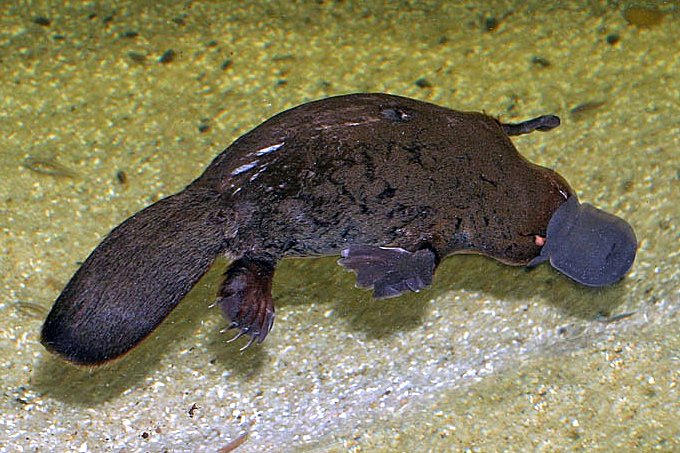
The Platypus Problem

“A Disbeliever in everything beyond his reason might exclaim,
surely two Creators must have been at work.”
Charles Darwin, 1836

As crypto zoological debates rumble on, year in and year out, one has to wonder what the effect of confirmation and discovery will be upon parties with deeply entrenched views, should it ever happen. Imagine someone shooting dead the first ever Sasquatch. Or being close enough to The Loch Ness Monster to take a clear picture and feed it a sandwich. Will these creatures of myth and mystery suddenly ‘disappear’ from popular consciousness? Will we no longer think about the now tamed and imprisoned Yeti? Will we begin to wonder what Nessie meat tastes like, and desire a Sasquatch fur coat? It’s a point worth pondering when we consider the overlooked and humble platypus, discovered in Australia at the height of popular interest in zoology and new life forms.
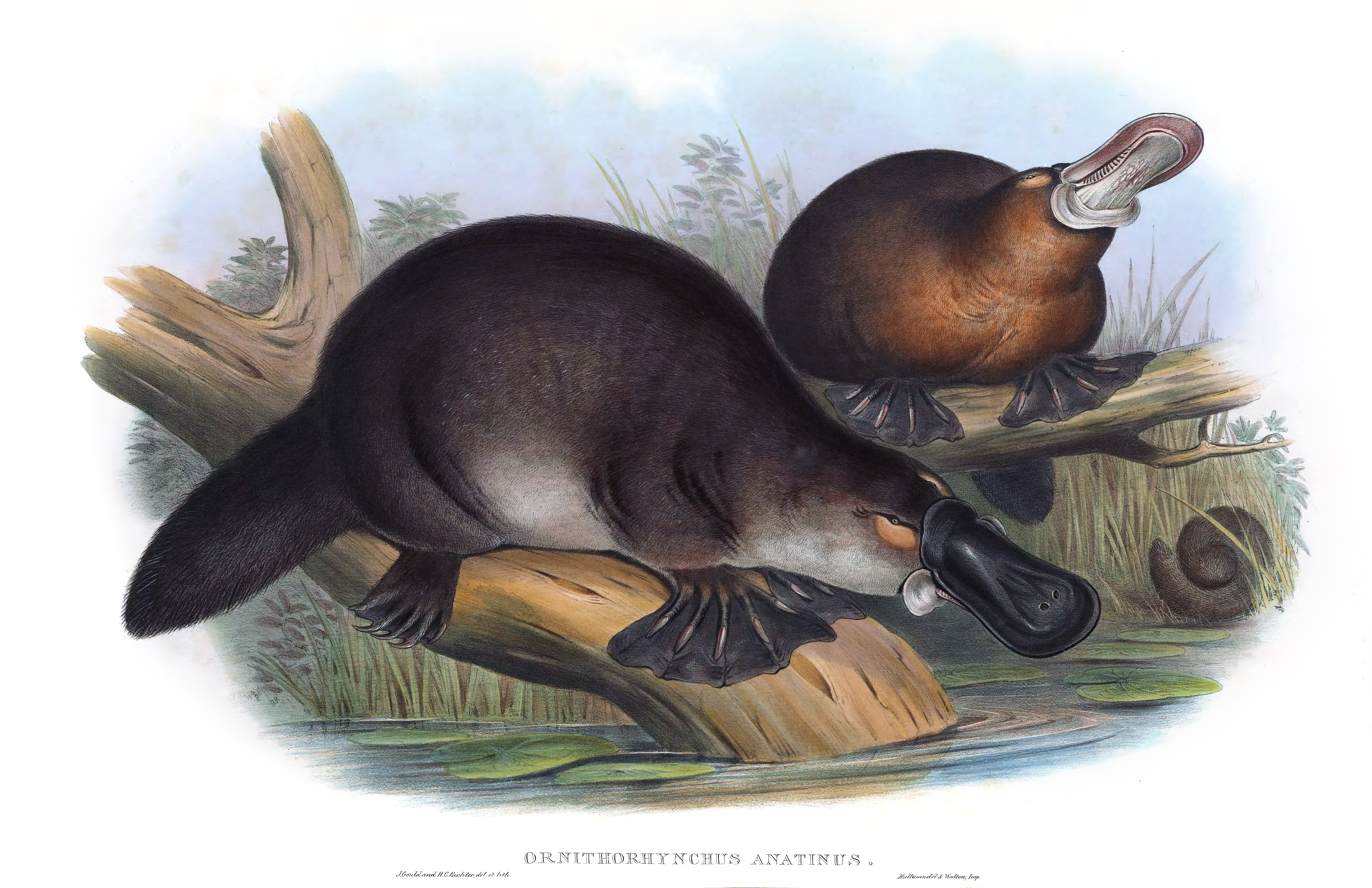
The opening quote is from Charles Darwin’s very first report on encountering the much-debated duck-billed platypus. For quite some time its mere existence was a matter of international debate, so alien was the description of the strange creature.
Competing biologists batted theories back and forth, with utter disbelief at the accounts filtering out of eastern Australia, as early as 1798. A venomous mammal, with fur, which laid eggs, with feet like an otter, and a bill like a duck? It did sound wholly improbable, failing as it did to fit any taxonomic classification at that time. Biology mattered back then. It caused arguments. Big ones. The science was all new, but still some believed that nothing this new could possibly exist. They had their classifications, and this creature, from a penal colony no less, most certainly did not fit.
Controversy
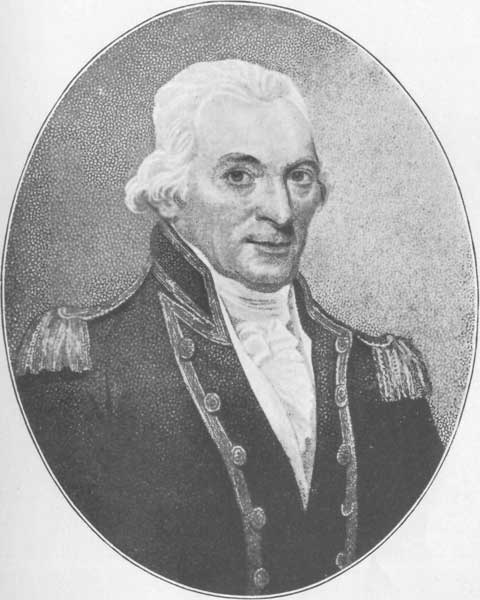
Captain John Hunter, a naval officer and botanist, who became the 2nd Governor of New South Wales, eventually caught a specimen. A reliable enough witness, one would have thought. He killed the creature and sent its pelt back to England, for examination, along with a sketch. But British biologists were far from convinced, suspecting that the creature was a hoax. The renowned scientist George Shaw, who examined the pelt was not impressed at all. Although he was used to dealing with specimens in very poor condition, as assistant keeper at the Natural History Museum in London, he took one look at the pelt and declared it a fraud in terms that would have left Captain Hunter smarting. In the polite language of the day he stated that it was impossible not to entertain doubts as to its ‘genuine nature’. His meaning was clear. Controversial zoologist Robert Knox went further, claiming the pelt must have been manufactured by ‘an Asian taxidermist’. Shaw eventual took a pair of scissors to the pelt, checking along the beak line for stitches.
Prejudice and Disbelief
The debate raged on, from the turn of the century right up until the 1830s with zoologists arguing their views vociferously like stock brokers trading in shares. Because of the view of Australia at the time, which was basically a penal colony, many people dismissed the creature as a mutant, just like the inhabitants of the country, who were all ‘queer and opposite’, along with their animals. The attitude to the Aboriginal natives was not too dissimilar. The Aboriginal people had known about the platypus for centuries, of course, but their views and voices were largely brushed aside.
The Hunt Goes On
Notoriously retiring, the capture of a live platypus still eluded the scientific world. One naturalist, Dr George Bennett, spent fifty years trying to find the creature, tearing up the countryside to find it in one of its extensive burrow networks. Finally, Darwin, on board The Beagle, visited Australia where he laid eyes on a platypus for himself, and penned his astonished reaction to meeting the creature for the first time. The platypus re-wrote the science books, throwing the cat amongst the scientific pigeons for some time.
Just Another Animal
In time the thrill of the chase and the intellectual challenge dimmed. The platypus became just another animal, and was hunted for its fur, until it became a protected species. Captive breeding was not successful, and gradually interest in the strange creature died down. It was an animal many people believe passionately existed, and others doubted wholly – not unlike the modern day Sasquatch or the Chupacubra. When they are discovered, finally, if they are and the first live specimen displayed to the world, how long will it take for the fuss to die down, one wonders? How long before there are hunting trips to shoot a Yeti, or traps laid to take its skin? And how much responsibility will we all have for what happens? Questions to ponder perhaps, with interest in cryptozoology at a high level currently.
Happily the Platypus is now the National Emblem of New South Wales and appears as a cultural icon on coins. Let’s just hope the Sasquatch ends up honored in the same way…
Images:


1863 picture of platypi
http://upload.wikimedia.org/wikipedia/commons/7/7e/Platypus-sketch.jpg
Early depiction
http://news.stanford.edu/news/2008/may14/gifs/platypus_300w.jpg
Platypus Burrow
http://designeranimals.wikispaces.com/file/view/burrow.jpg/154481013/burrow.jpg
Dentition of a platypus - Date 1849 Source Volume 1 of Sketches in Natural History: History of the Mammalia,  Author Charles Knight
http://upload.wikimedia.org/wikipedia/commons/6/61/Animaldentition_ornithoryncusanatinus.png
Captain John Hunter
http://upload.wikimedia.org/wikipedia/commons/6/6a/John_Hunter_-_Project_Gutenberg_eText_12992.jpg
Robert Knox c 1830
http://upload.wikimedia.org/wikipedia/commons/thumb/b/b7/Robert_Knox72.jpg/200px-Robert_Knox72.jpg
Venomous Spur on the platypus’s rear paw
http://upload.wikimedia.org/wikipedia/commons/3/3d/Platypus_spur.JPG
Platypus swimming
http://upload.wikimedia.org/wikipedia/commons/f/f2/Platypus.jpg

Lisa Hardcastle is a freelance writer from England who writes on behalf of many good causes including drug addiction treatment centers.