Magda Rui Mendes posts:
Iguanodon (meaning iguana tooth) , a herbivorous dinosaur from the mid Jurassic decade of the Cretaceous period , been extinct for millions of years . Or not ? In the remote forests of Papua , New Guinea , dinosaur-like creature was seen . This can live link to an extinct creature was dubbed the Iguanodon PNG .
In 2004 , the PNG Iguanodon was spotted living in a swamp of thick green plants near the ruined city of Rabaul . The city was destroyed in a volcanic eruption about ten years before . Villagers saw the creature ran away from her, terrified . They reported it to be about three feet tall , gray, and have a head like a dog and a tail like a crocodile .
Although Iguanodon is thought to have been a strict herbivore, this creature spotted in Papua New Guinea is reported to have eaten three dogs . Could be the creature evolved to become carnivorous in the millions of years it has been thought to be extinct ? Or does it mean that it is some other animal entirely?
Anyway , the mayor of the nearby town of Kokopo Capital expects that the creature is found because it would make a great tourist attraction for the area .
A previous group of sightings , although somewhat less well documented , took place in 1999 - a large creature was seen wading in Lake Murray . The next day, a Seventh Day Adventist pastor reported seeing a creature with a body as a garbage truck , standing on two legs . He reported that he had a cow's head -like, and a crocodile tail , with a look of crocodile-like scaly general .
The SyFy show Destination Truth investigated the Iguanodon PNG in his first season episode entitled Igunodon and Ri . In the episode , the team is shown bones thought to be a Iquanodon in Papua New Guinea University . They also conducted some research first hand in the swamp . Upon returning to the U.S. , they consult experts zoology and showed them the evidence examined . Experts say the bones are probably from a sperm whale , and the footage caught on tape is probably one hunting saltwater crocodile .
What is known about dinosaurs Iguanodon , and how it relates to this strange creature seen in this isolated island ? Iquanodon fossils and bones have shown that they can grow to a height of 9 feet ( 2.7 m ) , then this is consistent with what the report sightings . Iguanodon teeth are made for herbivores , which means that the herbivorous dinosaur would not have eaten three dogs - unless they evolved to eat meat to be , or just killed the dogs and eat them . Examining the leg bones Iguanadon , the scientists concluded that could walk on four legs , but also work in two . This is consistent with the sightings .
If an Iguanodon were still exist today , the isolated island of New Guinea seems to be the perfect place for a creature to have remained unknown until modern times . It is not beyond the realm of possibility that he belongs to a species never before documented - between the years 2000-2009, more than 19 thousand new species have been discovered . Naturally, most of which was insects , plants and fungi. Is also quite possible that a creature has been considered extinct appear alive and well many years later - to see the story of the coelacanth fish, which was discovered in 1938 , after having been thought to be exinct 65 million years.
In 2004 , the PNG Iguanodon was spotted living in a swamp of thick green plants near the ruined city of Rabaul . The city was destroyed in a volcanic eruption about ten years before . Villagers saw the creature ran away from her, terrified . They reported it to be about three feet tall , gray, and have a head like a dog and a tail like a crocodile .
Although Iguanodon is thought to have been a strict herbivore, this creature spotted in Papua New Guinea is reported to have eaten three dogs . Could be the creature evolved to become carnivorous in the millions of years it has been thought to be extinct ? Or does it mean that it is some other animal entirely?
Anyway , the mayor of the nearby town of Kokopo Capital expects that the creature is found because it would make a great tourist attraction for the area .
A previous group of sightings , although somewhat less well documented , took place in 1999 - a large creature was seen wading in Lake Murray . The next day, a Seventh Day Adventist pastor reported seeing a creature with a body as a garbage truck , standing on two legs . He reported that he had a cow's head -like, and a crocodile tail , with a look of crocodile-like scaly general .
The SyFy show Destination Truth investigated the Iguanodon PNG in his first season episode entitled Igunodon and Ri . In the episode , the team is shown bones thought to be a Iquanodon in Papua New Guinea University . They also conducted some research first hand in the swamp . Upon returning to the U.S. , they consult experts zoology and showed them the evidence examined . Experts say the bones are probably from a sperm whale , and the footage caught on tape is probably one hunting saltwater crocodile .
What is known about dinosaurs Iguanodon , and how it relates to this strange creature seen in this isolated island ? Iquanodon fossils and bones have shown that they can grow to a height of 9 feet ( 2.7 m ) , then this is consistent with what the report sightings . Iguanodon teeth are made for herbivores , which means that the herbivorous dinosaur would not have eaten three dogs - unless they evolved to eat meat to be , or just killed the dogs and eat them . Examining the leg bones Iguanadon , the scientists concluded that could walk on four legs , but also work in two . This is consistent with the sightings .
If an Iguanodon were still exist today , the isolated island of New Guinea seems to be the perfect place for a creature to have remained unknown until modern times . It is not beyond the realm of possibility that he belongs to a species never before documented - between the years 2000-2009, more than 19 thousand new species have been discovered . Naturally, most of which was insects , plants and fungi. Is also quite possible that a creature has been considered extinct appear alive and well many years later - to see the story of the coelacanth fish, which was discovered in 1938 , after having been thought to be exinct 65 million years.
For now, though , Iguanodon PNG remains a little puzzling cryptozoology , out of the reach of modern science and fact.
https://www.facebook.com/groups/108862020834/10151985895900835/


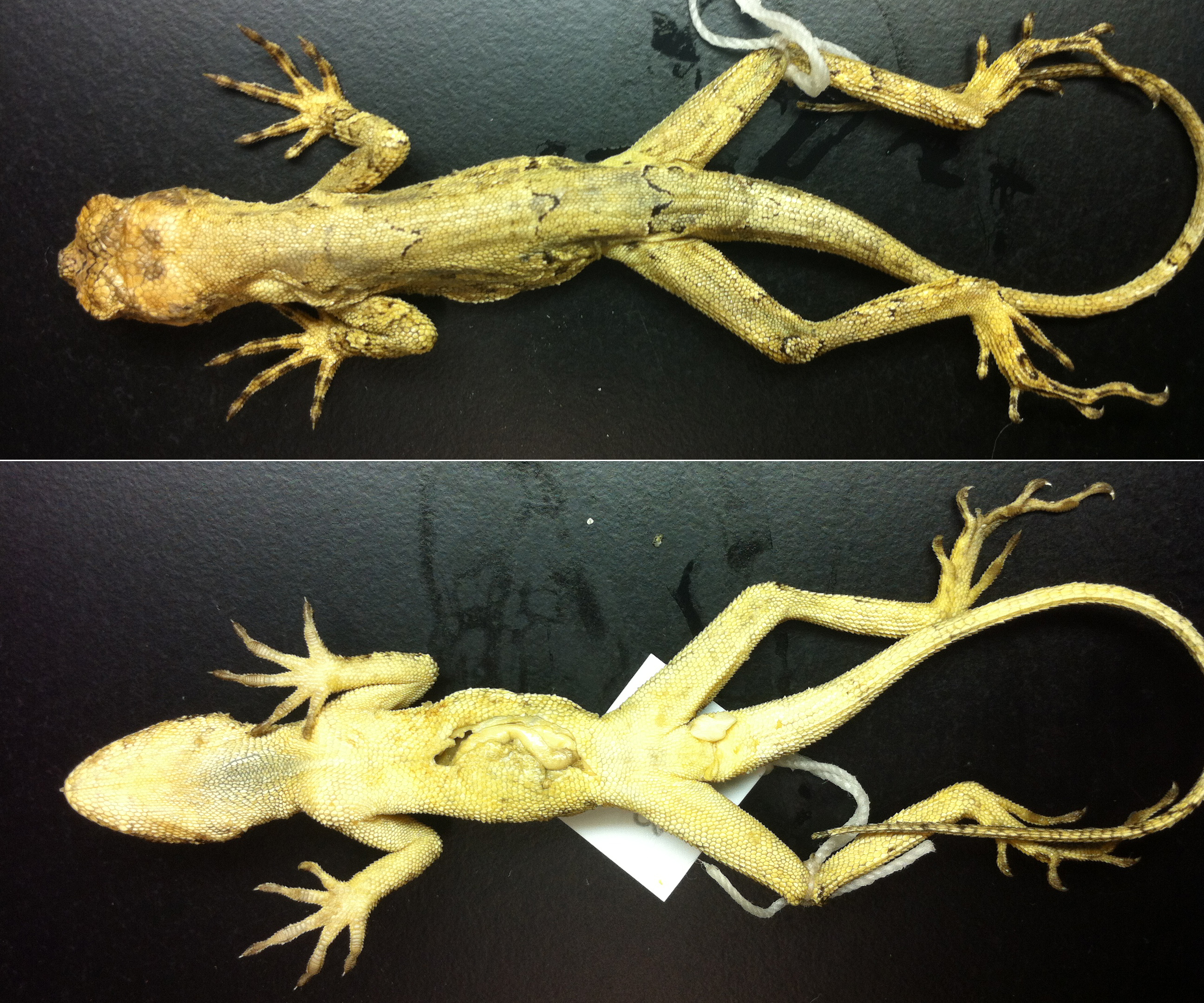
[-The creature in question is almost certainly a large lizard and not an Iguanodon. A parallel situation exists in South America with a large Iguanid lizard is called an "Iguanodon"
In this case, all I am interested in is the local reports of a sort of carnivorous land-crocodile and I do not consider the source, the supposed supporting evidence, or the conclusions to be reliable.
I have been informed that the remains spoken of in the television broadcast and brought back by the Destination Truth team were most likely whale remains as stated, and the film is pretty certainly a Saltie croc. And I should still say the creature as described in the reports is still unidentified. It is also not an Iguanodon and not described as being in any way like an Iguanodon-DD]